
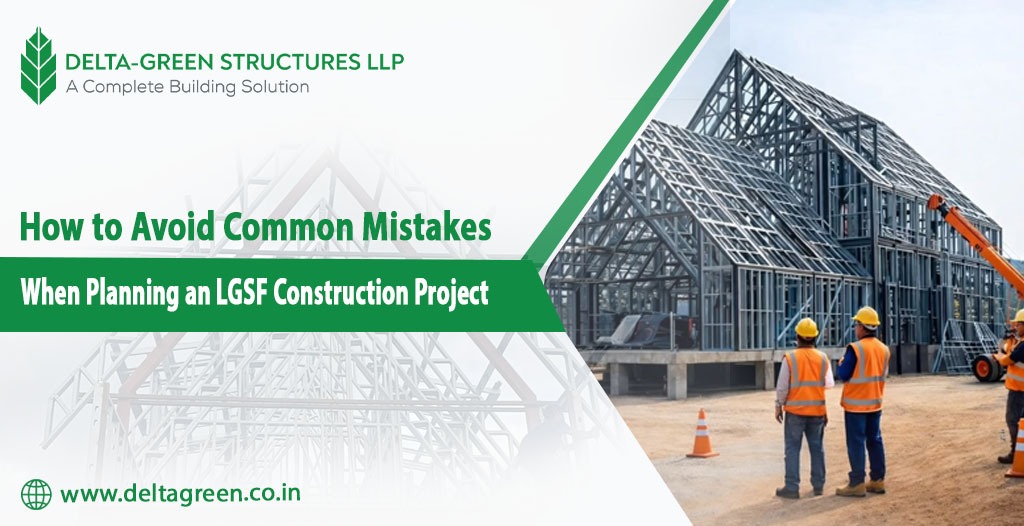
How to Avoid Common Mistakes When Planning an LGSF Construction Project
LGSF construction is fast, precise and efficient-but only when the planning is right.
Light Gauge Steel Framing (LGSF) has changed the way modern buildings can be planned and constructed. From faster project execution to precise manufacturing and reduced structural weight, it offers several advantages over conventional construction methods.
But there is an important point that is often overlooked:
A good LGSF building does not begin at the construction site. It begins with good planning.
Small mistakes in design, material selection, measurements or installation can create delays, additional costs and performance issues later. Most LGSF construction mistakes are completely avoidable when the project is planned with the right technical approach.
Mistakes Worth Watching Before Your LGSF Project Moves From Drawing Board To Reality
1. Treating LGSF Like Conventional Construction
Different material. Different process. Different mindset.
One of the most common mistakes in LGSF construction is approaching it exactly like a conventional RCC or brick-and-mortar project.
LGSF relies heavily on precision. Structural members are manufactured according to detailed designs, and every component needs to fit correctly during assembly.
Changing dimensions casually at the site, making last-minute structural modifications or assuming that conventional construction practices can simply be transferred to LGSF can cause unnecessary complications.
Plan first. Manufacture second. Assemble with precision.
A coordinated design-to-manufacturing process can significantly reduce rework and site-level adjustments.
2. Poor Material Selection Can Become an Expensive Problem
Not all steel framing materials deliver the same performance.
Poor material selection in LGSF can affect the durability, structural performance and long-term reliability of a building.
The important factors go beyond simply asking, “How much does the steel cost?”
Material specifications, steel grade, protective coating, thickness, manufacturing accuracy and compatibility with other building components all matter.
For projects exposed to challenging climatic conditions, the selection becomes even more important. Moisture, humidity, temperature variations and local environmental conditions should be considered during material planning.
A lower initial price is not necessarily a lower project cost if the material compromises performance.
3. Ignoring Site Conditions During Design
Your building has to work in the location where it is actually being built.
Soil conditions, terrain, wind exposure, rainfall, seismic considerations, accessibility and local climate can influence the design and construction approach.
This becomes particularly important in geographically challenging regions.
A design that works well in one location may require modifications for another. Ignoring these factors during the planning stage can result in expensive changes later.
Before finalising the structural design, understand the site-not just the building.
4. Inaccurate Measurements: A Small Error With a Big Impact
LGSF construction depends on precision.
Incorrect dimensions in architectural drawings, structural drawings or openings for doors and windows can create a chain reaction during manufacturing and installation.
Once steel components have been manufactured, correcting a design error at the site is far more complicated than correcting it on paper.
That is why dimensional coordination between architecture, structure, MEP services and manufacturing is essential.
Measure twice. Coordinate everything. Manufacture once.
5. Improper LGSF Installation Can Affect the Entire Structure
Precision doesn’t stop when the steel leaves the factory.
Improper LGSF installation is another major source of construction errors.
Incorrect alignment, inadequate connections, misplaced components or failure to follow the approved installation sequence can compromise the intended performance of the framing system.
Installation teams should understand the specific LGSF system being used and follow the manufacturer’s technical requirements.
Site supervision also matters. A technically sound design can still underperform if installation quality is inconsistent.
6. Forgetting About Openings and Services
Electrical conduits, plumbing lines, HVAC systems, doors, windows and other services should not become an afterthought.
Poor coordination between structural and service requirements can lead to unnecessary cutting, drilling or modification of framing members.
This is one of the avoidable common LGSF construction errors that can create delays on site.
The better approach is simple: coordinate service requirements during the design stage.
If the services are planned before fabrication, the structure doesn’t have to be changed to accommodate them later.
7. Choosing a Contractor Based Only on Price
The cheapest quotation is not always the cheapest project.
LGSF requires knowledge of design coordination, manufacturing, structural systems, installation and site execution.
A contractor or manufacturer should therefore be evaluated on more than the quoted price.
Look at:
- Manufacturing capabilities
- Quality of materials
- Equipment and technology
- Technical expertise
- Previous project experience
- Site installation capabilities
- Turnaround time
- After-sales and consultancy support
A technically capable partner can help identify potential mistakes in LGSF construction before they become expensive site problems.
8. Underestimating Quality Control
Quality control should exist at every stage – not only after construction is complete.
For LGSF projects, quality checks can include material specifications, manufacturing accuracy, component identification, connections, alignment and installation.
Automated manufacturing technology can improve consistency by producing components according to digitally controlled specifications.
This is where a properly equipped manufacturing facility can make a meaningful difference.
At Delta Green Structures, the focus is on precision manufacturing using advanced LGSF technology and fully automated Pinnacle machines, helping maintain consistency from design through production.
9. Planning Without Considering the Full Project Timeline
One of the major advantages of LGSF is speed – but speed depends on coordination.
Design approval, engineering, procurement, manufacturing, transportation, foundation readiness and installation must work together.
If the foundation is not ready when the manufactured components arrive, or drawings are repeatedly changed after fabrication begins, the expected time advantage can quickly disappear.
Create a realistic project schedule with clear responsibilities and approval deadlines.
Fast construction starts with organised planning – not rushed execution.
The Smart Way to Prevent LGSF Construction Mistakes
The best way to avoid LGSF construction mistakes is to identify risks before construction begins.
A successful project should bring together:
Accurate design + suitable materials + site-specific planning + precision manufacturing + trained installation + quality control.
When these elements work together, LGSF becomes more than simply a faster construction method. It becomes a carefully coordinated building system designed for efficiency, consistency and long-term performance.
For projects where terrain, climate or project complexity presents additional challenges, working with an experienced technical partner becomes even more valuable.
Delta Green Structures combines LGSF manufacturing expertise with turnkey construction capabilities, customised packages and consultancy support throughout the project duration. With top-tier LGSF materials, advanced machinery and a focus on precision and turnaround time, the company works to deliver results that meet demanding project requirements.
And that is ultimately the secret to avoiding construction problems:
Don’t wait for mistakes to appear on site. Plan them out before they happen.
Ready to Build Smarter?
Whether you are planning a residential, commercial or specialised LGSF project, the decisions made before fabrication can have a lasting impact on cost, quality and execution.
Choose the right materials. Coordinate the design. Understand the site. Work with experienced professionals.
Because in LGSF construction, precision isn’t just an advantage – it is the foundation of a successful project.
Delta Green Structures – Let’s build the future together.