
What Types of LGSF Machines Are Used in Steel Frame Manufacturing?
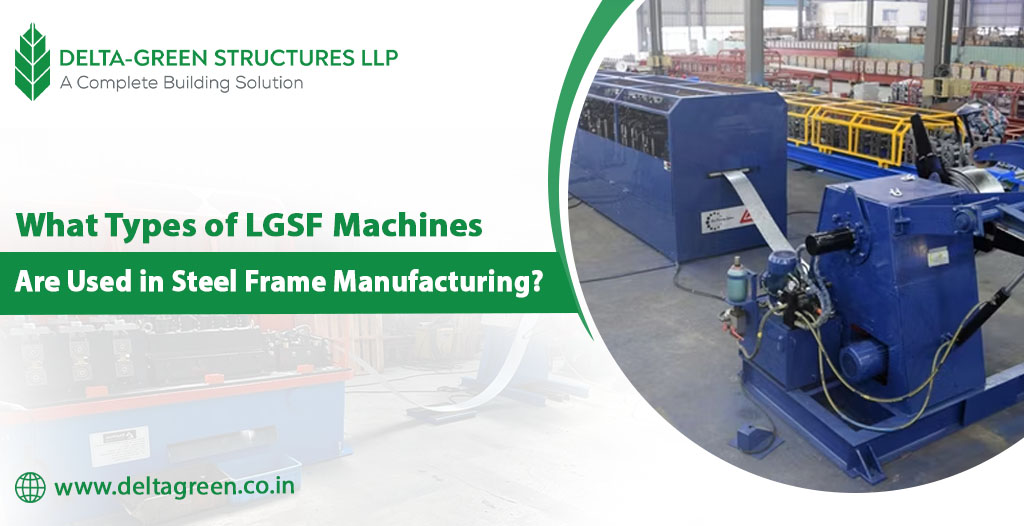
What Types of LGSF Machines Are Used in Steel Frame Manufacturing? Precision is where modern steel construction begins. Light Gauge Steel Framing (LGSF) has changed the way buildings are manufactured. Instead of cutting and assembling structural members entirely by hand, modern LGSF production uses specialized machinery to convert steel coils into accurately formed, cut and marked framing components. But what exactly happens inside an LGSF manufacturing unit? The answer lies in a combination of automated forming, cutting, punching and quality-control systems. Understanding these LGSF machine types helps project owners, architects and contractors understand why factory-made steel framing can deliver consistency, speed and material efficiency. What Are LGSF Machines? LGSF Machines are specialized manufacturing systems designed to produce lightweight structural steel components from galvanized steel coils. The steel passes through a controlled production line where it can be straightened, roll-formed, punched, cut and marked according to digitally prepared structural designs. Unlike conventional fabrication, where measurements and modifications may depend heavily on manual work, automated LGSF fabrication equipment follows predefined dimensions. That means every stud, track, joist or other framing member can be manufactured to the required specification before reaching the construction site. In simple terms: the design becomes a digital instruction, and the machine turns that instruction into a physical frame. 1. LGSF Roll Forming Machine: Where the Frame Takes Shape The LGSF roll forming machine is one of the most important pieces of equipment in an LGSF production line. Its job is to transform a flat galvanized steel strip from a coil into the required structural profile. The steel passes through a series of forming rollers. Each roller gradually bends the material until it reaches the required C, U or other specified profile. The gradual forming process is important. Instead of forcing the sheet into its final shape in one step, the machine creates the profile progressively, helping maintain dimensional consistency. Depending on the design, the machine can manufacture components such as: Wall studs Tracks Floor joists Roof members Structural channels Special framing sections For large-scale projects, this repeatability becomes particularly valuable. Hundreds or thousands of components can be manufactured according to the same design parameters. 2. LGSF Cutting System: Accurate Lengths, Less Site Work Forming the correct profile is only half the job. The member must also be cut to the correct length. An LGSF cutting System performs this operation automatically according to the programmed production requirements. Automated cutting reduces dependence on manual measurement and helps minimise inconsistent member lengths. This has a direct impact on installation. When components arrive at the site already cut according to the fabrication schedule, workers spend less time measuring, marking and trimming individual members. The goal is simple: more manufacturing precision, fewer corrections at the site. 3. Punching and Hole-Making Systems LGSF members often require holes or service openings for connections, fasteners and building services. Modern LGSF Machines can incorporate automated punching systems that create these openings at predetermined locations. This is more significant than it may initially appear. A hole positioned a few millimetres away from its intended location can affect connections, alignment or the installation of electrical and plumbing services. Automated punching helps maintain repeatable positioning throughout production. For complex buildings, this can make assembly considerably more systematic. 4. Marking Systems: Turning Components into an Assembly Kit One of the lesser-discussed advantages of automated LGSF production is component identification. Modern manufacturing systems can mark individual members with information linked to the digital design or assembly sequence. This allows installers to identify where a particular component belongs without relying entirely on visual interpretation. Think of it as turning a collection of steel members into a numbered construction kit. For projects with numerous wall panels, floors or roof sections, clear identification can reduce confusion during installation and improve workflow. 5. Automated Software and CNC Control The machinery itself is only one part of modern LGSF manufacturing. The real efficiency comes from the connection between design software and machine control. Structural information can be converted into machine-readable production instructions. The manufacturing system then uses these instructions to determine profile dimensions, cutting lengths, punching locations and component requirements. This digital connection helps reduce repetitive manual data entry. It also creates a more traceable production process – from structural design to manufactured components. For contractors handling multiple projects, this level of digital coordination can make production planning much easier. 6. Why Automated LGSF Fabrication Equipment Matters Not every steel framing project needs the same level of automation. However, automated LGSF fabrication equipment becomes particularly valuable when precision, speed and repeatability are important. Better dimensional consistency: Automated processes reduce variations that can occur when components are repeatedly measured and fabricated manually. Faster production: Once the production parameters are established, multiple components can be manufactured in a continuous workflow. Reduced material wastage: Accurate cutting and production planning can help use steel more efficiently and reduce unnecessary off-cuts. Easier installation: Pre-manufactured components can reach the site ready for assembly, reducing the amount of fabrication required during construction. Greater production control: Digital manufacturing provides better control over dimensions, component identification and production sequences. The Machine Is Important. The Manufacturing System Matters More A common mistake is to judge an LGSF facility simply by asking, “Which machine do they use?” The better question is: “How well does the entire manufacturing system work?” Machine capability, steel quality, software integration, structural design, operator expertise, quality checks and project coordination all affect the final result. Even advanced LGSF Machines cannot compensate for poor design information or unsuitable raw materials. That is why a professional LGSF manufacturer needs more than machinery. It needs a controlled process from design through fabrication and construction. Why Choose Delta Green Structures for LGSF Manufacturing? At Delta Green Structures, manufacturing combines modern LGSF technology with digitally controlled production.de The company operates the only LGSF manufacturing unit in North-East India, using fully automated Pinnacle machines for precision-focused production. Its approach goes beyond simply producing steel members. The focus is on delivering end-to-end building solutions, including support for projects involving challenging
What Types of LGSF Machines Are Used in Steel Frame Manufacturing? Read More »