Delta Green

April 2026

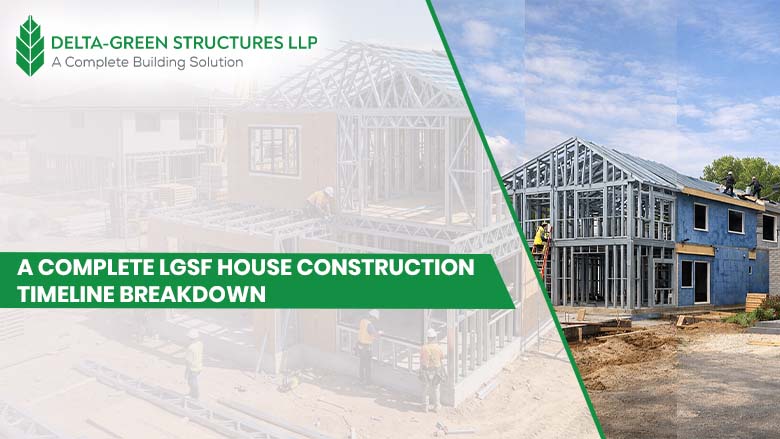
A Complete LGSF House Construction Timeline Breakdown

A Complete LGSF House Construction Timeline Breakdown Imagine moving into your new home in just a few weeks and not months. That’s not an exaggeration. It’s the reality of modern construction using Light Gauge Steel Framing (LGSF). As the demand for faster, smarter, and more efficient building methods rises, understanding the LGSF House Construction Timeline has become essential for homeowners, developers, and investors alike. This blog gives you a complete, practical, and deeply informative breakdown of how long it really takes to build an LGSF house—and what happens at every stage. Why the LGSF Timeline is a Game-Changer Traditional construction is time-intensive for reasons such as manual work, unpredictable weather, curing time, and coordination issues all slow things down. LGSF eliminates most of these variables. With pre-engineered components, factory precision, and systematic installation, the light gauge steel frame construction time is drastically reduced while maintaining structural quality. Companies like Delta Green Structures are redefining construction timelines by combining advanced manufacturing with end-to-end execution, making projects faster and more reliable. Quick Overview of the LGSF House Construction Timeline Phase Key Activities Estimated Time Planning & Design Layout, engineering, approvals 1–2 Weeks Factory Manufacturing Steel section production 1–2 Weeks Site Preparation Foundation & groundwork 1–2 Weeks Framing Assembly Structure installation 2–3 Weeks External Work Roofing & cladding 2–3 Weeks Interior Finishing Electrical, plumbing, interiors 3–5 Weeks Total Duration: 8–12 Weeks (2–3 Months) When all phases are combined, the complete LGSF House Construction Timeline typically falls within 8 to 12 Weeks (2–3 Months). This is significantly faster compared to traditional construction, which often takes 8–12 months or more. Phase-by-Phase LGSF House Construction Timeline To truly understand the timeline, it’s important to break down the steel frame house construction phases in a realistic and structured way. 1. Planning & Design (1–2 Weeks) Every successful project starts with detailed planning. In LGSF construction, this phase is highly optimized using advanced design software. During this stage: Architectural layouts are finalized Structural designs are engineered Material requirements are calculated with precision Unlike traditional methods, where design changes can cause delays later, LGSF planning is highly accurate from the beginning. This reduces rework and keeps the LGSF House Construction Timeline on track. 2. Factory Manufacturing (1–2 Weeks) This is where LGSF truly stands apart. All structural components are manufactured in a controlled facility using automated machines. Steel sections are cold-formed, cut, and labeled with exact specifications. This stage is a key part of the Cold-formed steel construction phases, ensuring: High precision Zero manual errors Ready-to-assemble components Since everything is prepared in advance, there is no dependency on site conditions. This significantly reduces the overall Light gauge steel framing project duration. 3. Site Preparation & Foundation (1–2 Weeks) While manufacturing is underway, work at the site begins simultaneously. This includes: Land preparation and leveling Foundation construction Utility planning The ability to run factory production and site work in parallel is one of the biggest reasons why the Lgsf house construction time is so efficient. In traditional construction, these stages happen sequentially, increasing the overall timeline. 4. Framing & Structural Assembly (2–3 Weeks) This is the most visually transformative phase. Pre-engineered steel components are transported to the site and assembled like a systemized framework. Walls, floors, and roof structures are erected quickly and accurately. This phase defines the core of the LGSF foundation and framing stages, where: Structural integrity is established The building shape becomes visible Construction speed reaches its peak Unlike conventional methods that require extensive labor and time, LGSF framing is fast, clean, and highly organized. 5. External Work: Roofing & Cladding (2–3 Weeks) Once the structure is complete, external elements are installed. This includes: Roofing systems Wall cladding Weatherproofing layers These components not only define the appearance of the building but also protect it from environmental conditions. The efficiency of this stage contributes directly to reducing the Modular steel home completion time. 6. Internal Work & Finishing (3–5 Weeks) The final phase focuses on functionality and aesthetics. It involves: Electrical and plumbing installation Interior partitions and insulation Flooring, painting, and fixtures Because the structure is pre-planned and precisely built, internal work progresses smoothly without major modifications. This ensures the final stage does not cause unnecessary delays. LGSF vs Traditional Construction Timeline Comparison Factor Traditional Construction LGSF Construction Total Time 8–12 Months 2–3 Months Workflow Sequential Parallel Weather Impact High Minimal Material Handling On-site Factory-made Error Rate Higher Very Low Delay Probability Common Rare This comparison clearly shows why the LGSF House Construction Timeline is becoming the preferred choice in modern construction. What Makes the Timeline Even Faster? Although LGSF is inherently fast, certain factors influence how quickly a project can be completed. · Project Complexity Simpler designs with standard layouts are completed faster. Complex architectural features or multi-storey buildings may require additional planning and execution time. · Weather Conditions Since most components are manufactured indoors, weather has minimal impact. This makes the light gauge steel frame construction time more predictable compared to traditional methods. · Expertise of the Builder An experienced company like Delta Green Structures ensures smooth coordination between design, manufacturing, and execution. This eliminates delays caused by miscommunication or poor planning. · Machinery & Technology Advanced automated machines produce precise components, reducing errors and speeding up installation. This directly enhances the efficiency of the Cold-formed steel construction phases. Beyond Timeline: Why LGSF is Smarter Construction Speed is just one part of the story. The real strength of LGSF lies in its overall efficiency and performance. 1. Consistent Quality Due to Factory Production LGSF components are manufactured in controlled environments, ensuring uniform quality. Every steel section meets strict standards, eliminating inconsistencies that are common in on-site construction. With Delta Green Structures, this precision ensures long-lasting and reliable structures. 2. Reduced Material Wastage Materials are pre-calculated and cut with accuracy, resulting in minimal waste. This not only reduces costs but also keeps the construction site cleaner and more organized. 3. Eco-Friendly Construction Steel is recyclable, and the process generates less waste and uses less water. Faster construction

A Complete LGSF House Construction Timeline Breakdown Read More »
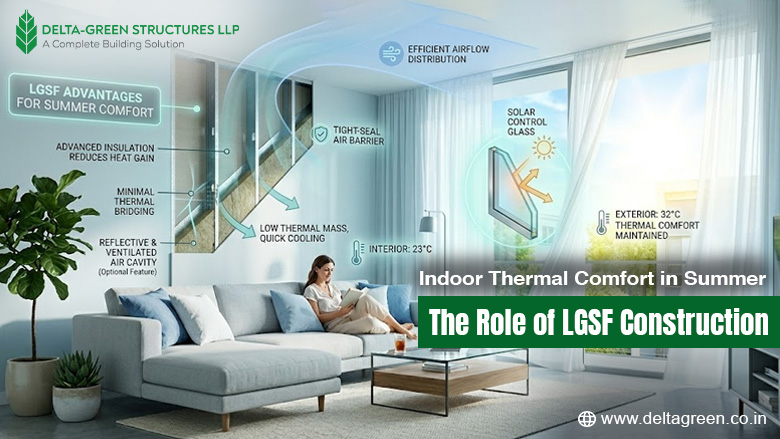
Indoor Thermal Comfort in Summer: The Role of LGSF Construction

Indoor Thermal Comfort in Summer: The Role of LGSF Construction Step inside. Feel the difference. That’s the power of smarter construction. Summer today doesn’t arrive gently—it arrives with intensity. Rising temperatures, increased humidity, and trapped indoor heat are turning homes and commercial spaces into uncomfortable environments. The real concern is no longer just durability or design; it is how well a building performs under extreme heat. This is where LGSF thermal comfort in summer is changing the way we think about construction. It is not just about building faster or stronger—it is about building intelligently. With companies like Delta Green Structures, the focus has shifted towards creating spaces that remain naturally cool, energy-efficient, and comfortable even during peak summer months. The Real Problem: Why Traditional Buildings Fail in Summer If your walls store heat, your comfort is already compromised. Most conventional buildings are constructed using brick and concrete. While these materials offer structural strength, they also absorb a significant amount of heat during the day and release it slowly at night. This creates a continuous cycle of discomfort. Indoor spaces remain warm long after sunset, fans circulate hot air instead of cooling it, and air conditioners need to run for extended hours to maintain comfort. This is exactly why Energy-efficient LGSF buildings are gaining attention. Instead of allowing heat to enter and then trying to remove it, LGSF construction focuses on preventing heat penetration from the start. LGSF Explained: More Than Just a Structural System It’s not just a structure—it’s a system designed for comfort. Light Gauge Steel Framing (LGSF) uses precision-engineered steel sections combined with advanced construction layers. What makes it unique is its integrated design approach, where every component plays a role in enhancing indoor comfort. Walls and roofs in LGSF structures are not single-layer elements. They are built with multiple layers that manage insulation, airflow, and moisture control. This systematic design significantly improves Temperature control in LGSF homes, ensuring consistent indoor conditions regardless of external heat. How LGSF Enhances Indoor Thermal Comfort in Summer 1. High-Performance Insulation In traditional construction, insulation is often limited or overlooked. In contrast, LGSF structures are designed with dedicated insulation layers that act as a strong barrier against heat transfer. These materials prevent external heat from entering the building, maintaining a stable indoor temperature throughout the day. This is why Heat insulation in steel frame houses is significantly more effective compared to conventional systems. It ensures that indoor spaces remain cooler without constant reliance on artificial cooling. 2. Minimal Heat Retention for Faster Cooling One of the major disadvantages of traditional construction is heat retention. Materials like concrete store heat during the day and release it gradually, keeping interiors warm even during the evening. LGSF structures are designed to minimize this effect. The combination of steel framing and insulation prevents heat storage, allowing indoor spaces to cool down quickly. This improves the thermal performance of LGSF structures, creating a more comfortable environment that responds faster to ventilation and cooling systems. 3. Engineered Walls and Roofs for Heat Resistance In LGSF construction, walls and roofs are engineered systems rather than basic structural elements. They are designed with reflective surfaces, insulated panels, and ventilation layers that actively reduce heat gain. Instead of absorbing sunlight, these systems reflect and block it, providing strong summer heat protection in steel frame buildings. The result is a noticeable reduction in indoor temperature, even during peak sunlight hours. 4. Improved Airflow and Ventilation Thermal comfort is not only about temperature but also about airflow. Poor ventilation can make indoor spaces feel suffocating, even if the temperature is relatively controlled. LGSF designs incorporate better ventilation strategies, allowing fresh air to circulate effectively throughout the space. This reduces humidity and enhances overall comfort. As a result, temperature control in LGSF homes feels more natural and balanced, improving both living and working conditions. 5. Energy Efficiency That Reflects in Everyday Living One of the biggest advantages of energy-efficient LGSF buildings is their ability to reduce dependence on air conditioning. Since the structure itself minimizes heat gain, cooling systems do not need to work as hard. This leads to: Lower electricity bills due to reduced AC usage Consistent indoor comfort throughout the day Reduced environmental impact through lower energy consumption Over time, these benefits make LGSF not just a comfortable choice, but also a cost-effective and sustainable one. Quick Comparison: LGSF vs Traditional Construction Feature Traditional Construction LGSF Construction Heat Absorption High – stores heat during the day Low – resists heat entry Cooling Speed Slow and delayed Fast and responsive Indoor Comfort at Night Often warm and uncomfortable Cool and stable Insulation Efficiency Limited or basic Advanced multi-layer insulation Energy Consumption High due to AC usage Reduced due to natural cooling Overall Thermal Comfort Moderate High Designed for Indian Summers and Challenging Conditions A building should adapt to the climate, not fight against it. India’s climate varies from region to region, often presenting extreme conditions such as high heat and humidity. Buildings must be designed to handle these variations effectively. This is where Delta Green Structures brings significant value. With expertise in diverse climatic and geographical terrains, they deliver customized LGSF solutions that ensure optimal LGSF thermal comfort in summer. Their approach focuses on understanding local conditions and designing structures that perform efficiently in those environments. Why Choose Delta Green Structures “Precision, innovation, and performance—delivered together.” As the only manufacturing unit in North-East India offering turnkey LGSF solutions, Delta Green Structures combines advanced technology with practical expertise. Their strengths include: End-to-end construction solutions from design to execution Use of top-tier materials and automated manufacturing systems Customizable solutions tailored to specific project needs Strong focus on quality, precision, and timely delivery Most importantly, their commitment to LGSF thermal comfort in summer ensures that every project is designed to deliver maximum comfort and efficiency. Step Into a Cooler Future—Build Smart with LGSF Today As temperatures continue to rise, the importance of indoor comfort cannot be ignored. Buildings must evolve to meet modern climate challenges,

Indoor Thermal Comfort in Summer: The Role of LGSF Construction Read More »

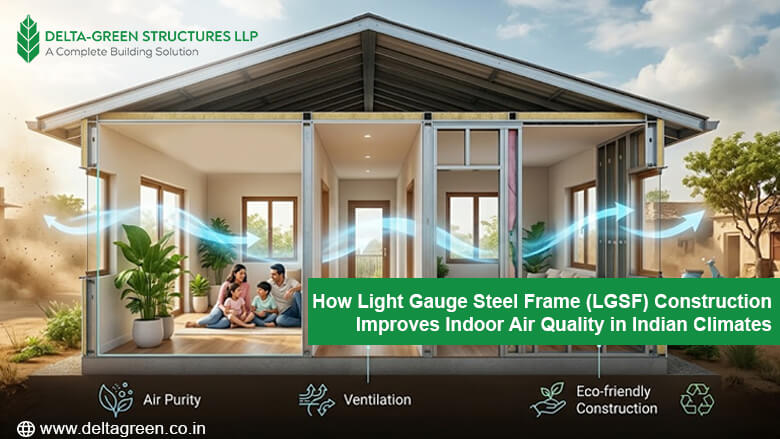
How Light Gauge Steel Frame (LGSF) Construction Improves Indoor Air Quality in Indian Climates

How Light Gauge Steel Frame (LGSF) Construction Improves Indoor Air Quality in Indian Climates Because the air you breathe inside your home should be as pure as your intentions behind building it. When we talk about construction in India, conversations usually revolve around cost, durability, and speed. But here’s a truth that’s often overlooked—the quality of indoor air directly affects your health, productivity, and overall well-being. With rising pollution levels, unpredictable weather patterns, and increasing urban density, indoor air quality has become a serious concern across Indian households and commercial spaces. This is exactly where Light Gauge Steel Frame Construction steps in—not just as a modern building method, but as a smarter, healthier way to build. Let’s break down how this innovative approach is transforming the way we breathe inside our spaces. The Invisible Problem: Indoor Air Quality in India From the humid air of the North-East to the dry heat of Rajasthan and the polluted metros like Delhi, Indian climates are diverse and challenging. Traditional construction methods often trap moisture, dust, and pollutants inside buildings. Common issues include: Mold growth due to damp walls Poor ventilation design Dust accumulation from porous materials Chemical emissions from low-quality construction inputs Over time, these factors contribute to respiratory problems, allergies, and fatigue. Now imagine a construction system designed to eliminate these problems from the ground up. What Makes Light Gauge Steel Frame Construction Different? Light Gauge Steel Frame Construction uses cold-formed steel sections to create the structural framework of a building. Unlike traditional brick-and-mortar systems, it is precise, factory-made, and engineered for performance. At companies like Delta Green Structures, this process is powered by advanced machinery and high-grade materials, ensuring consistency and quality in every project. But how does this relate to cleaner indoor air? Let’s take a closer look. 1. Zero Moisture Retention Means No Mold or Dampness One of the biggest enemies of indoor air quality is moisture. Traditional materials like bricks and cement tend to absorb water, especially in regions with heavy rainfall or humidity. With Lightweight steel construction, the structure itself does not absorb moisture. This means: No damp walls No hidden fungal growth No musty odors The result is a fresher and healthier indoor environment throughout the year. 2. Designed Ventilation, Not Accidental Airflow In conventional buildings, ventilation is often an afterthought. But with the LGSF building system, ventilation is integrated into the design stage itself. Using Modern steel frame construction, architects can: Plan precise airflow pathways Integrate mechanical ventilation systems seamlessly Optimize natural light and cross ventilation This ensures that fresh air circulates continuously, reducing indoor pollutants and improving oxygen levels. 3. Non-Toxic and Cleaner Building Materials Another hidden contributor to poor indoor air quality is the use of low-grade materials that release harmful chemicals over time. Steel stud framing construction eliminates this risk by using: High-quality galvanized steel Controlled, factory-manufactured components Minimal on-site chemical usage At Delta Green Structures, only top-tier materials and accessories are used, ensuring that your indoor space remains free from harmful emissions. 4. Dust-Free Precision Construction Traditional construction sites are often filled with cement dust, sand particles, and debris that linger even after completion. With Light gauge steel frame building technology, most components are pre-engineered and assembled with precision. This results in: Minimal dust generation Cleaner construction process Reduced post-construction contamination This means you move into a cleaner and healthier environment from day one. 5. Better Thermal Performance for Healthier Air Temperature plays a crucial role in indoor air quality. Poor insulation leads to: Excess humidity Condensation Increased pollutant concentration Light Gauge Steel Frame Construction allows for advanced insulation systems to be integrated within walls and roofs. This results in: Stable indoor temperatures Reduced humidity fluctuations Improved comfort and air quality In Indian climates, this makes a significant difference. 6. Adaptability across Indian Climates India’s climate diversity demands construction that adapts rather than resists. From the heavy rains of the North-East to coastal humidity and dry inland heat, Lightweight steel construction performs consistently across regions. Companies like Delta Green Structures, being one of the few advanced manufacturing units in the North-East, specialize in designing structures that respond intelligently to local environmental challenges. This ensures better indoor air quality regardless of location. 7. Airtight Yet Breathable Structures The best buildings are both airtight and breathable. With Modern steel frame construction, you get: Controlled air infiltration, preventing outside pollutants from entering Planned ventilation systems that ensure only clean air circulates This balance is essential for maintaining high indoor air quality while keeping external pollution out. 8. Faster Construction with Less Contamination The longer a construction project takes, the more exposure it has to dust, moisture, and environmental pollutants. Light Gauge Steel Frame Construction significantly reduces construction time due to: Pre-engineered components Automated manufacturing Efficient assembly At Delta Green Structures, the use of advanced Pinnacle machines ensures faster turnaround without compromising quality, resulting in cleaner and healthier buildings from the very beginning. Why This Matters More Than Ever Today, our indoor spaces do a lot more than just provide shelter. They function as workspaces, study areas, and safe zones for our families, which makes the quality of air inside them extremely important. With increasing pollution and changing lifestyles, poor indoor air can quietly impact health over time. That’s why choosing Light Gauge Steel Frame Construction is not just about structure—it’s about creating a cleaner, healthier living environment. It’s a smart, long-term investment in comfort, well-being, and better everyday living. Final Thoughts: Build Smart, Breathe Better Indoor air quality is not something that can be fixed later. It must be built into the structure from the very beginning. With its precision engineering, moisture resistance, cleaner materials, and smart ventilation, Light Gauge Steel Frame Construction offers a clear advantage over traditional methods. With a reliable partner like Delta Green Structures, you are not just building faster or more efficiently—you are building healthier. Because a truly modern building does not just stand strong, it creates a space where you can breathe freely every single day.

How Light Gauge Steel Frame (LGSF) Construction Improves Indoor Air Quality in Indian Climates Read More »

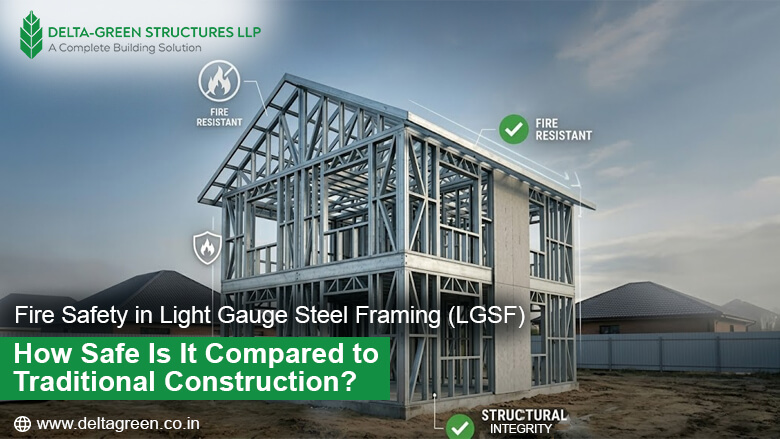
Fire Safety in Light Gauge Steel Framing (LGSF): How Safe Is It Compared to Traditional Construction?

Fire Safety in Light Gauge Steel Framing (LGSF): How Safe Is It Compared to Traditional Construction? When you build, you’re not just creating a structure—you’re protecting lives inside it. Fire safety is one of those aspects people often assume is “handled.” But in reality, the materials and methods you choose can make a life-saving difference. Today, with modern construction evolving rapidly, Fire Safety in Light Gauge Steel Framing (LGSF) has become a topic worth serious attention. So, how does LGSF really perform in a fire? And is it actually safer than traditional brick-and-concrete construction? Let’s break it down in a way that truly matters. Understanding Fire Behavior in Buildings A fire doesn’t spread slowly—it escalates fast. Within minutes: Temperatures can rise beyond 800°C Weak materials start failing Smoke becomes a major threat In such situations, the strength of a building lies not just in standing tall, but in how long it can resist damage and allow safe evacuation. This is exactly where Fire Safety in Light Gauge Steel Framing begins to stand out. What Makes LGSF Different? Unlike traditional construction, LGSF is not just about steel—it’s a complete engineered system. At Delta Green Structures, every LGSF project is designed with precision, ensuring that safety is not added later, but built into the structure from the start. Let’s look at what makes it fire-resilient. 1. Steel: Strong, Stable, and Non-Combustible One of the biggest advantages of LGSF is simple: Steel does not burn. Unlike wood or other materials: It doesn’t fuel the fire It doesn’t produce smoke It doesn’t accelerate flame spread This gives fire-resistant steel framing a clear edge in preventing fire from growing uncontrollably. 2. The Real Shield: Fire-Resistant Layers Here’s something many people don’t realize— Steel in LGSF is always protected with layers like: Gypsum boards  Cement boards Fire-rated insulation These act as thermal barriers, delaying heat from reaching the steel core. This dramatically improves steel frame fire resistance, allowing structures to maintain stability for longer durations. In comparison, traditional materials may resist fire—but they can crack, weaken, or even collapse without warning. 3. Engineered Fire Protection, Not Guesswork One of the strongest aspects of Fire Safety in Light Gauge Steel Framing is that everything is pre-planned. Modern LGSF systems include: Fire-rated wall assemblies Compartmentalized layouts to stop fire spread Special coatings that expand under heat This level of fire protection in steel structures ensures that fire doesn’t travel easily from one area to another. With advanced machinery and automated processes, Delta Green Structures ensures consistency in every component—something that’s hard to guarantee in traditional on-site construction. LGSF vs Traditional Construction: A Practical Comparison Aspect Traditional Brick & Concrete Light Gauge Steel Framing (LGSF) Fire Resistance Naturally fire-resistant to an extent Non-combustible structural system Heat Behavior Slower heat penetration Controlled and tested fire performance Structural Response in Fire Can crack or spall under extreme heat Predictable structural behavior under fire conditions Safety During Emergency Structural damage can be unpredictable Faster evacuation due to lightweight design Post-Fire Repair Expensive and time-consuming repairs Easier and quicker to repair after fire incidents Design Requirement Conventional methods, less engineered fire planning Requires proper design and fire-rated materials (ensured by professional manufacturers) Fire Safety in Prefabricated Buildings: A Hidden Advantage Prefabrication often gets misunderstood, but in reality, it enhances safety. Why? Because everything is: Designed in advance Manufactured under strict quality control Installed with precision This reduces human error, making fire safety in prefabricated buildings more reliable compared to conventional construction methods. At Delta Green Structures, this approach ensures that every structure meets high safety standards without compromise. Fire Ratings & Smart Design: Where Every Second Counts Fire resistance is not just a technical number—it’s time that can save lives. LGSF systems can be designed to withstand fire for: 30 minutes 60 minutes 90 minutes 120 minutes or more And those minutes? They mean more time to react, more time to evacuate, and far less risk of sudden failure. That’s what makes Fire Safety in Light Gauge Steel Framing not just flexible—but dependable across different types of buildings. But here’s where it gets even smarter. Fire safety isn’t only about how long a structure can resist fire—it’s about how intelligently it handles it. Modern LGSF designs are built with: Sealed joints that stop smoke from silently spreading Fire stops within walls and floors to contain flames Clearly planned escape routes for faster, safer exits This is where design meets real-world safety. Because when fire-resistant building materials work together as a system—not separately—you don’t just get protection, you get control, predictability, and peace of mind. Why Modern Builders Are Choosing LGSF Across India, especially in regions with challenging climates, construction needs to be both strong and safe. Builders are choosing LGSF because it offers: Speed without compromising safety Precision in fire-resistant design Better performance during emergencies With its expertise in diverse terrains and conditions, Delta Green Structures is helping set new benchmarks in safe construction practices. Beyond Structures: It’s About People At the end of the day, fire safety is not just about buildings. It’s about: Families sleeping peacefully Employees working safely Communities staying protected A well-designed LGSF structure gives people something invaluable—time to respond, time to escape, and peace of mind. Final Verdict: Is LGSF Safer? If designed and executed properly, the answer is clear—yes, LGSF can be as safe, and in many cases even safer, than traditional construction. This is because it brings together multiple layers of protection, including non-combustible materials, engineered fire protection systems, predictable structural behavior, and advanced fire-resistant building materials. Unlike conventional methods that often rely on assumption, LGSF is based on calculated performance and tested safety standards. When executed by experienced companies like Delta Green Structures, this approach ensures that safety is not just a feature added at the end, but a core part of the entire construction process—delivered with precision and reliability. At the same time, construction itself is evolving, and so are the expectations from it. Fire Safety in Light Gauge Steel Framing is no

Fire Safety in Light Gauge Steel Framing (LGSF): How Safe Is It Compared to Traditional Construction? Read More »