Delta Green

September 2026

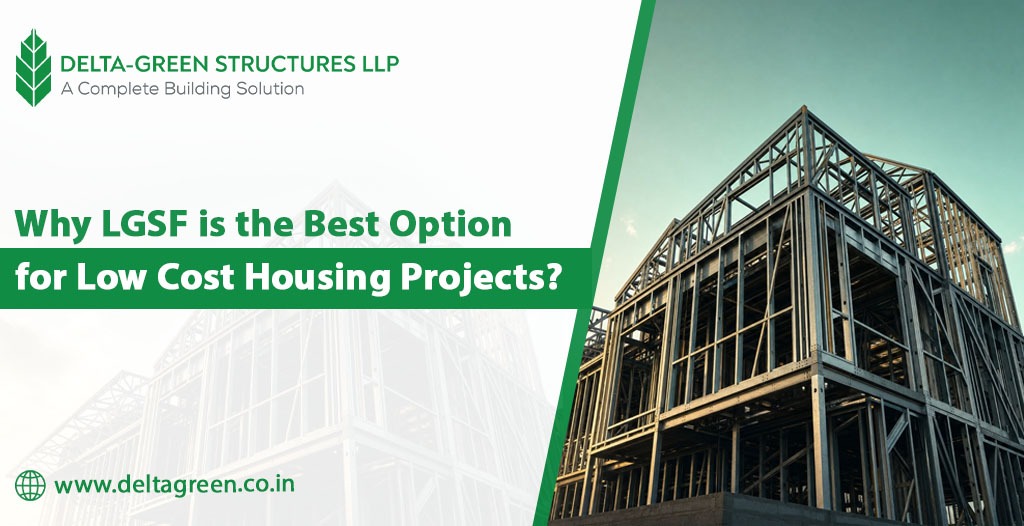
Why LGSF is the Best Option for Low Cost Housing Projects?

Why LGSF is the Best Option for Low Cost Housing Projects? Affordable housing should not mean compromising on strength, speed or quality. With the right technology, you can build smarter without building beyond your budget. For housing projects, cost is always an important consideration. But the real challenge is not simply finding cheaper materials. A genuinely affordable home needs to balance construction cost, durability, speed, maintenance, material efficiency and long-term performance. This is where LGSF for low cost housing stands out. Light Gauge Steel Framing (LGSF) uses precision-engineered, lightweight steel sections to create the structural framework of a building. Because many components can be designed, manufactured and prepared with high accuracy before reaching the construction site, the process can reduce several of the delays and inefficiencies associated with conventional construction. For developers, institutions and organisations planning multiple housing units, that difference can be significant. What Makes LGSF Suitable for Low Cost Housing? Lower cost is not about using less. It is about wasting less. Traditional construction can involve considerable material wastage, lengthy on-site work and unpredictable labour requirements. LGSF approaches construction differently. The structural components are manufactured according to detailed designs, allowing measurements, connections and framing members to be produced with greater consistency. This precision helps reduce unnecessary cutting and material wastage at the site. For LGSF affordable housing, this can translate into better control over resources and project execution. Another advantage is the lightweight nature of the system. Compared with conventional structural systems, LGSF places less dead load on the foundation. Depending on the soil conditions, building design and engineering requirements, this may allow a more efficient foundation solution. That does not mean every LGSF project automatically needs a cheaper foundation. Proper structural and geotechnical assessment is essential. But reducing unnecessary structural weight can create opportunities for better overall project economics. Reasons Why LGSF is the Best Choice for Low-Cost Projects Faster Construction Means Faster Housing Delivery When housing is urgently needed, every week matters. One of the strongest advantages of low cost LGSF construction is speed. LGSF components can be manufactured with high precision and assembled at the site using a planned sequence. Several activities can also progress in parallel, reducing dependence on a long chain of conventional masonry work. Faster construction can have a financial impact beyond labour savings. Earlier completion can mean: Reduced project overheads Lower site management costs Earlier occupancy Better utilisation of labour Faster handover of housing units Reduced exposure to prolonged construction delays For large-scale affordable housing, these savings can become increasingly important as the number of units increases. Precision That Reduces Material Waste A low-cost project becomes expensive when materials are repeatedly wasted. LGSF manufacturing is based on detailed engineering and computer-controlled production. At a specialised manufacturing facility, steel sections can be cut and formed according to project-specific requirements. This approach offers greater dimensional consistency than uncontrolled on-site fabrication. For LGSF for affordable homes, precision matters because even small inefficiencies multiplied across hundreds of components or multiple housing units can affect the project budget. Better planning also makes material requirements easier to estimate before construction begins, helping project teams make more informed purchasing and scheduling decisions. Strong, Lightweight and Adaptable Affordable does not have to mean temporary. LGSF uses galvanised structural steel designed for building applications. When properly engineered, detailed, protected and installed, LGSF structures can provide a durable structural solution. The system is also adaptable to different architectural requirements. Homes can be planned around varying room layouts, elevations and project requirements rather than being restricted to one standard configuration. This flexibility is particularly useful when developing housing in different locations where site conditions, climatic requirements and design expectations may vary. A Smart Choice for Difficult Terrains The same housing solution does not work equally well everywhere. This is especially relevant in regions with challenging geographical conditions. Sloping sites, difficult access, remote locations and variable climatic conditions can make conventional construction more complicated. Transporting large quantities of heavy materials and managing extensive on-site construction activities can become difficult. The lightweight nature of LGSF can offer a practical advantage in such situations. Delta Green Structures brings particular value here through its experience with challenging climatic conditions and geographical terrains. Its approach combines LGSF manufacturing with turnkey construction capabilities, allowing projects to be considered as complete building solutions rather than simply supplying steel frames. Cost-Effective Housing Is More Than Construction Cost There is an important distinction between cheap construction and cost-effective housing solutions. A cheaper building may have a lower initial price but become expensive if it requires frequent repairs, suffers from poor construction quality or takes too long to complete. A cost-effective building considers the entire project lifecycle. LGSF can contribute to this approach through: Material efficiency: Precision manufacturing can help minimise unnecessary wastage. Construction speed: Faster assembly can reduce certain labour and project overheads. Quality consistency: Factory-controlled manufacturing allows greater control over component dimensions and production. Design flexibility: The system can accommodate different housing layouts and requirements. Lightweight construction: Lower structural weight can influence foundation and transportation considerations, subject to engineering assessment. These factors make LGSF for low cost housing particularly relevant when affordability is being evaluated beyond the initial construction quotation. Why Choose Delta Green Structures? Technology alone does not guarantee a successful project. Engineering, manufacturing quality, site execution and project coordination all matter. Delta Green Structures operates an LGSF manufacturing facility using advanced technology and fully automated Pinnacle machines. The company positions itself as the only LGSF manufacturing unit in North-East India offering turnkey construction services. Its focus on precision, short turnaround times and top-tier LGSF materials, machines and accessories is particularly relevant for housing projects where consistency and delivery timelines matter. The company also provides customized packages and consultancy support throughout the project duration, helping clients approach construction according to their specific requirements rather than relying on a one-size-fits-all solution. The Bigger Picture: Building More Homes, Smarter The demand for affordable housing is not going away. What is changing is the technology available to meet that demand. LGSF

Why LGSF is the Best Option for Low Cost Housing Projects? Read More »
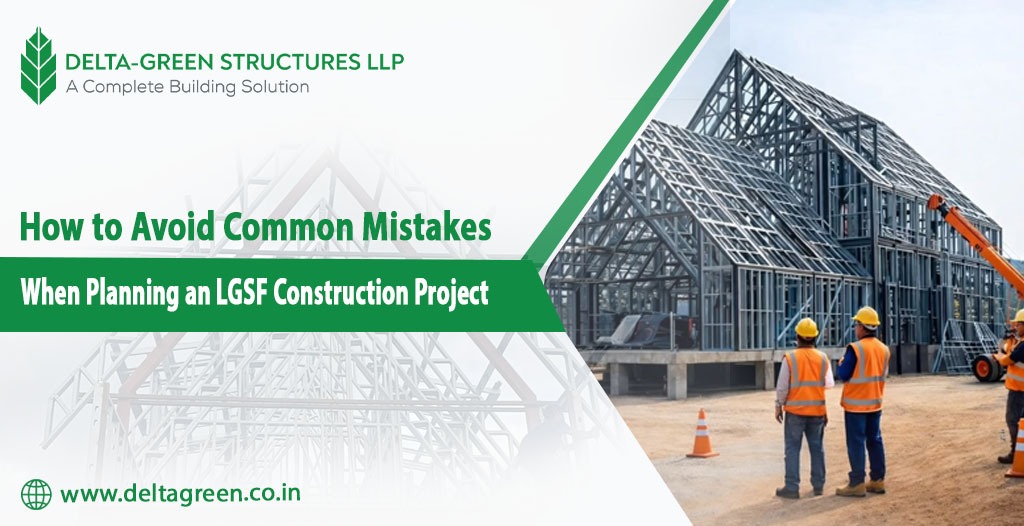
How to Avoid Common Mistakes When Planning an LGSF Construction Project

How to Avoid Common Mistakes When Planning an LGSF Construction Project LGSF construction is fast, precise and efficient-but only when the planning is right. Light Gauge Steel Framing (LGSF) has changed the way modern buildings can be planned and constructed. From faster project execution to precise manufacturing and reduced structural weight, it offers several advantages over conventional construction methods. But there is an important point that is often overlooked: A good LGSF building does not begin at the construction site. It begins with good planning. Small mistakes in design, material selection, measurements or installation can create delays, additional costs and performance issues later. Most LGSF construction mistakes are completely avoidable when the project is planned with the right technical approach. Mistakes Worth Watching Before Your LGSF Project Moves From Drawing Board To Reality 1. Treating LGSF Like Conventional Construction Different material. Different process. Different mindset. One of the most common mistakes in LGSF construction is approaching it exactly like a conventional RCC or brick-and-mortar project. LGSF relies heavily on precision. Structural members are manufactured according to detailed designs, and every component needs to fit correctly during assembly. Changing dimensions casually at the site, making last-minute structural modifications or assuming that conventional construction practices can simply be transferred to LGSF can cause unnecessary complications. Plan first. Manufacture second. Assemble with precision. A coordinated design-to-manufacturing process can significantly reduce rework and site-level adjustments. 2. Poor Material Selection Can Become an Expensive Problem Not all steel framing materials deliver the same performance. Poor material selection in LGSF can affect the durability, structural performance and long-term reliability of a building. The important factors go beyond simply asking, “How much does the steel cost?” Material specifications, steel grade, protective coating, thickness, manufacturing accuracy and compatibility with other building components all matter. For projects exposed to challenging climatic conditions, the selection becomes even more important. Moisture, humidity, temperature variations and local environmental conditions should be considered during material planning. A lower initial price is not necessarily a lower project cost if the material compromises performance. 3. Ignoring Site Conditions During Design Your building has to work in the location where it is actually being built. Soil conditions, terrain, wind exposure, rainfall, seismic considerations, accessibility and local climate can influence the design and construction approach. This becomes particularly important in geographically challenging regions. A design that works well in one location may require modifications for another. Ignoring these factors during the planning stage can result in expensive changes later. Before finalising the structural design, understand the site-not just the building. 4. Inaccurate Measurements: A Small Error With a Big Impact LGSF construction depends on precision. Incorrect dimensions in architectural drawings, structural drawings or openings for doors and windows can create a chain reaction during manufacturing and installation. Once steel components have been manufactured, correcting a design error at the site is far more complicated than correcting it on paper. That is why dimensional coordination between architecture, structure, MEP services and manufacturing is essential. Measure twice. Coordinate everything. Manufacture once. 5. Improper LGSF Installation Can Affect the Entire Structure Precision doesn’t stop when the steel leaves the factory. Improper LGSF installation is another major source of construction errors. Incorrect alignment, inadequate connections, misplaced components or failure to follow the approved installation sequence can compromise the intended performance of the framing system. Installation teams should understand the specific LGSF system being used and follow the manufacturer’s technical requirements. Site supervision also matters. A technically sound design can still underperform if installation quality is inconsistent. 6. Forgetting About Openings and Services Electrical conduits, plumbing lines, HVAC systems, doors, windows and other services should not become an afterthought. Poor coordination between structural and service requirements can lead to unnecessary cutting, drilling or modification of framing members. This is one of the avoidable common LGSF construction errors that can create delays on site. The better approach is simple: coordinate service requirements during the design stage. If the services are planned before fabrication, the structure doesn’t have to be changed to accommodate them later. 7. Choosing a Contractor Based Only on Price The cheapest quotation is not always the cheapest project. LGSF requires knowledge of design coordination, manufacturing, structural systems, installation and site execution. A contractor or manufacturer should therefore be evaluated on more than the quoted price. Look at: Manufacturing capabilities Quality of materials Equipment and technology Technical expertise Previous project experience Site installation capabilities Turnaround time After-sales and consultancy support A technically capable partner can help identify potential mistakes in LGSF construction before they become expensive site problems. 8. Underestimating Quality Control Quality control should exist at every stage – not only after construction is complete. For LGSF projects, quality checks can include material specifications, manufacturing accuracy, component identification, connections, alignment and installation. Automated manufacturing technology can improve consistency by producing components according to digitally controlled specifications. This is where a properly equipped manufacturing facility can make a meaningful difference. At Delta Green Structures, the focus is on precision manufacturing using advanced LGSF technology and fully automated Pinnacle machines, helping maintain consistency from design through production. 9. Planning Without Considering the Full Project Timeline One of the major advantages of LGSF is speed – but speed depends on coordination. Design approval, engineering, procurement, manufacturing, transportation, foundation readiness and installation must work together. If the foundation is not ready when the manufactured components arrive, or drawings are repeatedly changed after fabrication begins, the expected time advantage can quickly disappear. Create a realistic project schedule with clear responsibilities and approval deadlines. Fast construction starts with organised planning – not rushed execution. The Smart Way to Prevent LGSF Construction Mistakes The best way to avoid LGSF construction mistakes is to identify risks before construction begins. A successful project should bring together: Accurate design + suitable materials + site-specific planning + precision manufacturing + trained installation + quality control. When these elements work together, LGSF becomes more than simply a faster construction method. It becomes a carefully coordinated building system designed for efficiency, consistency

How to Avoid Common Mistakes When Planning an LGSF Construction Project Read More »

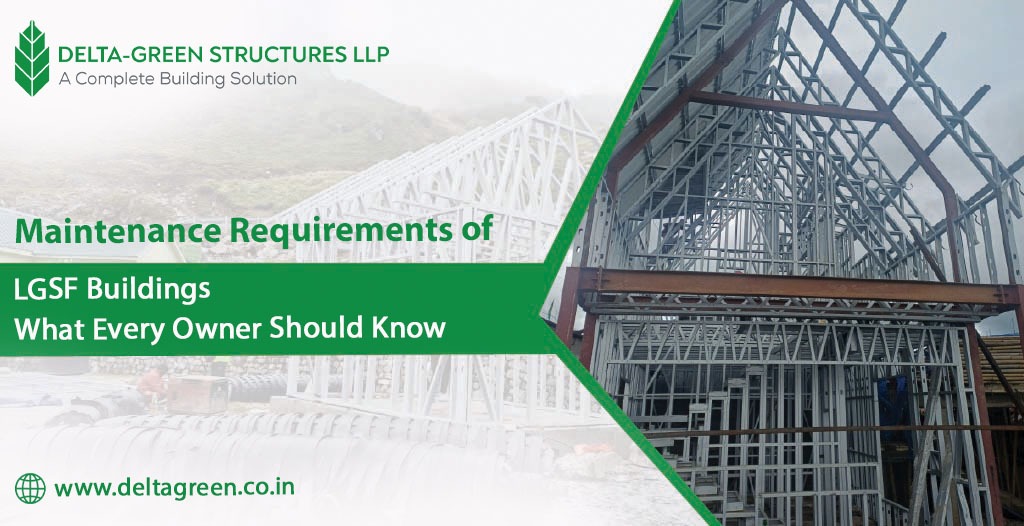
Maintenance Requirements of LGSF Buildings: What Every Owner Should Know

Maintenance Requirements of LGSF Buildings: What Every Owner Should Know A well-built LGSF building is designed to last. Smart maintenance is what keeps it performing at its best. Light Gauge Steel Framing (LGSF) has changed the way modern buildings are designed and constructed. It offers speed, precision, structural efficiency and excellent adaptability, making it particularly useful for projects where conventional construction may be slower or more demanding. But there is one misconception worth clearing up: low maintenance does not mean no maintenance. Like any building system, an LGSF structure needs periodic inspection and care. The good news is that LGSF building maintenance is generally straightforward when owners understand what to look for. From checking the condition of the protective coating to watching for moisture intrusion, a few simple practices can prevent minor issues from becoming expensive repairs. Why Does an LGSF Building Need Maintenance? LGSF structures use cold-formed, galvanized steel sections that are engineered for strength and dimensional accuracy. Galvanization provides a protective Aluminum and zinc alloy coating that helps steel resist corrosion. However, buildings are exposed to changing conditions every day. Rainwater, humidity, condensation, coastal air, construction damage, plumbing leaks and poor drainage can all affect building components over time. In areas that experience heavy rainfall or high humidity, regular inspection becomes even more important. Effective Light LGSF building maintenance is therefore less about frequent repair and more about early detection. Think of it as preventive care: inspect today so you do not have to rebuild tomorrow. 1. Keep an Eye on Moisture Water is one of the biggest enemies of building durability. Although galvanized steel has strong corrosion resistance, prolonged exposure to moisture can create problems, particularly where protective coatings have been damaged or where water remains trapped. Owners should periodically inspect: Roofs and gutters Downpipes and drainage points Window and door openings Plumbing connections Bathrooms and wet areas Exterior wall joints Areas around penetrations and service lines Any persistent dampness, leakage or water accumulation should be investigated promptly. Good drainage is not just a landscaping concern. It is an important part of long-term LGSF building maintenance. 2. Inspect the Galvanized Steel Frame The steel frame itself should be visually inspected at suitable intervals, particularly after significant weather events or alterations to the building. Look for unusual signs such as: Visible corrosion Scratches or exposed areas on protective coatings Water staining Loose or damaged connections Unusual movement or deformation Damage caused during renovation work This is where proper galvanized steel frame maintenance matters. If damage to the galvanized coating is found, it should not simply be ignored. The appropriate repair method depends on the location, extent and cause of the damage and should follow the relevant manufacturer’s and project specifications. 3. Check for Corrosion – Even If You See None One common mistake is to inspect only the areas that are easy to see. Corrosion can develop in locations where moisture or condensation is allowed to remain for long periods. Hidden cavities, poorly ventilated areas and damaged connections deserve particular attention. During Cold-formed steel (CFS) maintenance, inspectors should pay attention to joints, penetrations, fasteners and locations where dissimilar materials come into contact. The objective is simple: Find the source of moisture before corrosion becomes a structural concern. 4. Do Not Ignore Fasteners and Connections An LGSF structure is not simply a collection of steel profiles. Its performance also depends on properly designed and maintained connections. During routine inspections, accessible screws, brackets, connectors and other structural components should be checked for visible damage, corrosion or loosening. Owners should never attempt to modify structural members or connections without professional advice. A seemingly small alteration – such as drilling through a structural section, removing a member or adding a heavy load – can have consequences that are not immediately visible. That is why Steel frame structural maintenance should always distinguish between ordinary building repairs and changes that affect the structural system. 5. Maintain the Building Envelope The steel frame may be the skeleton, but the building envelope protects everything inside it. External cladding, insulation, membranes, sealants, flashing and waterproofing systems should be inspected periodically. Cracked sealants, damaged flashing or failed waterproofing can allow water to reach areas that were never intended to remain wet. A small crack around a window may look cosmetic today. Six months of repeated water intrusion can make it a much bigger problem. 6. Pay Attention After Renovations Renovation work is an often-overlooked part of LGSF building maintenance. Electrical installations, plumbing work, interior modifications, air-conditioning systems and other upgrades may involve drilling, cutting or attaching components to existing building elements. Before making structural changes, owners should consult qualified professionals familiar with LGSF construction. Keep records of all modifications. Future maintenance teams need to know what has changed, where services run and whether any structural components have been altered. 7. Create a Practical Inspection Schedule Maintenance becomes much easier when it is planned rather than reactive. A practical approach can include: Monthly: Check for visible leaks, blocked drainage, unusual dampness and obvious external damage. Every 6 months:Inspect roof drainage, sealants, openings, exterior finishes and accessible steel components. Annually: Conduct a more comprehensive building inspection, including areas that may not be checked during routine cleaning. After severe weather: Inspect the roof, drainage, external envelope and visible structural areas for damage. The exact schedule should depend on the building’s location, design, usage and environmental exposure. 8. Keep Maintenance Records A maintenance log may seem unnecessary when a building is new, but it becomes extremely valuable over time. Record: Inspection dates Areas inspected Defects identified Repairs completed Materials used Renovation or modification work Photographs of significant issues This creates a maintenance history and helps professionals identify recurring problems. It can also make future inspections considerably more efficient. Built for Precision. Maintained for Performance At Delta Green Structures, the focus extends beyond manufacturing steel frames. The company provides end-to-end building solutions using advanced LGSF technology and fully automated CNC machines, with an emphasis on precision, quality and efficient turnaround. Its experience

Maintenance Requirements of LGSF Buildings: What Every Owner Should Know Read More »

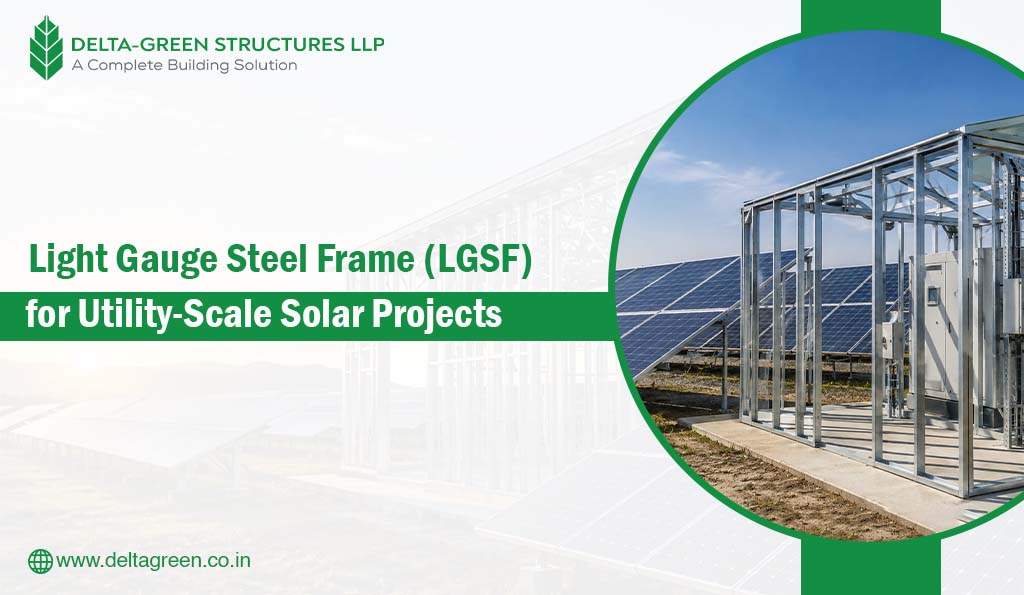
Light Gauge Steel Frame (LGSF) for Utility-Scale Solar Projects

Light Gauge Steel Frame (LGSF) for Utility-Scale Solar Projects Solar is having a moment. Every state government, every private developer, every EPC contractor is racing to lock down land and start bending metal for the next big solar farm. But here’s the plot twist nobody’s talking about enough: the panels get all the glory, while the structure holding them up quietly decides whether your project survives its 25-year lifespan or falls apart in year six. That structure is where the Light Gauge Steel Frame for Utility-Scale Solar Projects comes in – and it’s rewriting the rulebook for how ground-mounted solar systems get built. Wait, What Exactly is LGSF? Light Gauge Steel Framing (LGSF) uses cold-formed, galvanized steel sections instead of the heavier hot-rolled steel or timber traditionally used in construction. Think of it as steel that’s been engineered to be smart, not just strong – precision-rolled, lightweight, and shaped for exact structural performance. For solar, this translates into LGSF solar mounting structures that support PV panels without the bulk, cost, and installation headaches of conventional steel structures for solar farms. It’s the same technology already dominating modern building construction, now being adapted for renewable energy infrastructure at utility scale. Why Solar EPC Contractors Are Making the Switch If you’ve spent any time on-site for a utility-scale build, you already know the usual suspects that eat your timeline and budget: heavy material handling, welding delays, corrosion issues within a few monsoons, and mounting structures that just weren’t designed for the specific terrain you’re working on. Here’s what changes with LGSF: Faster installation, seriously faster: Cold-formed steel components arrive pre-engineered and ready to bolt together. No on-site welding, no curing time, no waiting on skilled labor that’s booked out for months. Crews can erect entire rows of PV mounting systems in a fraction of the time it takes with conventional structural steel. Corrosion resistance that actually holds up: Utility-scale solar farms often sit in punishing environments – coastal salt air, industrial zones, high humidity belts across India’s plains. LGSF components come galvanized and treated specifically to resist rust and degradation, which matters enormously when your investment horizon is measured in decades, not years. Lightweight structures, lower foundation costs: Less structural weight means smaller foundations, less concrete, and lower transport costs to remote solar sites. For large-scale ground-mounted solar systems spread across acres of land, that weight savings compounds fast. Long-term durability without the maintenance nightmare: Traditional steel structures for solar farms often need repainting, rust treatment, and periodic reinforcement. LGSF, done right, is built to outlast the panels it’s holding up. LGSF vs. Structural Steel: The Honest Comparison Nobody wants a sales pitch dressed up as a blog, so let’s be straight about it. Conventional hot-rolled structural steel still has its place – particularly for extremely high-load tracker systems or unusual terrain profiles. But for the vast majority of fixed-tilt utility-scale installations, LGSF wins on cost-per-watt, speed of deployment, and lifecycle maintenance. And when it comes to steel vs aluminum solar structures, aluminum might be lighter, but it comes at a premium price point and doesn’t match galvanized LGSF steel’s load-bearing capacity for large tracker arrays or high-wind zones. For utility-scale projects where every rupee per megawatt matters, LGSF typically comes out ahead. Fixed-Tilt vs. Tracker Systems: Does LGSF Work for Both? Yes – and this is where LGSF earns extra points. Whether your project is a fixed-tilt array or a single/dual-axis tracker system, cold-formed steel framing can be engineered to match the load and wind-resistance requirements of either configuration. That flexibility is a big reason solar EPC contractors are increasingly specifying LGSF at the design stage rather than treating it as an afterthought. Built for India’s Toughest Terrain This is where Delta Green Structures enters the conversation. As the only dedicated LGSF manufacturing unit in the North-East of India, Delta Green Structures has spent years solving for the exact conditions most manufacturers avoid – challenging climatic zones, difficult geographical terrain, and remote project sites where turnaround time can make or break a construction schedule. Using fully automated Pinnacle machines, Delta Green Structures produces precision-engineered LGSF components for both private developers and government-scale renewable energy infrastructure projects. It’s turnkey manufacturing built specifically for utility-scale solar, not retrofitted from another industry. What Makes a Genuinely Good LGSF Partner? Not every LGSF supplier is built for solar-scale demands. Here’s what actually matters when picking one: Certified manufacturing with consistent quality control Engineering support that understands solar loading, not just general construction Proven experience in extreme climates and difficult terrain Turnaround times that match utility-scale project deadlines Customisable packages instead of one-size-fits-all structures Delta Green Structures checks each of these boxes, offering end-to-end building solutions with flexible, consultancy-backed packages designed around the realities of large-scale solar deployment – not just the theory of it. The Bottom Line Utility-scale solar isn’t just about panels and inverters anymore. The mounting structure underneath is quietly becoming one of the most important engineering decisions in the entire project – affecting installation speed, long-term durability, maintenance costs, and ultimately, the return on investment for every megawatt installed. Light Gauge Steel Frame for Utility-Scale Solar Projects isn’t a trend. It’s the practical, cost-efficient, climate-resilient answer that ground-mounted solar systems have needed for a while. And with LGSF manufacturers like Delta Green Structures leading that shift in North-East India, solar developers finally have a partner who understands both the steel and the sun. If your next solar farm is still on the drawing board, the frame holding it up deserves just as much thought as the panels sitting on top.

Light Gauge Steel Frame (LGSF) for Utility-Scale Solar Projects Read More »