
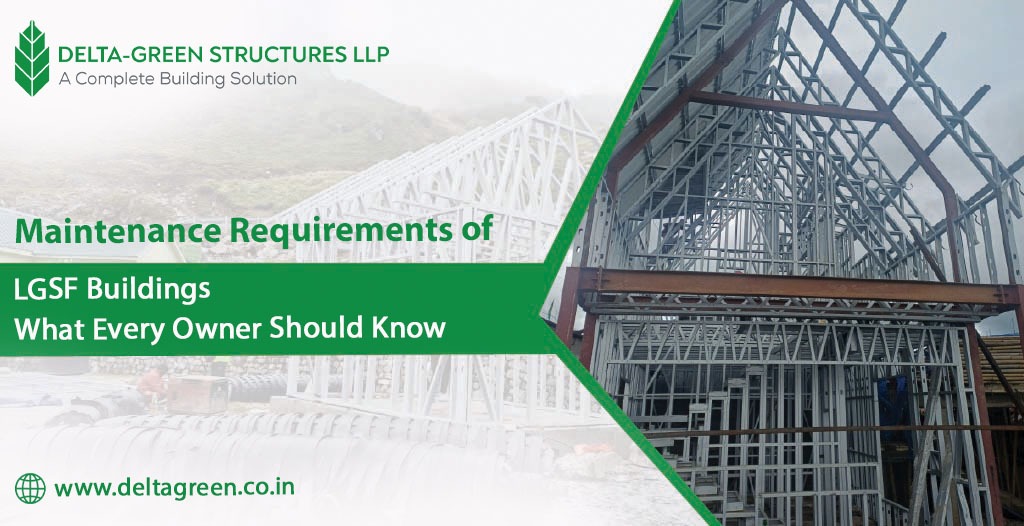
Maintenance Requirements of LGSF Buildings: What Every Owner Should Know
A well-built LGSF building is designed to last. Smart maintenance is what keeps it performing at its best.
Light Gauge Steel Framing (LGSF) has changed the way modern buildings are designed and constructed. It offers speed, precision, structural efficiency and excellent adaptability, making it particularly useful for projects where conventional construction may be slower or more demanding.
But there is one misconception worth clearing up: low maintenance does not mean no maintenance.
Like any building system, an LGSF structure needs periodic inspection and care. The good news is that LGSF building maintenance is generally straightforward when owners understand what to look for.
From checking the condition of the protective coating to watching for moisture intrusion, a few simple practices can prevent minor issues from becoming expensive repairs.
Why Does an LGSF Building Need Maintenance?
LGSF structures use cold-formed, galvanized steel sections that are engineered for strength and dimensional accuracy. Galvanization provides a protective Aluminum and zinc alloy coating that helps steel resist corrosion.
However, buildings are exposed to changing conditions every day.
Rainwater, humidity, condensation, coastal air, construction damage, plumbing leaks and poor drainage can all affect building components over time. In areas that experience heavy rainfall or high humidity, regular inspection becomes even more important.
Effective Light LGSF building maintenance is therefore less about frequent repair and more about early detection.
Think of it as preventive care: inspect today so you do not have to rebuild tomorrow.
1. Keep an Eye on Moisture
Water is one of the biggest enemies of building durability.
Although galvanized steel has strong corrosion resistance, prolonged exposure to moisture can create problems, particularly where protective coatings have been damaged or where water remains trapped.
Owners should periodically inspect:
- Roofs and gutters
- Downpipes and drainage points
- Window and door openings
- Plumbing connections
- Bathrooms and wet areas
- Exterior wall joints
- Areas around penetrations and service lines
Any persistent dampness, leakage or water accumulation should be investigated promptly.
Good drainage is not just a landscaping concern. It is an important part of long-term LGSF building maintenance.
2. Inspect the Galvanized Steel Frame
The steel frame itself should be visually inspected at suitable intervals, particularly after significant weather events or alterations to the building.
Look for unusual signs such as:
- Visible corrosion
- Scratches or exposed areas on protective coatings
- Water staining
- Loose or damaged connections
- Unusual movement or deformation
- Damage caused during renovation work
This is where proper galvanized steel frame maintenance matters.
If damage to the galvanized coating is found, it should not simply be ignored. The appropriate repair method depends on the location, extent and cause of the damage and should follow the relevant manufacturer’s and project specifications.
3. Check for Corrosion - Even If You See None
One common mistake is to inspect only the areas that are easy to see.
Corrosion can develop in locations where moisture or condensation is allowed to remain for long periods. Hidden cavities, poorly ventilated areas and damaged connections deserve particular attention.
During Cold-formed steel (CFS) maintenance, inspectors should pay attention to joints, penetrations, fasteners and locations where dissimilar materials come into contact.
The objective is simple:
Find the source of moisture before corrosion becomes a structural concern.
4. Do Not Ignore Fasteners and Connections
An LGSF structure is not simply a collection of steel profiles. Its performance also depends on properly designed and maintained connections.
During routine inspections, accessible screws, brackets, connectors and other structural components should be checked for visible damage, corrosion or loosening.
Owners should never attempt to modify structural members or connections without professional advice.
A seemingly small alteration – such as drilling through a structural section, removing a member or adding a heavy load – can have consequences that are not immediately visible.
That is why Steel frame structural maintenance should always distinguish between ordinary building repairs and changes that affect the structural system.
5. Maintain the Building Envelope
The steel frame may be the skeleton, but the building envelope protects everything inside it.
External cladding, insulation, membranes, sealants, flashing and waterproofing systems should be inspected periodically.
Cracked sealants, damaged flashing or failed waterproofing can allow water to reach areas that were never intended to remain wet.
A small crack around a window may look cosmetic today. Six months of repeated water intrusion can make it a much bigger problem.
6. Pay Attention After Renovations
Renovation work is an often-overlooked part of LGSF building maintenance.
Electrical installations, plumbing work, interior modifications, air-conditioning systems and other upgrades may involve drilling, cutting or attaching components to existing building elements.
Before making structural changes, owners should consult qualified professionals familiar with LGSF construction.
Keep records of all modifications. Future maintenance teams need to know what has changed, where services run and whether any structural components have been altered.
7. Create a Practical Inspection Schedule
Maintenance becomes much easier when it is planned rather than reactive.
A practical approach can include:
- Monthly: Check for visible leaks, blocked drainage, unusual dampness and obvious external damage.
- Every 6 months:Inspect roof drainage, sealants, openings, exterior finishes and accessible steel components.
- Annually: Conduct a more comprehensive building inspection, including areas that may not be checked during routine cleaning.
- After severe weather: Inspect the roof, drainage, external envelope and visible structural areas for damage.
The exact schedule should depend on the building’s location, design, usage and environmental exposure.
8. Keep Maintenance Records
A maintenance log may seem unnecessary when a building is new, but it becomes extremely valuable over time.
Record:
- Inspection dates
- Areas inspected
- Defects identified
- Repairs completed
- Materials used
- Renovation or modification work
- Photographs of significant issues
This creates a maintenance history and helps professionals identify recurring problems.
It can also make future inspections considerably more efficient.
Built for Precision. Maintained for Performance
At Delta Green Structures, the focus extends beyond manufacturing steel frames.
The company provides end-to-end building solutions using advanced LGSF technology and fully automated CNC machines, with an emphasis on precision, quality and efficient turnaround. Its experience across challenging climatic conditions and geographical terrains also highlights an important reality of modern construction: the right building system must be paired with the right approach to maintenance.
As the only manufacturing unit of its kind in North-East India offering turnkey construction services, Delta Green Structures combines manufacturing capability with practical project expertise.
The Bottom Line
LGSF buildings are not maintenance-free buildings – they are maintenance-efficient buildings.
Routine inspections, moisture control, corrosion prevention, proper drainage, careful renovation practices and professional structural checks can significantly contribute to long-term performance.
The most important rule is simple:
Don’t wait for a visible problem to become an expensive one.
With sensible LGSF building maintenance, owners can protect the building envelope, preserve the galvanized steel frame and identify potential issues before they become major concerns.
For owners, developers and project planners, maintenance should not be considered an afterthought. It should be part of the building’s lifecycle from the very beginning.
Build with precision. Maintain awareness. Perform for years.
With advanced manufacturing, turnkey capabilities and a commitment to quality, Delta Green Structures is helping shape a smarter future for modern construction in North-East India.