
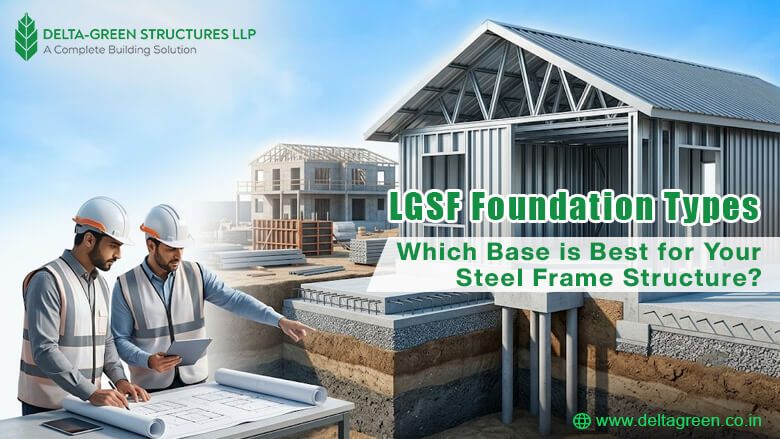
LGSF Foundation Types: Which Base is Best for Your Steel Frame Structure?
A strong structure doesn’t begin with walls – it begins beneath them.
When it comes to Light Gauge Steel Framing, the real hero is the foundation you don’t see.
Choosing the right LGSF Foundation Types is not just a technical decision – it directly impacts durability, safety, cost, and long-term performance. Whether you’re building a modern home, a commercial unit, or a large-scale project, understanding the right base can make all the difference.
Let’s break it down in a way that actually helps you decide – not confuse you.
Why Foundation Matters More in LGSF Construction
Unlike traditional RCC structures, LGSF buildings are lightweight yet incredibly strong. That means the foundation doesn’t need to carry excessive load – but it must be precise.
A well-planned LGSF building foundation design ensures:
- Faster construction timelines
- Better load distribution
- Resistance to soil movement
- Long-term structural stability
At Delta Green Structures, every project starts with a carefully engineered base because even the most advanced steel frame is only as strong as what supports it.
Understanding the Core: LGSF Foundation Types
Not all land is created equal – and neither are foundations.
Here are the most effective Foundation types for steel frame house construction:
1. Strip Footing -The Most Practical Choice
Simple. Efficient. Cost-effective.
The strip footing for LGSF houses is one of the most commonly used foundation systems, especially for residential projects.
Best suited for:
- Stable soil conditions
- Low to medium-rise structures
- Budget-conscious builds
Why it works:
It runs continuously under load-bearing walls, distributing weight evenly. Since LGSF structures are lighter, strip footings often require less excavation and material.
What makes it smart:
- Lower construction cost
- Faster installation
- Minimal complexity
For most homes, this is the go-to solution – and for good reason.
2. Raft (Mat) Foundation - When Stability is Key
Think of it as a floating base for your entire structure.
A raft foundation spreads the load across the entire building footprint, making it ideal for weaker or uneven soil.
Best suited for:
- Soft or loose soil
- Areas with high water tables
- Projects requiring uniform load distribution
Why it works:
Instead of concentrating weight in specific areas, it distributes it across a large slab, reducing settlement risks.
Advantages:
- Prevents differential settlement
- Ideal for challenging terrains
- Strong base for larger LGSF structures
At Delta Green Structures, raft foundations are often recommended for projects in unpredictable soil conditions, especially in regions with varying terrain.
3. Isolated Footing – Precision Where Needed
Minimalist, yet effective.
Isolated footings are placed under individual columns, making them suitable for structures with point loads rather than continuous walls.
Best suited for:
- Small commercial buildings
- Modular structures
- Projects with defined column layouts
Why it works:
It supports specific load points without over-engineering the entire foundation.
Benefits:
- Material-efficient
- Cost-effective for smaller builds
- Easy to design and execute
This is a great option when your LGSF structural base design focuses on flexibility and modularity.
4. Pile Foundation - Built for Challenging Ground
When the surface can’t be trusted, go deeper.
A deep foundation for steel frame construction like pile foundation transfers the load to deeper, stronger soil layers.
Best suited for:
- Weak or marshy soil
- Flood-prone areas
- Heavy structural loads
Why it works:
Steel or concrete piles are driven deep into the ground, ensuring stability even when the upper soil layers are unreliable.
Key advantages:
- Exceptional load-bearing capacity
- Ideal for extreme conditions
- Long-term structural reliability
For high-risk terrains, this foundation type ensures peace of mind.
5. Slab-on-Grade – Fast, Clean, Modern
Speed meets simplicity.
This is a single-layer concrete slab poured directly on the ground, commonly used in modern prefab and LGSF homes.
Best suited for:
- Flat terrain
- Residential and low-rise buildings
- Fast-track construction projects
Why it works:
It combines foundation and floor into one system, reducing construction time significantly.
Benefits:
- Faster execution
- Reduced labor cost
- Clean and minimal design
This approach aligns perfectly with the efficiency-driven philosophy of LGSF construction.
How to Choose the Right LGSF Foundation Types
Choosing between different light gauge steel frame foundation types isn’t about preference – it’s about precision.
Here’s what actually matters:
Soil Condition: Is your soil stable, loose, or waterlogged? This single factor can eliminate half your options.
Load Requirements: Even lightweight structures need accurate load calculations. Your foundation must match your design.
Budget Constraints: Some foundations save upfront costs, while others save long-term maintenance.
Project Timeline: Need speed? Go for slab or strip footing. Need durability in tough conditions? Consider a raft or pile.
Environmental Factors: Rainfall, seismic activity, and terrain all influence the final decision.
At Delta Green Structures, these factors are analyzed in detail before recommending the most suitable LGSF Foundation Types, ensuring every project stands strong from the ground up.
What Most Builders Won’t Tell You
Here’s something often overlooked:
Overdesigning your foundation can be just as costly as underdesigning it.
Many projects waste money on unnecessarily heavy foundations, ignoring the lightweight advantage of LGSF. A smart LGSF building foundation design balances strength, cost, and efficiency.
Also, integration between foundation and steel framing is critical. Misalignment, even by a few millimeters, can affect the entire structure. That’s why precision engineering and automated manufacturing play a huge role.
The Delta Green Structures Advantage
What sets Delta Green Structures apart isn’t just technology – it’s execution.
- Fully automated Pinnacle machines for precision.
- Expertise in diverse terrains and climates.
- Turnkey solutions from foundation to finish.
- Tailored consultation for every project.
Being the leading manufacturing unit in North-East India offering such integrated services, the focus is always on building smarter – not just faster.
Final Thoughts: Build Smart from the Ground Up
Choosing the right LGSF Foundation Types is not just a technical step – it’s the foundation of your entire project’s success. From soil conditions and load requirements to budget and environmental factors, every decision plays a role in ensuring long-term durability and performance. A well-planned base not only enhances the strength of your structure but also optimizes construction speed and cost efficiency.
Whether you opt for a strip footing, raft, pile, or slab-on-grade, the key lies in selecting a solution that aligns perfectly with your project needs. With the right expertise and precision-driven approach, as offered by Delta Green Structures, you can ensure that your steel frame structure stands strong, stable, and future-ready for years to come.
Because in LGSF construction, the real strength lies where no one looks.