Delta Green

LGSF Construction

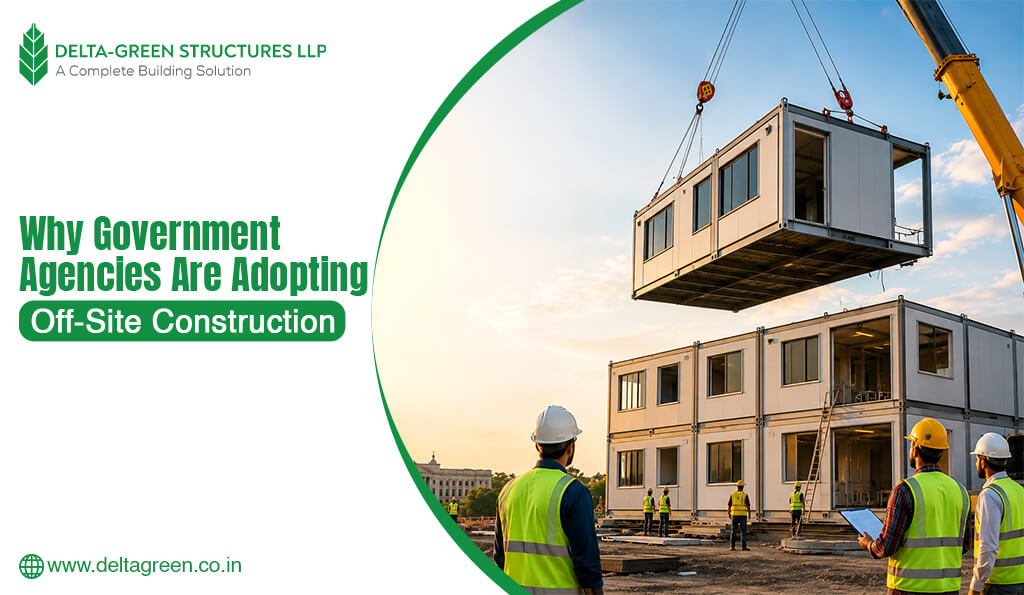
Why Government Agencies Are Adopting Off-Site Construction

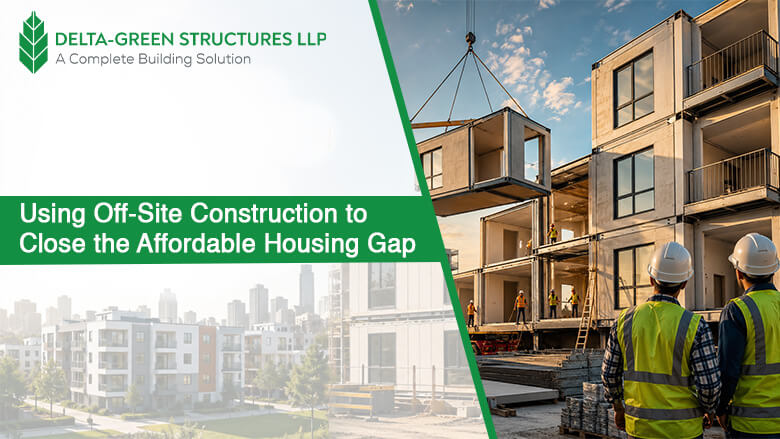
Why Government Agencies Are Adopting Off-Site Construction The Future of Public Infrastructure Is Being Built… Off-Site The way public infrastructure is designed and delivered is undergoing a significant transformation. Across India and around the world, government agencies are increasingly adopting off-site construction and other Modern Methods of Construction (MMC) to meet the growing demand for high-quality infrastructure within tighter timelines and budgets. With rapid urbanisation, expanding public infrastructure requirements, and increasing pressure to optimise public expenditure, conventional construction methods often struggle with labour shortages, weather-related delays, material wastage, and schedule overruns. As a result, governments are turning to industrialised construction systems that offer greater efficiency, consistency, and predictability. Off-site construction addresses these challenges by manufacturing structural components in a controlled factory environment before transporting them to the project site for assembly. This approach enables faster project execution, improved quality control, enhanced worker safety, and reduced environmental impact compared to conventional construction methods. Today, off-site construction is no longer considered an emerging trend-it is becoming an integral part of government construction projects, public infrastructure development, institutional buildings, and Smart City initiatives. Why Governments Are Moving Toward Modern Methods of Construction (MMC) Government departments are expected to deliver infrastructure that is durable, cost-effective, sustainable, and completed within strict project schedules. However, conventional construction methods are often affected by unpredictable site conditions, labour availability, weather disruptions, and inconsistent workmanship. Modern Methods of Construction (MMC), including Light Gauge Steel Frame (LGSF) systems, modular construction, prefabricated building systems, and other industrialised construction techniques, provide a practical solution to these challenges. By transferring a significant portion of the construction process to a controlled manufacturing facility, these systems ensure precision engineering, stringent quality control, and faster project execution. Factory-manufactured components are produced using automated processes and assembled on-site with minimal disruption, resulting in improved construction quality and greater schedule certainty. Companies such as Delta Green Structures are contributing to this transformation by manufacturing precision-engineered LGSF building systems using automated production technology. These solutions enable government agencies to deliver infrastructure more efficiently while maintaining high standards of quality, safety, and durability. Key Benefits Driving Government Adoption 1. Faster Project Delivery Without Compromising Quality One of the most significant advantages of off-site construction is its ability to reduce project timelines. Since component manufacturing and site development take place simultaneously, projects can be completed considerably faster than conventional construction methods. For government agencies, this enables the timely delivery of schools, hospitals, staff housing, healthcare centres, and other critical public infrastructure. 2. Cost-Effective Construction at Scale Cost efficiency is a key priority for public infrastructure projects. Off-site construction reduces material wastage, minimises labour dependency, improves productivity, and lowers the risk of costly project delays. These efficiencies contribute to better lifecycle value and more effective utilisation of public funds, particularly for large-scale and repetitive building programmes. 3. Sustainability & Green Building Advantage Sustainability has become a fundamental objective in modern infrastructure development. Factory-based manufacturing optimises material utilisation, significantly reduces construction waste, lowers site disturbances, and supports environmentally responsible construction practices. Combined with energy-efficient building design, off-site construction contributes to the development of greener and more sustainable public infrastructure. 4. High-Quality Buildings with Precision In controlled environments, materials are engineered with strict quality checks. This ensures High-Quality Buildings with better durability, accuracy, and performance compared to unpredictable traditional on-site construction. 5. Climate-Resilient Infrastructure From floods to earthquakes, infrastructure must withstand extreme conditions. Climate-Resilient Infrastructure built using modular systems ensures better structural integrity and long-term reliability. Off-Site vs. Traditional Construction: The Real Difference Off-site construction represents a significant evolution in the way buildings and infrastructure are planned, manufactured, and delivered. Unlike conventional construction, where most activities are carried out sequentially at the project site, off-site construction transfers a substantial portion of the work to a controlled manufacturing environment. Traditional construction methods are often affected by labour shortages, weather disruptions, material handling inefficiencies, and varying site conditions, all of which can impact project schedules, quality, and overall costs. In contrast, off-site construction enables structural components to be manufactured while site preparation progresses simultaneously. This parallel workflow significantly reduces construction time, improves quality control, minimises material wastage, and enhances project predictability. Modern off-site construction systems, including Light Gauge Steel Frame (LGSF) technology, offer precision-engineered components that are manufactured to stringent quality standards before being transported to site for rapid assembly. As a result, these systems are particularly well suited for government infrastructure projects that require speed, consistency, and scalability. As infrastructure demands continue to grow, the construction industry is steadily transitioning from labour-intensive site-based practices to manufacturing-led construction processes that deliver greater efficiency, quality, and reliability. Smart Cities & Public Infrastructure: The Big Push India’s rapid urbanisation and expanding infrastructure requirements have accelerated the need for construction methods that are faster, more sustainable, and capable of delivering consistent quality at scale. Initiatives such as the Smart Cities Mission, affordable housing programmes, institutional development, and urban infrastructure projects demand solutions that can be executed efficiently without compromising quality. Off-site construction is well positioned to address these requirements. From educational institutions and healthcare facilities to government offices, staff accommodation, public housing, and utility buildings, industrialised construction methods enable faster project delivery while reducing disruption to surrounding communities. By combining factory-based manufacturing with efficient on-site assembly, Modern Methods of Construction (MMC) improve productivity, minimise construction waste, and provide greater certainty in project delivery. These advantages make off-site construction an increasingly preferred approach for public infrastructure development across India. Where Delta Green Structures Fits Into This Transformation In this evolving ecosystem, Delta Green Structures is emerging as a strong enabler of industrialized construction in North-East India. With advanced LGSF technology, automated Pinnacle machines, and turnkey construction capabilities, the company is redefining how infrastructure is manufactured and delivered. Their approach to Off-Site Construction ensures precision-driven output, faster turnaround times, and scalable solutions for both private and government projects. What makes them stand out is their commitment to quality, climate adaptability, and end-to-end execution-making them highly relevant for modern Government Construction Projects and infrastructure needs in challenging terrains. By integrating innovation

Why Government Agencies Are Adopting Off-Site Construction Read More »

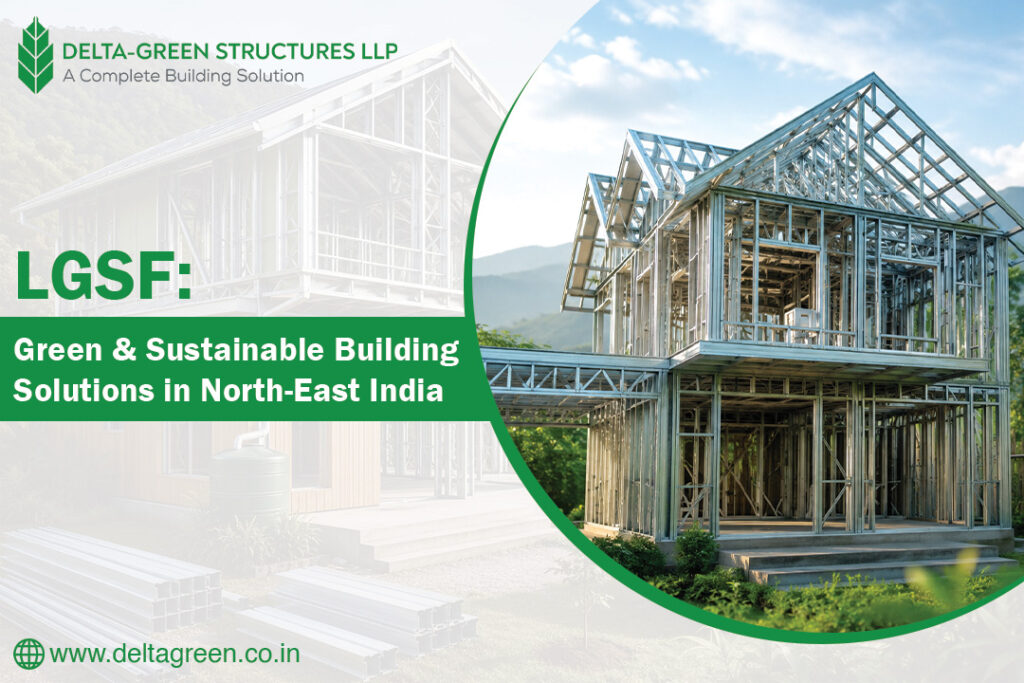
LGSF: Green & Sustainable Building Solutions in North-East India

LGSF: Green & Sustainable Building Solutions in North-East India  Steel that speaks. Structures that last. The mountains tested it. The earthquakes challenged it. LGSF passed every time.  Construction in North-East India has always come with unique challenges. Difficult terrain. Extreme weather. High seismic activity. Frequent floods and landslides. These are the conditions where traditional building techniques fall short, due to their high expenses, lengthy construction times, and limited durability. There is a better way to construct. It is known as Light Gauge Steel Framing -and it is changing the way North-East India builds. Why LGSF is a Sustainable Building Solution Galvalume coating, combined with 55% Aluminium, 43.4% Zinc, 1.6% Silicon are one of the most widely used recycled materials in the building lifecycle. It reduces the environmental impact throughout the lifecycle. It has certain unique features such as : Less construction waste Faster project completion Energy-efficient structures Recyclable steel materials Lower maintenance costs Reduced environmental impact LGSF buildings are designed to last longer while consuming fewer natural resources compared to traditional construction methods. Why North-East India Needs LGSF Right Now? If the ground is shaking, your building should not. North-East India is one of the most seismically active regions of India. The area has undulating topography, unreliable weather, and high costs and long delivery times for bringing heavy construction material. The conventional RCC construction method is weighty. It is a heavy material that uses lots of cement, sand and water. It takes months or years to do. A heavy RCC structure is also at high risk in an earthquake-prone area. LGSF’s lightweight steel structural system provides complete solutions to all these problems. Green Building Benefits of LGSF in North-East India LGSF uses recycled material, Galvalume coating so it leaves a far smaller footprint on the region’s fragile ecosystems. It needs no river sand, no curing water, and generates almost zero construction waste on site. 1. Lower Environmental Impact Construction causes nearly 40% of global carbon emissions. LGSF helps because: No river sand mining is needed (unlike concrete) No water is required for curing Minimal waste is generated on-site Steel is the world’s most recycled material This protects rivers, forests, and biodiversity -all of which are critical in this region. 2. Earthquake Resilience The 1950 Assam earthquake measured 8.6 on the Richter scale -one of the strongest ever recorded. The threat has not gone away. LGSF buildings handle earthquakes better because: Steel absorbs and releases seismic energy safely Lighter buildings generate less force during a quake All joints are engineered and tested -no guesswork This is not a minor advantage. It is a life-safety issue for millions of people across the region. 3. Flood and Moisture Resistance Mawsynram in Meghalaya is considered to be the wettest place on Earth. Much of the North-East gets torrential rainfall every year. LGSF handles this well: Steel does not rot, warp, or swell Structures can be elevated easily above flood levels The right cladding keeps moisture out completelyNo mould or fungal growth in the wall cavity 4. Faster Construction Speed matters -especially when infrastructure is urgently needed. A typical LGSF building is completed in 4 to 6 months An equivalent RCC structure takes 18 to 24 months Faster builds mean less site disruption, less noise, and lower costs For schools, hospitals, and homes, this difference is enormous. 5. Energy Efficiency LGSF works well with insulation systems like rock wool, glass wool, or EPS panels. In the cold highlands of Nagaland, Arunachal, and Mizoram, it keeps the heat in In the humid lowlands of Assam and Tripura, it keeps heat out This reduces electricity bills and energy consumption year-round Well-designed LGSF buildings can qualify for GRIHA and IGBC green building ratings in India. Where Is LGSF Being Used in the North-East? Homes and Housing For affordable homes in remote hilly and tribal areas Compatible with PMAY (Pradhan Mantri Awas Yojana) It can be manufactured in Siliguri and assembled locally Schools Quick to build, safe in earthquakes Designed for natural ventilation and daylight Lower running costs for energy Hospitals and Health Centres Dust-free construction is ideal for medical settings Fast delivery is critical in underserved areas Hygienic and easy to maintain Government Buildings Several state governments are already exploring LGSF Compatible with Smart Cities Mission projects Suitable for areas with poor road connectivity Eco-Lodges and Tourism Low site impact -ideal near forests and wildlife zones Can be clad in bamboo, timber, or stone for a natural look Removable and relocatable if needed Respecting the Region’s Cultural Identity North-East India has a rich tradition of vernacular architecture. Assamese Chang Ghars (stilt houses) Naga Morung structures Mizo Zawlbuk community halls Arunachali bamboo homes LGSF does not replace these traditions. It complements them. LGSF frames can be clad in bamboo, local stone, timber, or traditional-inspired finishes. The result is a building that looks rooted in the region -but is far safer and more durable. LGSF and Sustainability -Building for the Future Green is not just a colour. With LGSF, it is a commitment. Governments, institutions, and private builders are all under increasing pressure to build greener. The LGSF construction system is inherently sustainable: Steel can be recycled and reused at the end of a building’s life Factory manufacturing reduces on-site pollution and waste Lighter structures require less concrete in foundations -reducing cement consumption Energy-efficient wall systems can be integrated into the steel frame Faster construction means lower energy use over the build period For North-East India -a region of extraordinary natural beauty and ecological sensitivity -building sustainably is not just good practice. It is a responsibility. What makes Delta Green Structures a Sustainable Building Solution in North-East India? Delta Green Structures LLP provides sustainable building solutions in North-East India. Based in Siliguri, West Bengal, they serve clients across West Bengal, Assam, Sikkim, Tripura, Meghalaya, Mizoram, Manipur, Arunachal Pradesh, Bihar, and even Bhutan. End-to-End Service: They handle everything from design, manufacturing and all the way to final handover, maintaining sustainable practices. One team. Zero confusion. Sustainable practices: They believe in eco-friendly

LGSF: Green & Sustainable Building Solutions in North-East India Read More »

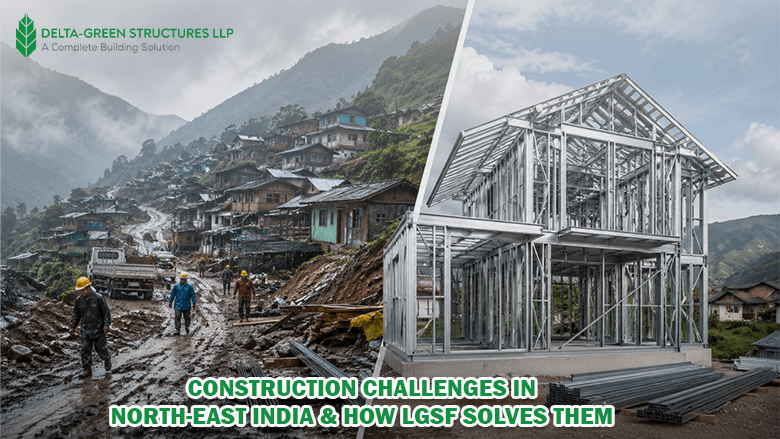
Construction Challenges in North-East India & How LGSF Solves Them

Construction Challenges in North-East India & How LGSF Solves Them Building in the North-East Was Never Easy, Until Now. Heavy rainfall, Landslide-prone roads, Earthquake-sensitive zones, Remote locations, Transportation delays, Short working seasons. Construction in North-East India has always been a different game altogether. While traditional brick-and-cement structures struggle with climate, terrain, and logistics, a smarter construction revolution is quietly changing the landscape – LGSF Construction in North-East India. And honestly! It’s not just a “new method” anymore. It’s becoming the future of fast, durable, and climate-smart infrastructure across the region. This is where companies like Delta Green Structures are stepping in with advanced technology, faster execution, and practical building solutions designed specifically for the North-East. Why Construction in North-East India Is So Challenging The North-East is one of the most beautiful regions in India but for builders, it comes with serious construction obstacles. 1. Difficult Terrain & Transportation Issues Transporting heavy materials through hilly roads and remote areas is expensive and time-consuming. In many locations, large construction equipment cannot even reach the site properly. Traditional construction depends heavily on: Sand Cement Bricks Large labor teams Continuous material supply One road blockage due to landslides or rain can delay an entire project for weeks. That’s one of the biggest reasons why Steel frame construction North East India is gaining attention. LGSF structures use lightweight steel components manufactured with precision and transported easily to project sites. Less weight. Less hassle. Faster assembly. Simple. 2. The Rain Problem Nobody Talks About North-East India receives some of the heaviest rainfall in the country. And rain affects construction more than people realize. Traditional construction often faces: Water seepage Damp walls Slow curing time Cracks due to moisture damage Long project delays during monsoon This is where Light Gauge Steel Frame construction North East India changes the entire approach. LGSF structures are manufactured off-site using automated machines, which mean: Minimal on-site construction dependency Faster installation Reduced weather impact Better structural consistency Even during challenging weather conditions, project timelines remain far more manageable compared to conventional methods. 3. Earthquake Zones Need Smarter Structures Here’s a fact many overlook: Most North-Eastern states fall under high seismic zones. That means buildings here need flexibility, reduced dead load, and better structural performance during earthquakes. Traditional heavy concrete structures increase seismic load. But LGSF Construction in North-East India offers a lightweight alternative that performs significantly better in seismic conditions. Why? Because steel framing systems: Reduce overall structural weight Distribute load efficiently Offer better flexibility during vibrations Minimize structural stress This makes LGSF one of the most practical choices for modern infrastructure in the region. And this isn’t just theory anymore. It’s already being implemented in residential, institutional, and commercial projects across challenging terrains. Speed Matters More Than Ever In the North-East, construction time isn’t just about convenience. It affects: Labor cost Material storage Weather exposure Government deadlines Operational expenses Traditional projects often stretch far beyond expected timelines. But the LGSF building system North East India approach changes the pace completely. Since most structural components are pre-engineered and precision-manufactured, installation becomes dramatically faster. Projects that normally take many months can often be completed in a much shorter timeframe. That’s a massive advantage for: Government infrastructure Schools Hospitals Tourism projects Site offices Resorts Residential housing Fast construction is no longer a luxury. In the North-East, it’s becoming a necessity. Why LGSF Is Perfect for Remote & High-Altitude Areas One of the biggest strengths of LGSF housing projects in North East India is adaptability. Whether it’s: Mountain regions Rural areas Forest-side developments Border infrastructure Tourism properties LGSF systems work efficiently where conventional construction becomes difficult. The lightweight steel sections reduce transportation challenges, while prefabrication reduces dependency on large local labor availability. That’s exactly why many modern developers are now exploring LGSF for: Eco resorts Homestays Staff quarters Educational buildings Commercial spaces And the best part? The design flexibility is surprisingly high. Modern LGSF structures don’t look temporary or industrial anymore. They can be sleek, premium, aesthetic, and highly customized. Delta Green Structures LLP: Bringing Advanced LGSF Technology to the North-East When discussing modern LGSF Construction in North-East India, Delta Green Structures stands out as one of the few companies bringing advanced manufacturing capabilities directly into the region. Being the only manufacturing unit in North-East India equipped with fully automated Pinnacle machines gives them a major edge in precision, consistency, and faster project delivery. But what makes Delta Green Structures different isn’t just machinery. It’s their practical understanding of North-Eastern geography and construction challenges. From difficult climatic conditions to remote project execution, the company focuses on delivering: Turnkey construction solutions Customizable packages Consultancy support Precision engineering Faster turnaround time And in a region where delays are common, execution quality matters a lot. Sustainability Is Becoming a Bigger Priority Construction today isn’t only about building fast. People are now asking:  “How sustainable is the structure?” Traditional construction creates significant material wastage and environmental impact. LGSF systems help reduce: Material waste Water usage On-site pollution Construction debris That makes Steel frame construction North East India a smarter option for future-ready infrastructure. Especially in ecologically sensitive regions like the North-East, sustainable building methods matter more than ever. The Future of Construction in North-East India Is Already Here The construction industry in the North-East is changing rapidly. People now want: Faster project completion Better durability Earthquake-resistant structures Lower maintenance Modern design flexibility Sustainable infrastructure And traditional construction methods are struggling to keep up with these expectations. That’s why LGSF Construction in North-East India is no longer just an alternative – it’s becoming the preferred solution for modern development. With advanced manufacturing, precision technology, and expertise in complex terrains, Delta Green Structures is helping shape this transformation across the region. Because in places where nature tests every structure, smarter construction is no longer optional. It’s essential.

Construction Challenges in North-East India & How LGSF Solves Them Read More »

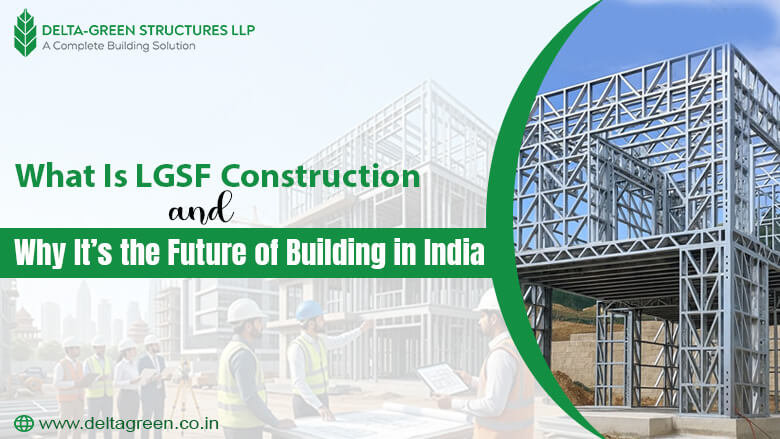
What Is LGSF Construction and Why It’s the Future of Building in India

What Is LGSF Construction and Why It’s the Future of Building in India Stronger. Smarter. Faster. The future of construction is already here. India’s construction landscape is not just evolving – it’s transforming at an unprecedented pace. With rapid urbanization, increasing population density, and the growing demand for faster project delivery, traditional construction methods are starting to show their limitations. Add to that the rising focus on sustainability, and it becomes clear: the industry needs a smarter solution. This is where LGSF steps in – not as an alternative, but as a revolution. If you’ve been wondering what LGSF construction is, this guide takes you beyond the basics. It explains not just how it works, but why it’s becoming the backbone of modern infrastructure and the future of building in India. What Is LGSF Construction? Let’s get straight to it – what is LGSF construction? LGSF, or light gauge steel frame construction, is a cutting-edge building method that uses cold-formed steel sections to create structural frameworks. These steel components are precisely engineered using advanced design software and manufactured through automated systems before being assembled on-site. Unlike traditional brick-and-cement construction, the LGSF construction method is based on accuracy, speed, and efficiency. Every component is pre-designed and pre-cut, which eliminates guesswork and significantly reduces errors during execution. The result?  A building system that is stronger, faster, and far more reliable. How LGSF Building Technology Works What makes LGSF building technology truly impressive is its precision-driven approach. Here’s a closer look at the process: Design & Engineering: Every structure is digitally modeled with exact measurements and load calculations. Automated Manufacturing: Steel sections are produced using advanced machines like Pinnacle systems. Prefabrication: Structural components are prepared in controlled environments. On-Site Assembly: Pre-engineered parts are assembled quickly with minimal labor. This workflow ensures not just speed, but consistent quality across every project – something traditional construction often struggles to maintain. Why LGSF is Gaining Momentum in India India is witnessing a construction shift – and LGSF is at the center of it. 1. Speed That Matches Modern Demand In today’s fast-moving world, delays are costly. LGSF structures can be completed up to 60% faster, making them ideal for both residential and commercial projects. 2. Strength Without the Bulk Despite being lightweight, LGSF offers exceptional structural strength. This makes it suitable for everything from individual homes to multi-storey commercial buildings. 3. Built for Indian Conditions India’s geography is diverse – and demanding. Whether it’s heavy rainfall, humidity, or seismic activity, LGSF structures are designed to withstand it all. They are resistant to termites, moisture, and even fire when properly treated. 4. Sustainable and Future-Ready With increasing focus on eco-friendly steel construction, LGSF stands out as a responsible choice: Reduced construction waste Recyclable steel materials Lower environmental impact It’s not just about building faster – it’s about building smarter. The Rise of Steel Frame House Construction Modern homeowners are no longer satisfied with conventional solutions. They want homes that are durable, efficient, and future-ready. That’s where steel frame house construction comes in. With LGSF, homeowners benefit from: Better insulation and energy efficiency Flexible and customizable layouts Long-lasting structural performance Minimal maintenance over time This approach transforms houses into engineered living spaces designed for longevity. Prefabricated Steel Structure System: A Game-Changer One of the biggest advantages of LGSF is its prefabricated steel structure system. Instead of relying entirely on on-site construction, most components are manufactured in controlled factory environments. This offers several key benefits: Superior quality control Faster installation timelines Reduced dependency on weather conditions Lower labor costs and fewer delays In a country like India, where construction delays are common, this system is nothing short of revolutionary. Applications: More Than Just Residential Projects LGSF is not limited to homes – it’s incredibly versatile. Today, it is widely used in: Commercial buildings Educational institutions Hospitals and healthcare centers Resorts and hospitality projects Industrial and warehouse structures Government infrastructure developments This adaptability makes LGSF one of the most scalable and future-ready construction solutions available today. Why Delta Green Structures is Leading the Change In the North-East region of India, Delta Green Structures is playing a key role in driving the adoption of LGSF. As the only manufacturing unit in the region equipped with advanced LGSF technology and fully automated Pinnacle machines, Delta Green Structures delivers complete end-to-end building solutions. What sets them apart? Proven expertise in private and government projects Capability to handle complex terrains and climatic challenges Flexible and customizable construction packages Strong commitment to precision and fast project delivery Their approach goes beyond construction – they focus on delivering high-performance structures built for the future. With every project, Delta Green Structures is raising the standard of modern construction in India. LGSF vs Traditional Construction: A Clear Advantage When compared side by side, the difference is striking: Factor Traditional Construction LGSF Construction Time Slow Fast Accuracy Inconsistent High precision Waste High Minimal Durability Moderate High Sustainability Limited Eco-friendly The shift isn’t just logical – it’s inevitable. The Future of Building in India with LGSF India is entering a new era of infrastructure development. With smart cities, urban expansion, and increasing demand for affordable housing, the need for faster, stronger, and more sustainable construction methods is growing rapidly. This is where LGSF stands out. Government bodies are exploring prefabricated solutions Developers are prioritizing cost-efficiency and speed Homeowners are choosing durability and innovation over tradition And at the heart of this transformation lies LGSF construction. Build the Future. Faster. Smarter. Stronger – with Delta Green Structures So, what is LGSF construction? It’s more than a building method.It’s a shift in mindset. A smarter, faster, and more sustainable way to create the spaces we live and work in. As India moves forward, embracing innovation and efficiency, companies like Delta Green Structures are ensuring that this transition is not just smooth – but impactful. Because the future isn’t built the old way. It’s engineered – with precision, purpose, and progress.

What Is LGSF Construction and Why It’s the Future of Building in India Read More »

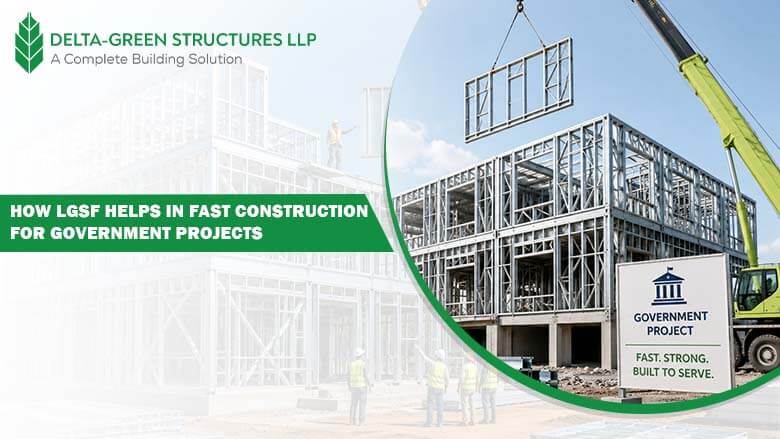
How LGSF Helps in Fast Construction for Government Projects

How LGSF Helps in Fast Construction for Government Projects When deadlines don’t move and accountability is non-negotiable – here’s why the Light Gauge Steel Frame is changing how India builds. Government construction projects in India have had a complicated relationship with time. Delayed hospitals, half-built schools, stalled housing schemes. The reasons are many, but one thing is now clear: the problem was never entirely about intent. A big part of it was always about method. That’s where LGSF for Government Construction Projects is quietly rewriting the rules. Light Gauge Steel Frame technology is not a buzzword – it’s a proven, precision-engineered system that’s already building faster, smarter, and cleaner across sectors worldwide. And in India’s North-East, Delta Green Structures is leading that charge. First – What exactly is LGSF? LGSF stands for Light Gauge Steel Frame – a cold-formed steel structural system where thin, high-strength steel sections are precisely manufactured off-site and assembled on location. Think of it as Lego for serious buildings, except each piece is engineered to the millimeter. Unlike conventional RCC (Reinforced Cement Concrete) construction that is heavily dependent on on-site labor, weather conditions, and curing times, LGSF components arrive at the site ready to install. The result? Construction timelines that are 40-60% shorter than traditional methods – without compromising structural integrity. 40–60% Faster than RCC construction 30% Lighter structural load 100% Factory-precision fabrication 50+ Years design lifespan Why Government Projects Specifically Need LGSF Government construction projects carry a weight that private builds simply don’t – public money, public scrutiny, and public need. A delayed school means children learn under a temporary shed. A stalled health centre means a community goes without. Speed here is not a luxury. It’s a civic obligation. Here’s where government construction using LGSF makes a fundamental difference: Off-site Manufacturing: Components fabricated in parallel with site prep – no waiting for one stage to finish before the next begins. Weather-Independent: No curing time. No monsoon halts. Assembly continues regardless of site conditions. Modular & Scalable: Schools, hospitals, housing – modular steel construction for the government adapts to any footprint, fast. Accountable Quality: Factory precision means every component is traceable, measurable, and consistent – no guesswork. LGSF for institutional buildings is not just about going fast – it’s about arriving at a quality outcome that is auditable, repeatable, and worth every rupee of public spending. The North-East Advantage: Where LGSF Proves Its Real Worth Most of the LGSF conversation in India happens in metro corridors. But the real test? Challenging terrain. Seismic zones. Remote hillside locations. Extreme rainfall. This is exactly where Delta Green Structures has built its expertise. As the leading LGSF manufacturing unit in the North-East of India, Delta Green Structures is uniquely positioned to serve government projects across challenging climatic conditions and geographical terrains where conventional RCC construction struggles – logistically, structurally, and financially. The region sees heavy monsoon, unstable soil in many zones, and connectivity challenges that make transporting bulk construction material both expensive and time-consuming. Light gauge steel frame government buildings built using LGSF solve this precisely – components are lighter, easier to transport even to remote sites, and require minimal heavy machinery during assembly. What takes months in concrete can take weeks in steel – without losing a millimetre of safety or a rupee of value LGSF for Institutional Buildings: Real Use Cases The scope of LGSF for institutional buildings spans far wider than most people realize. Here are the government project types where LGSF is already making impact: Schools and anganwadis – rapid construction meets strict safety and load standards. Primary Health Centres (PHCs) – clean, fast, functional; built without weeks of wet work. Government staff quarters and housing schemes – prefabricated steel structures for government cut project durations dramatically. Disaster-relief and temporary admin structures – deployed quickly and built to last. Border area infrastructure – lightweight components, strategic assembly, minimal logistics chain. Water treatment and utility buildings – corrosion-resistant steel handles humid and wet-zone conditions well. Sustainability: The Argument That Often Gets Missed Government buildings have a 50–year horizon. Any serious decision-maker has to ask – what is this costing not just today, but over a lifetime? Sustainable government construction in LGSF makes the case quietly but powerfully. Steel is among the most recyclable materials on earth with recycling rates exceeding 85% globally. LGSF construction generates significantly less construction waste than concrete. The thermal properties of LGSF walls, combined with insulation, reduce long-term energy consumption in buildings. For a government investing in green and climate-resilient infrastructure, LGSF is not just a faster choice – it’s a smarter one for the planet. 85%+ Steel Recyclability: Among the highest recyclable materials used in construction with no toxic runoff, minimal waste landfill. Reduced Construction Waste: Factory fabrication means precise cuts, zero offcuts on-site, and significantly cleaner project zones. Energy Efficient Buildings: Superior insulation compatibility cuts long-term energy bills in government-occupied buildings.`     What Makes Delta Green Structures Different There are vendors. And then there are partners who understand the terrain you’re building in. Delta Green Structures offers more than steel frames – they offer end-to-end turnkey construction services with cutting–edge designs realized through fully automated Pinnacle machines – the same machines used by leading LGSF builders globally. Their commitment is not just speed. It’s precision. It’s accountability. It’s the assurance that what they deliver surpasses industry standards – not just meets them. For government contractors, that means fewer RFIs, fewer change orders, and fewer uncomfortable conversations in front of audit committees. The Bottom Line India is building – fast and at scale. The Pradhan Mantri Awas Yojana, the Smart Cities Mission, the health infrastructure push post–2020 – all of it demands a construction ecosystem that can keep pace with ambition and accountability in equal measure. LGSF for government construction projects is not the future of Indian public infrastructure. It’s the present and the regions that adopt it earliest will simply get there first. Whether it’s a school in a remote hill district or a health centre in a

How LGSF Helps in Fast Construction for Government Projects Read More »

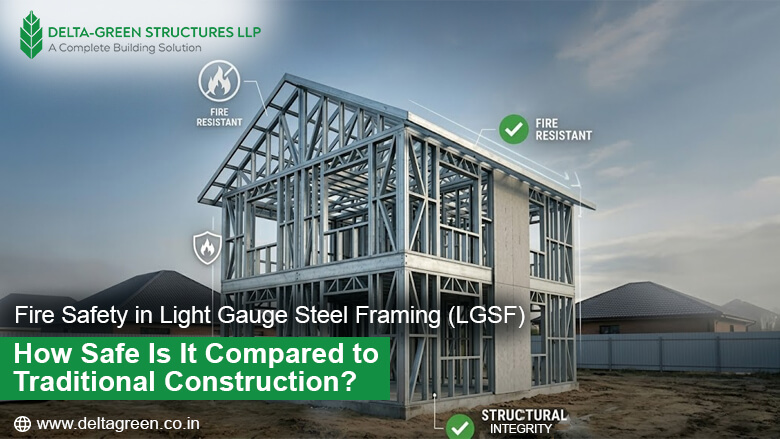
Fire Safety in Light Gauge Steel Framing (LGSF): How Safe Is It Compared to Traditional Construction?

Fire Safety in Light Gauge Steel Framing (LGSF): How Safe Is It Compared to Traditional Construction? When you build, you’re not just creating a structure—you’re protecting lives inside it. Fire safety is one of those aspects people often assume is “handled.” But in reality, the materials and methods you choose can make a life-saving difference. Today, with modern construction evolving rapidly, Fire Safety in Light Gauge Steel Framing (LGSF) has become a topic worth serious attention. So, how does LGSF really perform in a fire? And is it actually safer than traditional brick-and-concrete construction? Let’s break it down in a way that truly matters. Understanding Fire Behavior in Buildings A fire doesn’t spread slowly—it escalates fast. Within minutes: Temperatures can rise beyond 800°C Weak materials start failing Smoke becomes a major threat In such situations, the strength of a building lies not just in standing tall, but in how long it can resist damage and allow safe evacuation. This is exactly where Fire Safety in Light Gauge Steel Framing begins to stand out. What Makes LGSF Different? Unlike traditional construction, LGSF is not just about steel—it’s a complete engineered system. At Delta Green Structures, every LGSF project is designed with precision, ensuring that safety is not added later, but built into the structure from the start. Let’s look at what makes it fire-resilient. 1. Steel: Strong, Stable, and Non-Combustible One of the biggest advantages of LGSF is simple: Steel does not burn. Unlike wood or other materials: It doesn’t fuel the fire It doesn’t produce smoke It doesn’t accelerate flame spread This gives fire-resistant steel framing a clear edge in preventing fire from growing uncontrollably. 2. The Real Shield: Fire-Resistant Layers Here’s something many people don’t realize— Steel in LGSF is always protected with layers like: Gypsum boards  Cement boards Fire-rated insulation These act as thermal barriers, delaying heat from reaching the steel core. This dramatically improves steel frame fire resistance, allowing structures to maintain stability for longer durations. In comparison, traditional materials may resist fire—but they can crack, weaken, or even collapse without warning. 3. Engineered Fire Protection, Not Guesswork One of the strongest aspects of Fire Safety in Light Gauge Steel Framing is that everything is pre-planned. Modern LGSF systems include: Fire-rated wall assemblies Compartmentalized layouts to stop fire spread Special coatings that expand under heat This level of fire protection in steel structures ensures that fire doesn’t travel easily from one area to another. With advanced machinery and automated processes, Delta Green Structures ensures consistency in every component—something that’s hard to guarantee in traditional on-site construction. LGSF vs Traditional Construction: A Practical Comparison Aspect Traditional Brick & Concrete Light Gauge Steel Framing (LGSF) Fire Resistance Naturally fire-resistant to an extent Non-combustible structural system Heat Behavior Slower heat penetration Controlled and tested fire performance Structural Response in Fire Can crack or spall under extreme heat Predictable structural behavior under fire conditions Safety During Emergency Structural damage can be unpredictable Faster evacuation due to lightweight design Post-Fire Repair Expensive and time-consuming repairs Easier and quicker to repair after fire incidents Design Requirement Conventional methods, less engineered fire planning Requires proper design and fire-rated materials (ensured by professional manufacturers) Fire Safety in Prefabricated Buildings: A Hidden Advantage Prefabrication often gets misunderstood, but in reality, it enhances safety. Why? Because everything is: Designed in advance Manufactured under strict quality control Installed with precision This reduces human error, making fire safety in prefabricated buildings more reliable compared to conventional construction methods. At Delta Green Structures, this approach ensures that every structure meets high safety standards without compromise. Fire Ratings & Smart Design: Where Every Second Counts Fire resistance is not just a technical number—it’s time that can save lives. LGSF systems can be designed to withstand fire for: 30 minutes 60 minutes 90 minutes 120 minutes or more And those minutes? They mean more time to react, more time to evacuate, and far less risk of sudden failure. That’s what makes Fire Safety in Light Gauge Steel Framing not just flexible—but dependable across different types of buildings. But here’s where it gets even smarter. Fire safety isn’t only about how long a structure can resist fire—it’s about how intelligently it handles it. Modern LGSF designs are built with: Sealed joints that stop smoke from silently spreading Fire stops within walls and floors to contain flames Clearly planned escape routes for faster, safer exits This is where design meets real-world safety. Because when fire-resistant building materials work together as a system—not separately—you don’t just get protection, you get control, predictability, and peace of mind. Why Modern Builders Are Choosing LGSF Across India, especially in regions with challenging climates, construction needs to be both strong and safe. Builders are choosing LGSF because it offers: Speed without compromising safety Precision in fire-resistant design Better performance during emergencies With its expertise in diverse terrains and conditions, Delta Green Structures is helping set new benchmarks in safe construction practices. Beyond Structures: It’s About People At the end of the day, fire safety is not just about buildings. It’s about: Families sleeping peacefully Employees working safely Communities staying protected A well-designed LGSF structure gives people something invaluable—time to respond, time to escape, and peace of mind. Final Verdict: Is LGSF Safer? If designed and executed properly, the answer is clear—yes, LGSF can be as safe, and in many cases even safer, than traditional construction. This is because it brings together multiple layers of protection, including non-combustible materials, engineered fire protection systems, predictable structural behavior, and advanced fire-resistant building materials. Unlike conventional methods that often rely on assumption, LGSF is based on calculated performance and tested safety standards. When executed by experienced companies like Delta Green Structures, this approach ensures that safety is not just a feature added at the end, but a core part of the entire construction process—delivered with precision and reliability. At the same time, construction itself is evolving, and so are the expectations from it. Fire Safety in Light Gauge Steel Framing is no

Fire Safety in Light Gauge Steel Framing (LGSF): How Safe Is It Compared to Traditional Construction? Read More »

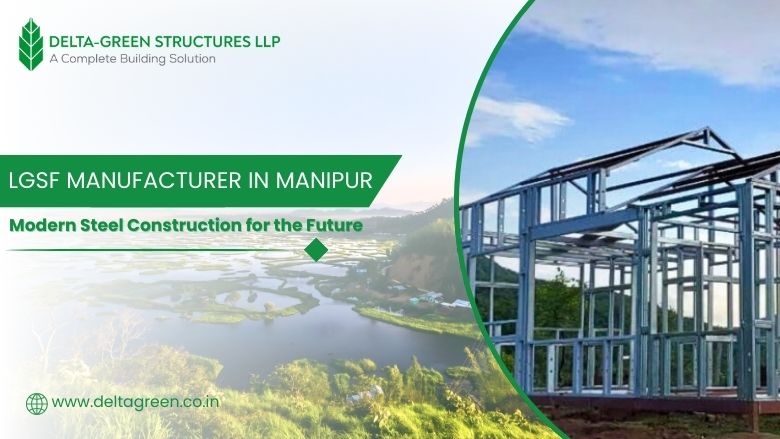
LGSF Manufacturer in Manipur: Modern Steel Construction for the Future

Manipur’s Construction Revolution: Why Smart Building Matters Now Manipur stands at a construction crossroads. The state is experiencing unprecedented urbanization—Imphal’s population growing, Ukhrul and Churachandpur expanding rapidly, commercial districts emerging. Yet traditional construction methods remain unchanged. Brick walls, concrete pillars, labor-intensive processes that take 18-24 months per project. But Manipur’s unique challenges demand smarter solutions:  Seismic Reality: Manipur sits in an earthquake-prone zone. Traditional brick structures crack, settle, and fail during seismic events. Modern steel frame construction offers what brick cannot: flexibility, ductility, and proven earthquake resistance. Monsoon Impact: 5-6 months of heavy rainfall annually. Traditional construction halts during monsoon season. Light Gauge Steel Frame (LGSF) manufacturing happens in climate-controlled factories—monsoon delays zero. Labor Constraints: Finding skilled brick masons has become nearly impossible. LGSF construction requires less specialized on-site labor, making it pragmatically superior in Manipur’s current employment landscape. Affordability Demand: Manipur’s State Affordable Housing Policy (2022) explicitly encourages LGSF technology. The Pradhan MantriAwas Yojana-Urban 2.0 offers Technology Innovation Grants of ₹3,000/sqm for LGSF projects. The question isn’t whether modern steel construction in Manipur is needed. Why haven’t we adopted it faster? What Is LGSF? The Technology Reshaping Manipur Light Gauge Steel Frame uses thin sheets of cold-formed galvanized steel (1-3mm thickness) to create precision-engineered structural frames. Unlike traditional masonry, LGSF components are manufactured in controlled factory environments, then rapidly assembled on-site. Key Components: Steel Studs: Vertical framework support members Steel Tracks: Horizontal channels guiding studs Joists: Floor and ceiling support Bracing: Diagonal stability members Sheathing: Wall and roof panels Fasteners: Secure connections Insulation: Energy efficiency and soundproofing Connections: Structural integrity details Why This Matters for Manipur: Factory manufacturing = quality regardless of monsoon. Galvanized steel = corrosion resistance in humid climates. Precision engineering = zero settling cracks. Lightweight = lower foundation costs. Why LGSF Construction is Booming in Manipur: Five Compelling Reasons 1. Speed: 60% Faster Than Traditional (9 Months vs 18-24) Factory pre-fabrication happens in parallel with site preparation. Monsoon doesn’t delay factory production. Fast-track construction with LGSF technology means: Developers recover investments faster Homebuyers occupy sooner Government housing targets become achievable 2. Earthquake Safety (Critical for Manipur’s Seismic Zone) Earthquake-resistant steel structures are proven. Steel’s ductility absorbs seismic energy instead of resisting rigidly. During earthquakes, LGSF buildings move safely with the ground. Brick buildings fight the ground—they fail. This is essential for Manipur. 3. Monsoon Resilience (5-6 Months Annual Rainfall) LGSF manufacturing is completely weather-independent. Projects don’t lose 5-6 months. Quality isn’t compromised by rain exposure. Timelines become predictable—critical for government and commercial projects. 4. Humidity & Pest Resistance Manipur’s humid climate creates moisture problems in traditional structures. LGSF solves this fundamentally.     resists corrosion. Steel doesn’t attract termites. No moisture problems. No settling. Long-term durability brick cannot match.    5. Government Incentives & Affordability Manipur’s Affordable Housing Policy explicitly encourages LGSF. PMAY-U 2.0 offers ₹3,000/sqm Technology Innovation Grants for LGSF projects. Cost-effective steel construction isn’t marketing—it’s government-backed reality. Key Advantages: Why LGSF Outperforms Traditional Construction Advantage Traditional LGSF Manipur Impact Construction Time 18-24 months 6-9 months Faster ROI, faster occupancy Labor Requirement Highly skilled Semi-skilled Solves Manipur’s labor shortage Monsoon Impact 5-6 month delays Zero delays Predictable timelines Earthquake Safety Fails in seismic Proven resistant Critical for Manipur zone Durability 30-40 years 50+ years Lower long-term costs Maintenance Settling cracks, repairs Zero settling cracks No future maintenance Waste Generation 40-50% waste 5-15% waste Environmental + cost savings Total Cost Baseline 15-20% lower Significant savings Real-World Applications in Manipur Residential: 2-3 BHK apartments for affordable housing (PMAY grant eligible) Institutional: Schools, colleges, government offices, hospitals Commercial: Retail complexes, IT parks, hospitality projects Industrial LGSF Structures: Warehouses, manufacturing, storage Rapid Response: Emergency shelters, disaster reconstruction (earthquake recovery) Why Choose Delta Green for LGSF in Manipur? Delta Green Structures is the Only Full-Service LGSF Manufacturer in North-East India. Unique Advantages: Local Presence, Deep Expertise Operating in Manipur, we understand the local climate, seismic vulnerability, monsoon challenges, building codes, and employment landscape. Complete Integration (Design + Manufacturing + Construction) Most competitors do one or two services. We provide integrated solutions. No vendor fragmentation. Single accountability. Quality control from concept to delivery. Government Project Experience Proven track record with state housing boards, government compliance, and large-scale project execution. Advanced Technology Top-tier LGSF materials, fully automated Pinnacle machines, precision-engineered designs, factory quality control that traditional on-site construction cannot match. Proven Results Quality structures exceeding industry standards. Shorter turnaround times. Real engineering excellence. Customizable Solutions Every project is different. Bespoke packages, flexible consulting, support adapted to specific needs. Sustainable Construction Aligns with green building certifications. Supports government sustainability mandates. Economical and environmental. FAQs: Common Questions About LGSF in Manipur Q: Is LGSF more expensive than traditional? A: Initially 5-10% more. Total cost? 15-20% lower when accounting for speed, labor efficiency, minimal waste, and zero settling issues. PMAY grants further offset costs. Q: Is LGSF safe in Manipur's earthquakes? A: Absolutely. Steel’s flexibility absorbs seismic energy. Proven globally in earthquake zones. Ideal for Manipur. Q: How does LGSF handle the monsoon climate? A: Factory manufacturing is monsoon-proof. Production unaffected. On-site assembly is weatherproofed. Quality is never compromised by rain. Q: How long do LGSF buildings last? A: 50+ years minimum. Galvanized coating provides superior corrosion protection in humid climates. Q: Is LGSF suitable for affordable housing projects? A: Perfect. Cost-efficient, fast-track, scalable. PMAY-U 2.0 offers substantial grants specifically for LGSF. Q: Can I customize designs with LGSF? A: Yes completely. Complex architectural plans, open floor layouts, custom interiors—all possible while maintaining structural integrity and earthquake safety. Q: Does LGSF work for industrial structures? A: Yes. Warehouses, manufacturing facilities, solar mounting structures—versatile across all applications. Q: Who should use LGSF in Manipur? A: Developers (faster ROI), homebuyers (quality + earthquake safety), government (affordability targets), commercial builders (design flexibility). Essentially, anyone building modernly in Manipur. Conclusion: The Smart Choice for Manipur’s Future Manipur’s construction evolution isn’t optional—it’s urgent. Rapid urbanization demands modern solutions. Seismic vulnerability demands earthquake-safe structures. Monsoon challenges demand weather-proof construction. Affordability demands cost-effective technology. LGSF—particularly through Delta Green Structures as Manipur’s only full-service LGSF manufacturer—provides the integrated answer. We offer:

LGSF Manufacturer in Manipur: Modern Steel Construction for the Future Read More »

How LGSF Manufacturers Minimize Human Error in Construction Projects

The Hidden Crisis: Why Construction’s Biggest Cost Isn’t Materials or Labor—It’s Human Error Every year, the global construction industry loses $1.8 trillion to human error. That’s not a rounding error or an industry estimate. That’s verified data from Autodesk and FMI Consulting, analyzing actual construction project failures worldwide. But here’s what makes this number even more staggering: 50% of construction rework is preventable. According to the Construction Industry Institute, up to 30% of total project cost goes to rework. Miscalculations. Design conflicts. Installation errors. Coordination breakdowns. Documentation losses. Communication failures. Each one rooted in human error. For a typical ₹10 crore construction project, this means ₹3 crore lost to rework. Half of that could have been prevented. This is the crisis that Light Gauge Steel Framing (LGSF) manufacturers solve systematically through three integrated technologies: Building Information Modeling (BIM), Automated Manufacturing, and Modular Construction. Delta Green Structures, leveraging these technologies, is redefining what “error-free construction” actually means. The Human Error Problem: Where Does It Really Come From? Human error in construction isn’t malice or carelessness. It’s systemic. Research shows: 24% of construction data is simply inaccurate (a five entered where a six should be) 24% of data is missing (blank fields in spreadsheets, lost documentation) 21% of data is wrong (recording one aspect but documenting another) Design errors account for 40% of all construction problems, costing $865 billion annually The underlying cause? Traditional construction is on-site dependent. A single brick layer’s skill level impacts quality. A single supervisor’s attention affects coordination. A single miscommunication halts progress. Every individual on-site is a point of failure. The result: Traditional construction achieves only 85-95% quality accuracy in manufacturing and inspection. The remaining 5-15% contains defects, rework, and waste. Technology Solution #1: Building Information Modeling (BIM) BIM eliminates design errors before they reach the construction site. BIM is not just 3D modeling. It’s a unified digital environment where architects, engineers, and contractors work from a single source of truth. How BIM Reduces Human Error: Clash Detection (Catching Problems Early)Traditional approach: Designs are created separately (architectural, structural, mechanical). Contractors discover conflicts on-site during construction. Cost: Rework, delays, safety issues. BIM approach: All systems integrate into one digital model. Conflicts appear immediately. Teams resolve clashes in virtual space before manufacturing begins. Impact: Fewer design errors, fewer surprises, fewer mistakes on-site. Improved Collaboration & CommunicationCloud-based BIM platforms ensure that every team member—architect, engineer, contractor, client—sees the same information in real-time. Not outdated prints. Not conflicting versions. One current model. Impact: Miscommunication drops dramatically. Information loss becomes impossible. Virtual Simulation (4D & 5D BIM) 4D BIM: Simulates construction sequence over time, identifying logistical conflicts before execution 5D BIM: Adds cost data, preventing budget surprises and hidden expenses Teams can “walk through” the project before construction starts, spotting problems humans would miss on paper. Impact: On-site errors drop because teams have anticipated and solved problems virtually. Technology Solution #2: Automated Manufacturing in LGSF Automation eliminates human variability in production. In traditional construction, quality depends on individual worker skill. Fatigue. Attention level. Experience. Training consistency. Each day, quality varies. In automated LGSF manufacturing, precision is guaranteed. The Accuracy Revolution: Research from the University of Virginia found that automated inspection systems achieve 99.9% accuracy—far exceeding human capability (85-95%). For LGSF manufacturers like Delta Green using fully automated Pinnacle machines: Precision Cutting & Forming Steel components cut to exact specifications: ±1-2mm tolerance Result: Every component matches design perfectly Real-Time Quality Inspection Every component automatically inspected at 99.9% accuracy Defects caught instantly, not weeks later Zero substandard components reach assembly Result: No rework, no surprise defects Digital Traceability Every component tracked with digital records Full manufacturing history accessible No lost documentation Result: Complete accountability, complete transparency Technology Solution #3: Modular Construction (Reducing On-Site Error Exposure) Factory-built components eliminate on-site human error by design. In traditional construction, 100% of the work happens on-site, exposing every step to weather, coordination challenges, and human error. In LGSF modular construction, 70-80% of the building is completed in the factory. Only final assembly happens on-site. Why This Matters: Factory Environment (Controlled, Supervised, Optimized): Climate-controlled conditions (no weather-related quality issues) Standardized processes (consistency guaranteed) Expert supervision (every step monitored) Quality control stations (errors caught immediately) On-Site Work (Simple Assembly Only): Fewer skilled labor requirements (less room for expertise variability) Simplified tasks (bolts and screws vs. complex masonry) Reduced coordination complexity (fewer teams, fewer interfaces) Shorter execution time (less exposure to error) Result: A building where human error is systematically minimized from design through assembly. The Delta Green Integration: BIM + Automation + Modular = Precision Delta Green combines all three technologies into an integrated system: BIM Design Phase: Every component designed in a unified digital environment. Clash detection eliminates conflicts. 4D/5D simulation identifies risks before manufacturing. Automated Manufacturing Phase: Pinnacle machines produce components at 99.9% accuracy. Every component inspected. Digital records track complete manufacturing history. Modular Assembly Phase: 75% factory-built components shipped ready. Simple on-site assembly with minimal error potential. Quality assured by factory precision. The Result by Numbers: Metric Traditional Construction LGSF with BIM + Automation Design Error Rate 40% of projects <5% (BIM catch) Manufacturing Tolerance ±10-15mm ±1-2mm Rework Cost 30% of project 3-5% of project Quality Accuracy 85-95% 99.9% Defect Detection Post-construction Pre-delivery Documentation Loss Common Zero FAQs: Understanding LGSF Error Minimization Q: How does BIM catch errors traditional construction misses? A: BIM integrates all building systems in one digital model. Conflicts appear instantly—MEP clashing with structure, architectural conflicting with mechanical. Teams resolve these virtually. Traditional construction discovers these conflicts on-site during expensive rework. Q: What is "99.9% accuracy" in LGSF manufacturing? A: Automated systems measure and produce components to ±1-2mm tolerance, detected by sensors at 99.9% accuracy. Traditional on-site construction achieves ±10-15mm tolerance with 85-95% detection—meaning 5-15% of errors go undetected until later. Q: Why does factory manufacturing reduce human error more than on-site? A: Factory production is standardized, supervised, and controlled. Weather doesn’t affect quality. Fatigue doesn’t reduce precision. Skill variability is eliminated through automation. On-site construction exposes every step to human variables. Q:

How LGSF Manufacturers Minimize Human Error in Construction Projects Read More »

Leading LGSF Manufacturer in Meghalaya: Fast, Durable, and Eco-Friendly Solutions

The construction landscape in Meghalaya is evolving rapidly with growing demand for faster project delivery, sustainable materials, and structures capable of performing well across challenging terrains and climatic conditions. In this transformation, Light Gauge Steel Framing (LGSF) has emerged as one of the most efficient and future-ready construction technologies. As a trusted LGSF manufacturer in Meghalaya, Delta Green Structures delivers precision-engineered LGSF solutions designed for speed, durability, sustainability, and long-term structural reliability. With advanced automated Pinnacle machines, premium-grade materials, and turnkey project expertise, the company supports residential, institutional, commercial, and government infrastructure projects across the North-East. This blog explores how LGSF technology is reshaping modern construction and why Delta Green Structures is recognized as a leading LGSF manufacturer in Meghalaya offering fast, durable, and eco-friendly building solutions Understanding LGSF — A Smarter Alternative to Conventional Construction Light Gauge Steel Framing is an engineered system where structures are built using cold-formed galvanized steel sections, produced with high precision through automated roll-forming technology. Unlike traditional brick-and-mortar construction, LGSF offers: Factory-fabricated structural components Minimal on-site wet work Faster installation and assembly Higher dimensional accuracy Reduced structural load and material wastage This makes LGSF especially suitable for Meghalaya, where terrain variations, heavy rainfall, and logistical challenges often delay conventional construction. Delta Green Structures, as a leading LGSF manufacturer in Meghalaya, ensures every frame is designed with structural precision, advanced engineering inputs, and strict quality assurance standards to deliver strong, stable, and long-lasting buildings. Fast-Track Construction for High-Priority Projects Time efficiency is one of the most compelling advantages of LGSF construction. With fully automated Pinnacle machines and digital design-to-production workflows, Delta Green Structures ensures: Faster fabrication cycles Significant reduction in manual intervention Quick on-site assembly and installation Predictable and shorter project timelines For projects such as: Institutional buildings Worker accommodations Prefabricated housing Tourism facilities Healthcare or administrative units LGSF enables completion in a fraction of the time required by conventional construction. This capability has positioned Delta Green Structures as a preferred LGSF manufacturer in Meghalaya for both public and private sector clients seeking rapid, reliable, and well-engineered project delivery. Durable Structures Built for Meghalaya’s Climate & Terrain Meghalaya experiences: High humidity levels Intense rainfall Hilly and sloped construction sites Seismic activity zones These environmental variables demand structures that are lightweight yet strong, corrosion-resistant, and structurally stable. LGSF systems manufactured by Delta Green Structures offer: Galvanized, corrosion-protected steel frames High load-bearing stability Resistance to termites, rot, and fungal decay Superior performance in humid and coastal zones Fire-resistant and dimensionally stable structures Unlike timber or traditional RCC, LGSF minimizes risks of: Structural cracks Moisture damage Long-term degradation This makes it an ideal construction technology for: Hill resorts and eco-lodges Institutional and educational facilities Modular office and site structures Residential developments in remote locations As a technology-driven LGSF manufacturer in Meghalaya, Delta Green Structures integrates structural engineering best practices to ensure durability and performance over the complete lifecycle of the building. Eco-Friendly & Sustainable Construction for a Greener Future Sustainability is no longer optional, it is central to future infrastructure development. LGSF plays a significant role in supporting eco-conscious construction through: Reduction in concrete and brick usage Lower embodied carbon output Minimal site disturbance and excavation Recyclable and reusable steel components Reduced construction waste generation Factory-controlled production also ensures: Optimized material consumption Lower energy consumption during fabrication Cleaner and safer site environments This aligns strongly with environmental priorities across the North-East. By combining technology, resource efficiency, and precision engineering, Delta Green Structures strengthens its position as a sustainability-driven LGSF manufacturer in Meghalaya delivering eco-friendly and future-ready construction alternatives. Turnkey LGSF Manufacturing and Project Execution Expertise One of the major strengths of Delta Green Structures is its end-to-end turnkey project capability ensuring seamless execution from conceptualization to completion. Comprehensive LGSF Solutions Include: Structural design & detailing Engineering validation & load analysis Customizable LGSF design packages Precision manufacturing with automated Pinnacle machines On-site installation & assembly support Quality inspection & structural performance checks Ongoing consultancy through project duration This integrated workflow helps clients achieve: Faster approvals Minimal technical gaps On-time project completion Consistent and benchmark-quality results Whether for institutional buildings, industrial facilities, modular housing, or government projects, this holistic execution approach reinforces the company’s credibility as a trusted LGSF manufacturer in Meghalaya. Applications of LGSF Across Key Sectors in Meghalaya LGSF technology is widely suited for diverse project categories, including: Residential & villa developments Educational and institutional blocks Healthcare and administrative units Prefabricated labour accommodation Modular offices and site buildings Tourism infrastructure and cottages Warehousing & utility structures Lightweight framing, rapid deployment, and structural stability make it an efficient solution for both temporary and permanent building applications. Commitment to Quality, Precision, and Performance Delta Green Structures prioritizes uncompromised quality at every production stage through: Use of top-tier LGSF materials and accessories Automated manufacturing to eliminate dimensional errors Strict alignment with engineering safety standards Robust inspection and monitoring systems The result — highly precise, durable, and performance-driven LGSF structures that exceed conventional construction standards. This dedication to engineering excellence strengthens its standing as a leading LGSF manufacturer in Meghalaya delivering dependable, scalable, and future-oriented construction systems. Partner with a Trusted LGSF Manufacturer in Meghalaya Choosing the right LGSF partner ensures better structural performance, long-term value, and sustainable infrastructure outcomes. With advanced technology, manufacturing expertise, and deep regional project experience, Delta Green Structures continues to empower modern construction across Meghalaya and the North-East. If you are looking for fast, durable, and eco-friendly LGSF construction solutions, the team is equipped to support you with engineering precision, turnkey execution capability, and reliable project partnership.

Leading LGSF Manufacturer in Meghalaya: Fast, Durable, and Eco-Friendly Solutions Read More »