Delta Green

Steel Frame Construction

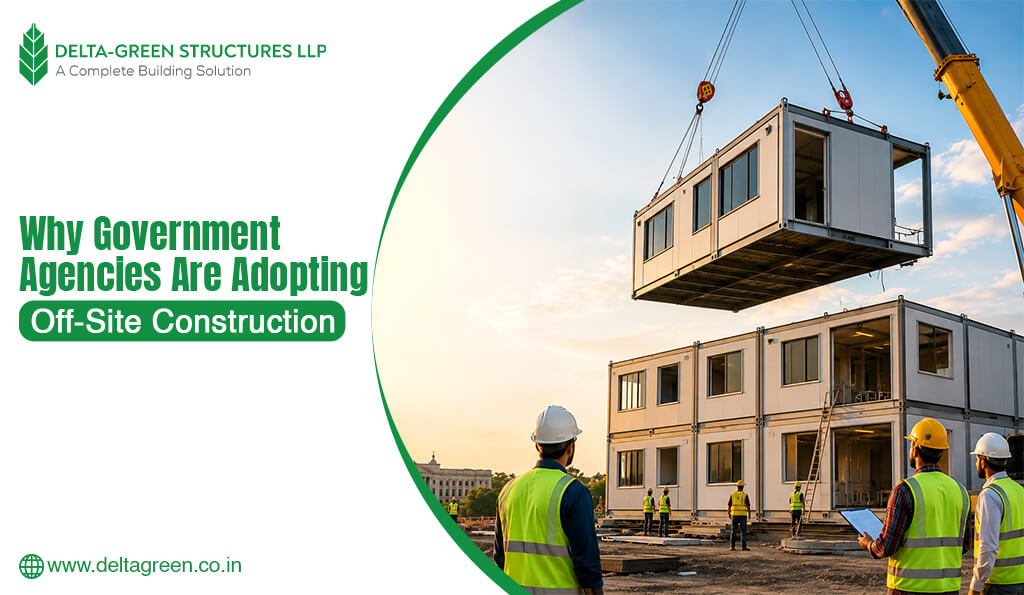
Why Government Agencies Are Adopting Off-Site Construction

Why Government Agencies Are Adopting Off-Site Construction The Future of Public Infrastructure Is Being Built… Off-Site The way public infrastructure is designed and delivered is undergoing a significant transformation. Across India and around the world, government agencies are increasingly adopting off-site construction and other Modern Methods of Construction (MMC) to meet the growing demand for high-quality infrastructure within tighter timelines and budgets. With rapid urbanisation, expanding public infrastructure requirements, and increasing pressure to optimise public expenditure, conventional construction methods often struggle with labour shortages, weather-related delays, material wastage, and schedule overruns. As a result, governments are turning to industrialised construction systems that offer greater efficiency, consistency, and predictability. Off-site construction addresses these challenges by manufacturing structural components in a controlled factory environment before transporting them to the project site for assembly. This approach enables faster project execution, improved quality control, enhanced worker safety, and reduced environmental impact compared to conventional construction methods. Today, off-site construction is no longer considered an emerging trend-it is becoming an integral part of government construction projects, public infrastructure development, institutional buildings, and Smart City initiatives. Why Governments Are Moving Toward Modern Methods of Construction (MMC) Government departments are expected to deliver infrastructure that is durable, cost-effective, sustainable, and completed within strict project schedules. However, conventional construction methods are often affected by unpredictable site conditions, labour availability, weather disruptions, and inconsistent workmanship. Modern Methods of Construction (MMC), including Light Gauge Steel Frame (LGSF) systems, modular construction, prefabricated building systems, and other industrialised construction techniques, provide a practical solution to these challenges. By transferring a significant portion of the construction process to a controlled manufacturing facility, these systems ensure precision engineering, stringent quality control, and faster project execution. Factory-manufactured components are produced using automated processes and assembled on-site with minimal disruption, resulting in improved construction quality and greater schedule certainty. Companies such as Delta Green Structures are contributing to this transformation by manufacturing precision-engineered LGSF building systems using automated production technology. These solutions enable government agencies to deliver infrastructure more efficiently while maintaining high standards of quality, safety, and durability. Key Benefits Driving Government Adoption 1. Faster Project Delivery Without Compromising Quality One of the most significant advantages of off-site construction is its ability to reduce project timelines. Since component manufacturing and site development take place simultaneously, projects can be completed considerably faster than conventional construction methods. For government agencies, this enables the timely delivery of schools, hospitals, staff housing, healthcare centres, and other critical public infrastructure. 2. Cost-Effective Construction at Scale Cost efficiency is a key priority for public infrastructure projects. Off-site construction reduces material wastage, minimises labour dependency, improves productivity, and lowers the risk of costly project delays. These efficiencies contribute to better lifecycle value and more effective utilisation of public funds, particularly for large-scale and repetitive building programmes. 3. Sustainability & Green Building Advantage Sustainability has become a fundamental objective in modern infrastructure development. Factory-based manufacturing optimises material utilisation, significantly reduces construction waste, lowers site disturbances, and supports environmentally responsible construction practices. Combined with energy-efficient building design, off-site construction contributes to the development of greener and more sustainable public infrastructure. 4. High-Quality Buildings with Precision In controlled environments, materials are engineered with strict quality checks. This ensures High-Quality Buildings with better durability, accuracy, and performance compared to unpredictable traditional on-site construction. 5. Climate-Resilient Infrastructure From floods to earthquakes, infrastructure must withstand extreme conditions. Climate-Resilient Infrastructure built using modular systems ensures better structural integrity and long-term reliability. Off-Site vs. Traditional Construction: The Real Difference Off-site construction represents a significant evolution in the way buildings and infrastructure are planned, manufactured, and delivered. Unlike conventional construction, where most activities are carried out sequentially at the project site, off-site construction transfers a substantial portion of the work to a controlled manufacturing environment. Traditional construction methods are often affected by labour shortages, weather disruptions, material handling inefficiencies, and varying site conditions, all of which can impact project schedules, quality, and overall costs. In contrast, off-site construction enables structural components to be manufactured while site preparation progresses simultaneously. This parallel workflow significantly reduces construction time, improves quality control, minimises material wastage, and enhances project predictability. Modern off-site construction systems, including Light Gauge Steel Frame (LGSF) technology, offer precision-engineered components that are manufactured to stringent quality standards before being transported to site for rapid assembly. As a result, these systems are particularly well suited for government infrastructure projects that require speed, consistency, and scalability. As infrastructure demands continue to grow, the construction industry is steadily transitioning from labour-intensive site-based practices to manufacturing-led construction processes that deliver greater efficiency, quality, and reliability. Smart Cities & Public Infrastructure: The Big Push India’s rapid urbanisation and expanding infrastructure requirements have accelerated the need for construction methods that are faster, more sustainable, and capable of delivering consistent quality at scale. Initiatives such as the Smart Cities Mission, affordable housing programmes, institutional development, and urban infrastructure projects demand solutions that can be executed efficiently without compromising quality. Off-site construction is well positioned to address these requirements. From educational institutions and healthcare facilities to government offices, staff accommodation, public housing, and utility buildings, industrialised construction methods enable faster project delivery while reducing disruption to surrounding communities. By combining factory-based manufacturing with efficient on-site assembly, Modern Methods of Construction (MMC) improve productivity, minimise construction waste, and provide greater certainty in project delivery. These advantages make off-site construction an increasingly preferred approach for public infrastructure development across India. Where Delta Green Structures Fits Into This Transformation In this evolving ecosystem, Delta Green Structures is emerging as a strong enabler of industrialized construction in North-East India. With advanced LGSF technology, automated Pinnacle machines, and turnkey construction capabilities, the company is redefining how infrastructure is manufactured and delivered. Their approach to Off-Site Construction ensures precision-driven output, faster turnaround times, and scalable solutions for both private and government projects. What makes them stand out is their commitment to quality, climate adaptability, and end-to-end execution-making them highly relevant for modern Government Construction Projects and infrastructure needs in challenging terrains. By integrating innovation

Why Government Agencies Are Adopting Off-Site Construction Read More »
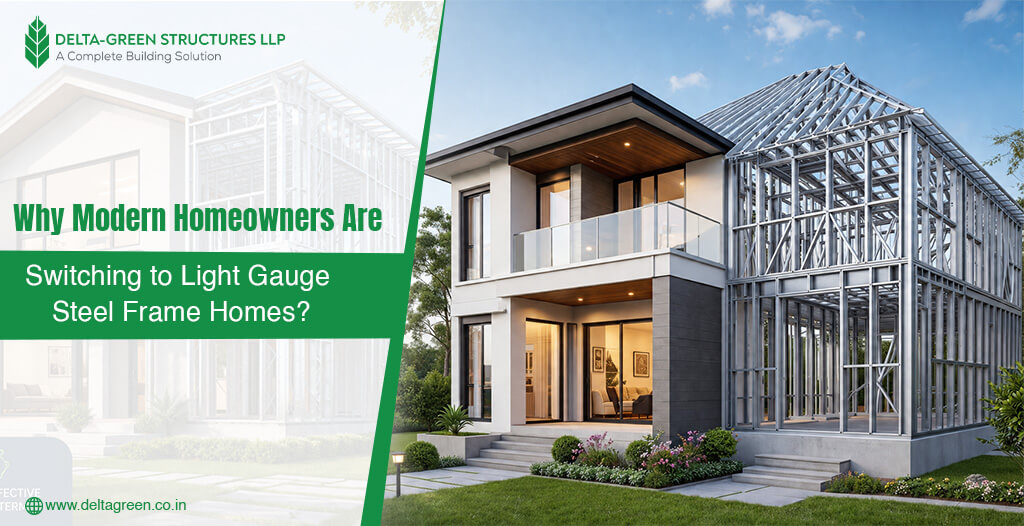
Why Modern Homeowners Are Switching to Light Gauge Steel Frame Homes

Why Modern Homeowners Are Switching to Light Gauge Steel Frame Homes The Future of Home Construction Isn’t Coming-It’s Already Here. “A dream home shouldn’t take forever to build… and it definitely shouldn’t become a maintenance headache a few years later.” For decades, traditional brick-and-concrete houses have been the obvious choice for homeowners. But today’s generation thinks differently. They want homes that are stronger, smarter, faster to build, environmentally responsible, and designed to last. That shift is exactly why Light Gauge Steel Frame Homes are becoming the preferred choice for modern homeowners across India and around the world. Whether you’re planning your forever home, investing in a holiday villa, or constructing a commercial building, modern construction demands solutions that go beyond conventional methods. Speed, safety, durability, and sustainability have become non-negotiable. This is where Delta Green Structures is changing the construction landscape. As the only fully automated Light Gauge Steel Frame manufacturing unit in North-East India, the company delivers complete turnkey construction solutions using advanced LGSF technology and world-class Pinnacle manufacturing machines. Let’s explore why thousands of homeowners are confidently making the switch. Light Gauge Steel Frame Homes: A Smarter Way to Build Modern residential construction demands more than conventional building techniques. Homeowners today expect structures that are durable, resilient, cost-effective, and capable of meeting the demands of changing environmental and climatic conditions. Unlike traditional masonry construction, Light Gauge Steel Frame (LGSF) homes utilise precision-engineered cold-formed galvalume steel sections as the primary structural framework. These components are manufactured in a controlled factory environment using automated CNC roll-forming technology before being transported to the project site for rapid assembly. Factory-controlled manufacturing ensures exceptional dimensional accuracy, consistent quality, reduced material wastage, and efficient project execution. The result is a structurally robust building system that delivers superior construction quality while significantly reducing on-site uncertainties. By integrating advanced engineering with modern manufacturing practices, LGSF construction offers a reliable alternative to conventional residential construction. Why Homeowners Are Choosing LGSF Over Conventional Construction Selecting a construction system is one of the most important decisions in any residential project. Beyond aesthetics, homeowners increasingly prioritise construction quality, project timelines, long-term durability, maintenance requirements, and overall lifecycle costs. Conventional construction methods often experience delays due to weather conditions, labour availability, material wastage, and variations in workmanship. These factors can increase project costs and extend completion schedules. Light Gauge Steel Frame construction addresses many of these challenges through factory-based manufacturing, precision engineering, and efficient on-site assembly, providing homeowners with greater certainty throughout the construction process. 1. Faster Construction Since steel components are prefabricated in a controlled manufacturing environment, on-site work becomes significantly quicker. Less time spent on construction means you can move into your dream home much sooner. 2. Precision Engineering The structural performance of any building depends on the accuracy of its primary framework. Unlike conventional masonry construction, which relies heavily on site workmanship, LGSF structural components are manufactured using fully automated roll-forming technology under controlled factory conditions. This manufacturing process delivers: Straighter walls Better finishing Easier interior installations Reduced construction errors Small details make a big difference. 3. Designed for Long-Term Durability A residential building is a long-term investment, making structural durability a critical consideration. Light Gauge Steel Frame systems are manufactured from high-strength galvanised steel designed to provide long-term structural stability under a wide range of environmental conditions. Unlike timber, steel is resistant to termite infestation, fungal decay, warping, and shrinkage. It also does not crack or deteriorate due to moisture in the same manner as many conventional building materials. When properly designed, manufactured, and installed, LGSF structures provide durable, low-maintenance building solutions capable of delivering reliable performance over their intended service life.  Consequently, homeowners seeking durable, resilient, and low-maintenance homes are increasingly choosing Light Gauge Steel Frame technology as a modern alternative to conventional construction.  Are Light Gauge Steel Frame Homes Safe? Absolutely. One of the most common misconceptions surrounding Light Gauge Steel Frame (LGSF) homes is that they are less robust than conventional masonry structures. In reality, modern LGSF buildings are designed and engineered to comply with stringent structural standards, delivering exceptional strength, durability, and safety under a wide range of environmental conditions. Earthquake Resistant Homes Steel is naturally flexible. Instead of cracking under seismic movement, properly engineered steel structures absorb and distribute forces more efficiently. That’s why Earthquake Resistant Homes built with Light Gauge Steel technology are becoming increasingly popular in earthquake-prone regions, including North-East India. Fire Resistant Homes Safety begins with the materials used. Steel is non-combustible, meaning it doesn’t ignite or fuel a fire the way timber can. Combined with fire-rated insulation and certified construction practices, Fire Resistant Homes offer an additional layer of protection for families. Weather Isn’t the Enemy Residential buildings across India are exposed to diverse climatic conditions, including heavy rainfall, high humidity, strong winds, and significant temperature variations. Light Gauge Steel Frame systems manufactured from high-quality galvanised steel are designed to provide excellent corrosion resistance when appropriate protective coatings, detailing, and construction practices are adopted. At Delta Green Structures, precision-engineered structural components are manufactured using premium-grade galvanised steel and advanced automated production systems, ensuring consistent quality and long-term performance across a wide range of environmental conditions. Sustainable Construction for a Better Future Sustainability has become an essential consideration in residential construction, driven by increasing environmental awareness and the need for more efficient use of natural resources. Compared with conventional construction methods, Light Gauge Steel Frame construction offers several environmental advantages throughout the building lifecycle. Factory-controlled manufacturing significantly reduces material wastage through precision engineering and optimised material utilisation. Off-site production also minimises on-site disturbances, lowers construction waste, and improves overall resource efficiency. Furthermore, steel is one of the world’s most recycled construction materials, making LGSF buildings an environmentally responsible solution that supports sustainable construction practices without compromising structural performance or durability. For homeowners seeking long-term value alongside environmental responsibility, LGSF construction offers a practical and future-ready alternative. Energy-Efficient Homes for Greater Comfort and Lower Operating Costs A comfortable home isn’t only about beautiful interiors. It’s also about efficient performance every

Why Modern Homeowners Are Switching to Light Gauge Steel Frame Homes Read More »

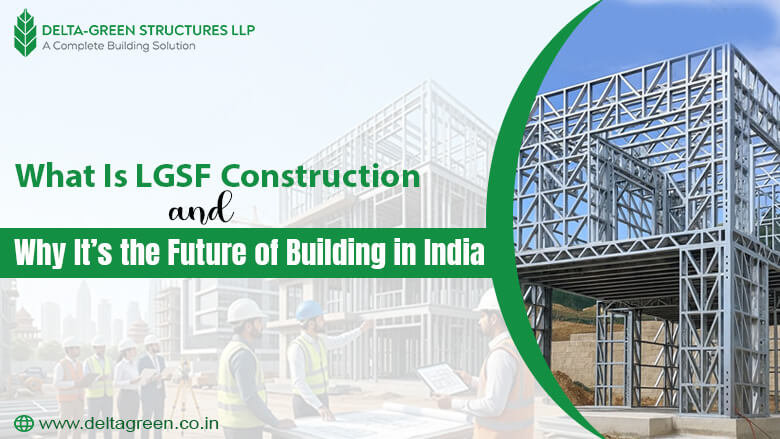
What Is LGSF Construction and Why It’s the Future of Building in India

What Is LGSF Construction and Why It’s the Future of Building in India Stronger. Smarter. Faster. The future of construction is already here. India’s construction landscape is not just evolving – it’s transforming at an unprecedented pace. With rapid urbanization, increasing population density, and the growing demand for faster project delivery, traditional construction methods are starting to show their limitations. Add to that the rising focus on sustainability, and it becomes clear: the industry needs a smarter solution. This is where LGSF steps in – not as an alternative, but as a revolution. If you’ve been wondering what LGSF construction is, this guide takes you beyond the basics. It explains not just how it works, but why it’s becoming the backbone of modern infrastructure and the future of building in India. What Is LGSF Construction? Let’s get straight to it – what is LGSF construction? LGSF, or light gauge steel frame construction, is a cutting-edge building method that uses cold-formed steel sections to create structural frameworks. These steel components are precisely engineered using advanced design software and manufactured through automated systems before being assembled on-site. Unlike traditional brick-and-cement construction, the LGSF construction method is based on accuracy, speed, and efficiency. Every component is pre-designed and pre-cut, which eliminates guesswork and significantly reduces errors during execution. The result?  A building system that is stronger, faster, and far more reliable. How LGSF Building Technology Works What makes LGSF building technology truly impressive is its precision-driven approach. Here’s a closer look at the process: Design & Engineering: Every structure is digitally modeled with exact measurements and load calculations. Automated Manufacturing: Steel sections are produced using advanced machines like Pinnacle systems. Prefabrication: Structural components are prepared in controlled environments. On-Site Assembly: Pre-engineered parts are assembled quickly with minimal labor. This workflow ensures not just speed, but consistent quality across every project – something traditional construction often struggles to maintain. Why LGSF is Gaining Momentum in India India is witnessing a construction shift – and LGSF is at the center of it. 1. Speed That Matches Modern Demand In today’s fast-moving world, delays are costly. LGSF structures can be completed up to 60% faster, making them ideal for both residential and commercial projects. 2. Strength Without the Bulk Despite being lightweight, LGSF offers exceptional structural strength. This makes it suitable for everything from individual homes to multi-storey commercial buildings. 3. Built for Indian Conditions India’s geography is diverse – and demanding. Whether it’s heavy rainfall, humidity, or seismic activity, LGSF structures are designed to withstand it all. They are resistant to termites, moisture, and even fire when properly treated. 4. Sustainable and Future-Ready With increasing focus on eco-friendly steel construction, LGSF stands out as a responsible choice: Reduced construction waste Recyclable steel materials Lower environmental impact It’s not just about building faster – it’s about building smarter. The Rise of Steel Frame House Construction Modern homeowners are no longer satisfied with conventional solutions. They want homes that are durable, efficient, and future-ready. That’s where steel frame house construction comes in. With LGSF, homeowners benefit from: Better insulation and energy efficiency Flexible and customizable layouts Long-lasting structural performance Minimal maintenance over time This approach transforms houses into engineered living spaces designed for longevity. Prefabricated Steel Structure System: A Game-Changer One of the biggest advantages of LGSF is its prefabricated steel structure system. Instead of relying entirely on on-site construction, most components are manufactured in controlled factory environments. This offers several key benefits: Superior quality control Faster installation timelines Reduced dependency on weather conditions Lower labor costs and fewer delays In a country like India, where construction delays are common, this system is nothing short of revolutionary. Applications: More Than Just Residential Projects LGSF is not limited to homes – it’s incredibly versatile. Today, it is widely used in: Commercial buildings Educational institutions Hospitals and healthcare centers Resorts and hospitality projects Industrial and warehouse structures Government infrastructure developments This adaptability makes LGSF one of the most scalable and future-ready construction solutions available today. Why Delta Green Structures is Leading the Change In the North-East region of India, Delta Green Structures is playing a key role in driving the adoption of LGSF. As the only manufacturing unit in the region equipped with advanced LGSF technology and fully automated Pinnacle machines, Delta Green Structures delivers complete end-to-end building solutions. What sets them apart? Proven expertise in private and government projects Capability to handle complex terrains and climatic challenges Flexible and customizable construction packages Strong commitment to precision and fast project delivery Their approach goes beyond construction – they focus on delivering high-performance structures built for the future. With every project, Delta Green Structures is raising the standard of modern construction in India. LGSF vs Traditional Construction: A Clear Advantage When compared side by side, the difference is striking: Factor Traditional Construction LGSF Construction Time Slow Fast Accuracy Inconsistent High precision Waste High Minimal Durability Moderate High Sustainability Limited Eco-friendly The shift isn’t just logical – it’s inevitable. The Future of Building in India with LGSF India is entering a new era of infrastructure development. With smart cities, urban expansion, and increasing demand for affordable housing, the need for faster, stronger, and more sustainable construction methods is growing rapidly. This is where LGSF stands out. Government bodies are exploring prefabricated solutions Developers are prioritizing cost-efficiency and speed Homeowners are choosing durability and innovation over tradition And at the heart of this transformation lies LGSF construction. Build the Future. Faster. Smarter. Stronger – with Delta Green Structures So, what is LGSF construction? It’s more than a building method.It’s a shift in mindset. A smarter, faster, and more sustainable way to create the spaces we live and work in. As India moves forward, embracing innovation and efficiency, companies like Delta Green Structures are ensuring that this transition is not just smooth – but impactful. Because the future isn’t built the old way. It’s engineered – with precision, purpose, and progress.

What Is LGSF Construction and Why It’s the Future of Building in India Read More »

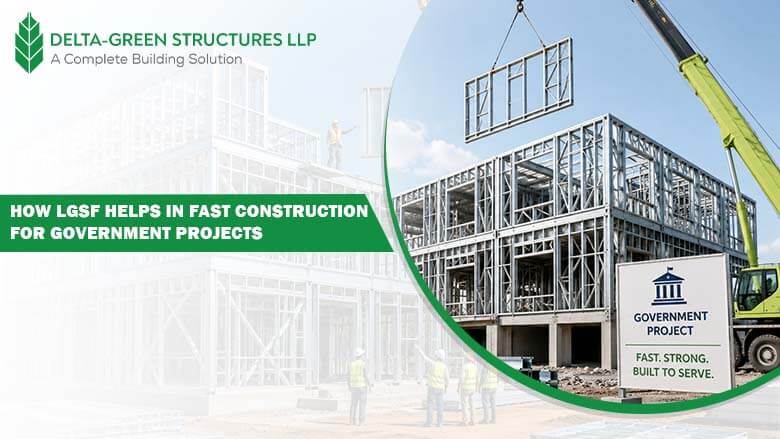
How LGSF Helps in Fast Construction for Government Projects

How LGSF Helps in Fast Construction for Government Projects When deadlines don’t move and accountability is non-negotiable – here’s why the Light Gauge Steel Frame is changing how India builds. Government construction projects in India have had a complicated relationship with time. Delayed hospitals, half-built schools, stalled housing schemes. The reasons are many, but one thing is now clear: the problem was never entirely about intent. A big part of it was always about method. That’s where LGSF for Government Construction Projects is quietly rewriting the rules. Light Gauge Steel Frame technology is not a buzzword – it’s a proven, precision-engineered system that’s already building faster, smarter, and cleaner across sectors worldwide. And in India’s North-East, Delta Green Structures is leading that charge. First – What exactly is LGSF? LGSF stands for Light Gauge Steel Frame – a cold-formed steel structural system where thin, high-strength steel sections are precisely manufactured off-site and assembled on location. Think of it as Lego for serious buildings, except each piece is engineered to the millimeter. Unlike conventional RCC (Reinforced Cement Concrete) construction that is heavily dependent on on-site labor, weather conditions, and curing times, LGSF components arrive at the site ready to install. The result? Construction timelines that are 40-60% shorter than traditional methods – without compromising structural integrity. 40–60% Faster than RCC construction 30% Lighter structural load 100% Factory-precision fabrication 50+ Years design lifespan Why Government Projects Specifically Need LGSF Government construction projects carry a weight that private builds simply don’t – public money, public scrutiny, and public need. A delayed school means children learn under a temporary shed. A stalled health centre means a community goes without. Speed here is not a luxury. It’s a civic obligation. Here’s where government construction using LGSF makes a fundamental difference: Off-site Manufacturing: Components fabricated in parallel with site prep – no waiting for one stage to finish before the next begins. Weather-Independent: No curing time. No monsoon halts. Assembly continues regardless of site conditions. Modular & Scalable: Schools, hospitals, housing – modular steel construction for the government adapts to any footprint, fast. Accountable Quality: Factory precision means every component is traceable, measurable, and consistent – no guesswork. LGSF for institutional buildings is not just about going fast – it’s about arriving at a quality outcome that is auditable, repeatable, and worth every rupee of public spending. The North-East Advantage: Where LGSF Proves Its Real Worth Most of the LGSF conversation in India happens in metro corridors. But the real test? Challenging terrain. Seismic zones. Remote hillside locations. Extreme rainfall. This is exactly where Delta Green Structures has built its expertise. As the leading LGSF manufacturing unit in the North-East of India, Delta Green Structures is uniquely positioned to serve government projects across challenging climatic conditions and geographical terrains where conventional RCC construction struggles – logistically, structurally, and financially. The region sees heavy monsoon, unstable soil in many zones, and connectivity challenges that make transporting bulk construction material both expensive and time-consuming. Light gauge steel frame government buildings built using LGSF solve this precisely – components are lighter, easier to transport even to remote sites, and require minimal heavy machinery during assembly. What takes months in concrete can take weeks in steel – without losing a millimetre of safety or a rupee of value LGSF for Institutional Buildings: Real Use Cases The scope of LGSF for institutional buildings spans far wider than most people realize. Here are the government project types where LGSF is already making impact: Schools and anganwadis – rapid construction meets strict safety and load standards. Primary Health Centres (PHCs) – clean, fast, functional; built without weeks of wet work. Government staff quarters and housing schemes – prefabricated steel structures for government cut project durations dramatically. Disaster-relief and temporary admin structures – deployed quickly and built to last. Border area infrastructure – lightweight components, strategic assembly, minimal logistics chain. Water treatment and utility buildings – corrosion-resistant steel handles humid and wet-zone conditions well. Sustainability: The Argument That Often Gets Missed Government buildings have a 50–year horizon. Any serious decision-maker has to ask – what is this costing not just today, but over a lifetime? Sustainable government construction in LGSF makes the case quietly but powerfully. Steel is among the most recyclable materials on earth with recycling rates exceeding 85% globally. LGSF construction generates significantly less construction waste than concrete. The thermal properties of LGSF walls, combined with insulation, reduce long-term energy consumption in buildings. For a government investing in green and climate-resilient infrastructure, LGSF is not just a faster choice – it’s a smarter one for the planet. 85%+ Steel Recyclability: Among the highest recyclable materials used in construction with no toxic runoff, minimal waste landfill. Reduced Construction Waste: Factory fabrication means precise cuts, zero offcuts on-site, and significantly cleaner project zones. Energy Efficient Buildings: Superior insulation compatibility cuts long-term energy bills in government-occupied buildings.`     What Makes Delta Green Structures Different There are vendors. And then there are partners who understand the terrain you’re building in. Delta Green Structures offers more than steel frames – they offer end-to-end turnkey construction services with cutting–edge designs realized through fully automated Pinnacle machines – the same machines used by leading LGSF builders globally. Their commitment is not just speed. It’s precision. It’s accountability. It’s the assurance that what they deliver surpasses industry standards – not just meets them. For government contractors, that means fewer RFIs, fewer change orders, and fewer uncomfortable conversations in front of audit committees. The Bottom Line India is building – fast and at scale. The Pradhan Mantri Awas Yojana, the Smart Cities Mission, the health infrastructure push post–2020 – all of it demands a construction ecosystem that can keep pace with ambition and accountability in equal measure. LGSF for government construction projects is not the future of Indian public infrastructure. It’s the present and the regions that adopt it earliest will simply get there first. Whether it’s a school in a remote hill district or a health centre in a

How LGSF Helps in Fast Construction for Government Projects Read More »

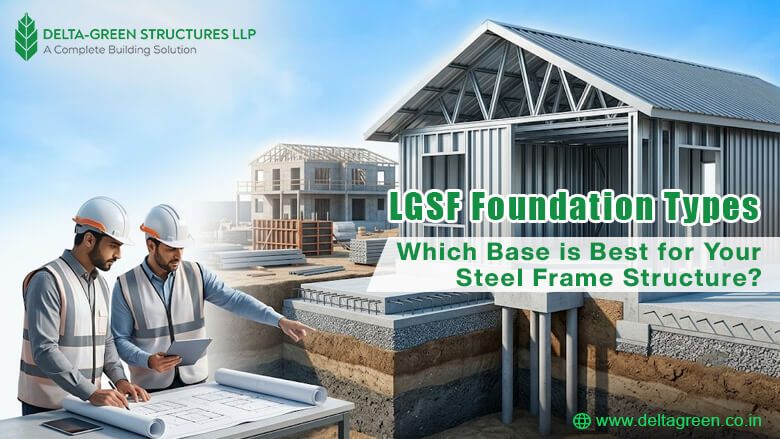
LGSF Foundation Types: Which Base is Best for Your Steel Frame Structure?

LGSF Foundation Types: Which Base is Best for Your Steel Frame Structure? A strong structure doesn’t begin with walls – it begins beneath them. When it comes to Light Gauge Steel Framing, the real hero is the foundation you don’t see. Choosing the right LGSF Foundation Types is not just a technical decision – it directly impacts durability, safety, cost, and long-term performance. Whether you’re building a modern home, a commercial unit, or a large-scale project, understanding the right base can make all the difference. Let’s break it down in a way that actually helps you decide – not confuse you. Why Foundation Matters More in LGSF Construction Unlike traditional RCC structures, LGSF buildings are lightweight yet incredibly strong. That means the foundation doesn’t need to carry excessive load – but it must be precise. A well-planned LGSF building foundation design ensures: Faster construction timelines Better load distribution Resistance to soil movement Long-term structural stability At Delta Green Structures, every project starts with a carefully engineered base because even the most advanced steel frame is only as strong as what supports it. Understanding the Core: LGSF Foundation Types Not all land is created equal – and neither are foundations. Here are the most effective Foundation types for steel frame house construction: 1. Strip Footing -The Most Practical Choice Simple. Efficient. Cost-effective. The strip footing for LGSF houses is one of the most commonly used foundation systems, especially for residential projects. Best suited for: Stable soil conditions Low to medium-rise structures Budget-conscious builds Why it works:  It runs continuously under load-bearing walls, distributing weight evenly. Since LGSF structures are lighter, strip footings often require less excavation and material. What makes it smart: Lower construction cost Faster installation Minimal complexity For most homes, this is the go-to solution – and for good reason. 2. Raft (Mat) Foundation – When Stability is Key Think of it as a floating base for your entire structure. A raft foundation spreads the load across the entire building footprint, making it ideal for weaker or uneven soil. Best suited for: Soft or loose soil Areas with high water tables Projects requiring uniform load distribution Why it works:  Instead of concentrating weight in specific areas, it distributes it across a large slab, reducing settlement risks. Advantages: Prevents differential settlement Ideal for challenging terrains Strong base for larger LGSF structures At Delta Green Structures, raft foundations are often recommended for projects in unpredictable soil conditions, especially in regions with varying terrain. 3. Isolated Footing – Precision Where Needed Minimalist, yet effective. Isolated footings are placed under individual columns, making them suitable for structures with point loads rather than continuous walls. Best suited for: Small commercial buildings Modular structures Projects with defined column layouts Why it works:  It supports specific load points without over-engineering the entire foundation. Benefits: Material-efficient Cost-effective for smaller builds Easy to design and execute This is a great option when your LGSF structural base design focuses on flexibility and modularity. 4. Pile Foundation – Built for Challenging Ground When the surface can’t be trusted, go deeper. A deep foundation for steel frame construction like pile foundation transfers the load to deeper, stronger soil layers. Best suited for: Weak or marshy soil Flood-prone areas Heavy structural loads Why it works:  Steel or concrete piles are driven deep into the ground, ensuring stability even when the upper soil layers are unreliable. Key advantages: Exceptional load-bearing capacity Ideal for extreme conditions Long-term structural reliability For high-risk terrains, this foundation type ensures peace of mind. 5. Slab-on-Grade – Fast, Clean, Modern Speed meets simplicity. This is a single-layer concrete slab poured directly on the ground, commonly used in modern prefab and LGSF homes. Best suited for: Flat terrain Residential and low-rise buildings Fast-track construction projects Why it works:  It combines foundation and floor into one system, reducing construction time significantly. Benefits: Faster execution Reduced labor cost Clean and minimal design This approach aligns perfectly with the efficiency-driven philosophy of LGSF construction. How to Choose the Right LGSF Foundation Types Choosing between different light gauge steel frame foundation types isn’t about preference – it’s about precision. Here’s what actually matters: Soil Condition: Is your soil stable, loose, or waterlogged? This single factor can eliminate half your options. Load Requirements: Even lightweight structures need accurate load calculations. Your foundation must match your design. Budget Constraints: Some foundations save upfront costs, while others save long-term maintenance. Project Timeline: Need speed? Go for slab or strip footing. Need durability in tough conditions? Consider a raft or pile. Environmental Factors: Rainfall, seismic activity, and terrain all influence the final decision. At Delta Green Structures, these factors are analyzed in detail before recommending the most suitable LGSF Foundation Types, ensuring every project stands strong from the ground up. What Most Builders Won’t Tell You Here’s something often overlooked: Overdesigning your foundation can be just as costly as underdesigning it. Many projects waste money on unnecessarily heavy foundations, ignoring the lightweight advantage of LGSF. A smart LGSF building foundation design balances strength, cost, and efficiency. Also, integration between foundation and steel framing is critical. Misalignment, even by a few millimeters, can affect the entire structure. That’s why precision engineering and automated manufacturing play a huge role. The Delta Green Structures Advantage What sets Delta Green Structures apart isn’t just technology – it’s execution. Fully automated Pinnacle machines for precision. Expertise in diverse terrains and climates. Turnkey solutions from foundation to finish. Tailored consultation for every project. Being the leading manufacturing unit in North-East India offering such integrated services, the focus is always on building smarter – not just faster. Final Thoughts: Build Smart from the Ground Up Choosing the right LGSF Foundation Types is not just a technical step – it’s the foundation of your entire project’s success. From soil conditions and load requirements to budget and environmental factors, every decision plays a role in ensuring long-term durability and performance. A well-planned base not only enhances the strength of your structure but also optimizes construction speed and

LGSF Foundation Types: Which Base is Best for Your Steel Frame Structure? Read More »

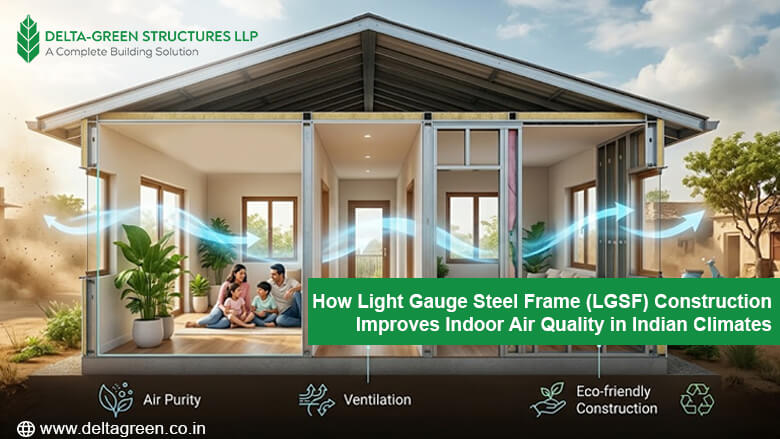
How Light Gauge Steel Frame (LGSF) Construction Improves Indoor Air Quality in Indian Climates

How Light Gauge Steel Frame (LGSF) Construction Improves Indoor Air Quality in Indian Climates Because the air you breathe inside your home should be as pure as your intentions behind building it. When we talk about construction in India, conversations usually revolve around cost, durability, and speed. But here’s a truth that’s often overlooked—the quality of indoor air directly affects your health, productivity, and overall well-being. With rising pollution levels, unpredictable weather patterns, and increasing urban density, indoor air quality has become a serious concern across Indian households and commercial spaces. This is exactly where Light Gauge Steel Frame Construction steps in—not just as a modern building method, but as a smarter, healthier way to build. Let’s break down how this innovative approach is transforming the way we breathe inside our spaces. The Invisible Problem: Indoor Air Quality in India From the humid air of the North-East to the dry heat of Rajasthan and the polluted metros like Delhi, Indian climates are diverse and challenging. Traditional construction methods often trap moisture, dust, and pollutants inside buildings. Common issues include: Mold growth due to damp walls Poor ventilation design Dust accumulation from porous materials Chemical emissions from low-quality construction inputs Over time, these factors contribute to respiratory problems, allergies, and fatigue. Now imagine a construction system designed to eliminate these problems from the ground up. What Makes Light Gauge Steel Frame Construction Different? Light Gauge Steel Frame Construction uses cold-formed steel sections to create the structural framework of a building. Unlike traditional brick-and-mortar systems, it is precise, factory-made, and engineered for performance. At companies like Delta Green Structures, this process is powered by advanced machinery and high-grade materials, ensuring consistency and quality in every project. But how does this relate to cleaner indoor air? Let’s take a closer look. 1. Zero Moisture Retention Means No Mold or Dampness One of the biggest enemies of indoor air quality is moisture. Traditional materials like bricks and cement tend to absorb water, especially in regions with heavy rainfall or humidity. With Lightweight steel construction, the structure itself does not absorb moisture. This means: No damp walls No hidden fungal growth No musty odors The result is a fresher and healthier indoor environment throughout the year. 2. Designed Ventilation, Not Accidental Airflow In conventional buildings, ventilation is often an afterthought. But with the LGSF building system, ventilation is integrated into the design stage itself. Using Modern steel frame construction, architects can: Plan precise airflow pathways Integrate mechanical ventilation systems seamlessly Optimize natural light and cross ventilation This ensures that fresh air circulates continuously, reducing indoor pollutants and improving oxygen levels. 3. Non-Toxic and Cleaner Building Materials Another hidden contributor to poor indoor air quality is the use of low-grade materials that release harmful chemicals over time. Steel stud framing construction eliminates this risk by using: High-quality galvanized steel Controlled, factory-manufactured components Minimal on-site chemical usage At Delta Green Structures, only top-tier materials and accessories are used, ensuring that your indoor space remains free from harmful emissions. 4. Dust-Free Precision Construction Traditional construction sites are often filled with cement dust, sand particles, and debris that linger even after completion. With Light gauge steel frame building technology, most components are pre-engineered and assembled with precision. This results in: Minimal dust generation Cleaner construction process Reduced post-construction contamination This means you move into a cleaner and healthier environment from day one. 5. Better Thermal Performance for Healthier Air Temperature plays a crucial role in indoor air quality. Poor insulation leads to: Excess humidity Condensation Increased pollutant concentration Light Gauge Steel Frame Construction allows for advanced insulation systems to be integrated within walls and roofs. This results in: Stable indoor temperatures Reduced humidity fluctuations Improved comfort and air quality In Indian climates, this makes a significant difference. 6. Adaptability across Indian Climates India’s climate diversity demands construction that adapts rather than resists. From the heavy rains of the North-East to coastal humidity and dry inland heat, Lightweight steel construction performs consistently across regions. Companies like Delta Green Structures, being one of the few advanced manufacturing units in the North-East, specialize in designing structures that respond intelligently to local environmental challenges. This ensures better indoor air quality regardless of location. 7. Airtight Yet Breathable Structures The best buildings are both airtight and breathable. With Modern steel frame construction, you get: Controlled air infiltration, preventing outside pollutants from entering Planned ventilation systems that ensure only clean air circulates This balance is essential for maintaining high indoor air quality while keeping external pollution out. 8. Faster Construction with Less Contamination The longer a construction project takes, the more exposure it has to dust, moisture, and environmental pollutants. Light Gauge Steel Frame Construction significantly reduces construction time due to: Pre-engineered components Automated manufacturing Efficient assembly At Delta Green Structures, the use of advanced Pinnacle machines ensures faster turnaround without compromising quality, resulting in cleaner and healthier buildings from the very beginning. Why This Matters More Than Ever Today, our indoor spaces do a lot more than just provide shelter. They function as workspaces, study areas, and safe zones for our families, which makes the quality of air inside them extremely important. With increasing pollution and changing lifestyles, poor indoor air can quietly impact health over time. That’s why choosing Light Gauge Steel Frame Construction is not just about structure—it’s about creating a cleaner, healthier living environment. It’s a smart, long-term investment in comfort, well-being, and better everyday living. Final Thoughts: Build Smart, Breathe Better Indoor air quality is not something that can be fixed later. It must be built into the structure from the very beginning. With its precision engineering, moisture resistance, cleaner materials, and smart ventilation, Light Gauge Steel Frame Construction offers a clear advantage over traditional methods. With a reliable partner like Delta Green Structures, you are not just building faster or more efficiently—you are building healthier. Because a truly modern building does not just stand strong, it creates a space where you can breathe freely every single day.

How Light Gauge Steel Frame (LGSF) Construction Improves Indoor Air Quality in Indian Climates Read More »

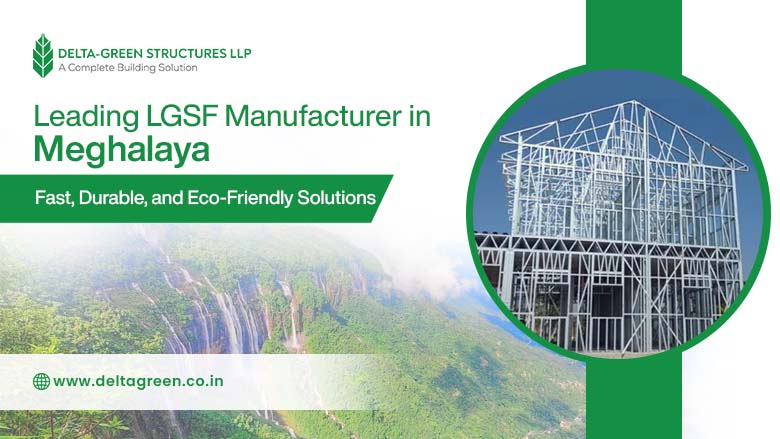
Leading LGSF Manufacturer in Meghalaya: Fast, Durable, and Eco-Friendly Solutions

The construction landscape in Meghalaya is evolving rapidly with growing demand for faster project delivery, sustainable materials, and structures capable of performing well across challenging terrains and climatic conditions. In this transformation, Light Gauge Steel Framing (LGSF) has emerged as one of the most efficient and future-ready construction technologies. As a trusted LGSF manufacturer in Meghalaya, Delta Green Structures delivers precision-engineered LGSF solutions designed for speed, durability, sustainability, and long-term structural reliability. With advanced automated Pinnacle machines, premium-grade materials, and turnkey project expertise, the company supports residential, institutional, commercial, and government infrastructure projects across the North-East. This blog explores how LGSF technology is reshaping modern construction and why Delta Green Structures is recognized as a leading LGSF manufacturer in Meghalaya offering fast, durable, and eco-friendly building solutions Understanding LGSF — A Smarter Alternative to Conventional Construction Light Gauge Steel Framing is an engineered system where structures are built using cold-formed galvanized steel sections, produced with high precision through automated roll-forming technology. Unlike traditional brick-and-mortar construction, LGSF offers: Factory-fabricated structural components Minimal on-site wet work Faster installation and assembly Higher dimensional accuracy Reduced structural load and material wastage This makes LGSF especially suitable for Meghalaya, where terrain variations, heavy rainfall, and logistical challenges often delay conventional construction. Delta Green Structures, as a leading LGSF manufacturer in Meghalaya, ensures every frame is designed with structural precision, advanced engineering inputs, and strict quality assurance standards to deliver strong, stable, and long-lasting buildings. Fast-Track Construction for High-Priority Projects Time efficiency is one of the most compelling advantages of LGSF construction. With fully automated Pinnacle machines and digital design-to-production workflows, Delta Green Structures ensures: Faster fabrication cycles Significant reduction in manual intervention Quick on-site assembly and installation Predictable and shorter project timelines For projects such as: Institutional buildings Worker accommodations Prefabricated housing Tourism facilities Healthcare or administrative units LGSF enables completion in a fraction of the time required by conventional construction. This capability has positioned Delta Green Structures as a preferred LGSF manufacturer in Meghalaya for both public and private sector clients seeking rapid, reliable, and well-engineered project delivery. Durable Structures Built for Meghalaya’s Climate & Terrain Meghalaya experiences: High humidity levels Intense rainfall Hilly and sloped construction sites Seismic activity zones These environmental variables demand structures that are lightweight yet strong, corrosion-resistant, and structurally stable. LGSF systems manufactured by Delta Green Structures offer: Galvanized, corrosion-protected steel frames High load-bearing stability Resistance to termites, rot, and fungal decay Superior performance in humid and coastal zones Fire-resistant and dimensionally stable structures Unlike timber or traditional RCC, LGSF minimizes risks of: Structural cracks Moisture damage Long-term degradation This makes it an ideal construction technology for: Hill resorts and eco-lodges Institutional and educational facilities Modular office and site structures Residential developments in remote locations As a technology-driven LGSF manufacturer in Meghalaya, Delta Green Structures integrates structural engineering best practices to ensure durability and performance over the complete lifecycle of the building. Eco-Friendly & Sustainable Construction for a Greener Future Sustainability is no longer optional, it is central to future infrastructure development. LGSF plays a significant role in supporting eco-conscious construction through: Reduction in concrete and brick usage Lower embodied carbon output Minimal site disturbance and excavation Recyclable and reusable steel components Reduced construction waste generation Factory-controlled production also ensures: Optimized material consumption Lower energy consumption during fabrication Cleaner and safer site environments This aligns strongly with environmental priorities across the North-East. By combining technology, resource efficiency, and precision engineering, Delta Green Structures strengthens its position as a sustainability-driven LGSF manufacturer in Meghalaya delivering eco-friendly and future-ready construction alternatives. Turnkey LGSF Manufacturing and Project Execution Expertise One of the major strengths of Delta Green Structures is its end-to-end turnkey project capability ensuring seamless execution from conceptualization to completion. Comprehensive LGSF Solutions Include: Structural design & detailing Engineering validation & load analysis Customizable LGSF design packages Precision manufacturing with automated Pinnacle machines On-site installation & assembly support Quality inspection & structural performance checks Ongoing consultancy through project duration This integrated workflow helps clients achieve: Faster approvals Minimal technical gaps On-time project completion Consistent and benchmark-quality results Whether for institutional buildings, industrial facilities, modular housing, or government projects, this holistic execution approach reinforces the company’s credibility as a trusted LGSF manufacturer in Meghalaya. Applications of LGSF Across Key Sectors in Meghalaya LGSF technology is widely suited for diverse project categories, including: Residential & villa developments Educational and institutional blocks Healthcare and administrative units Prefabricated labour accommodation Modular offices and site buildings Tourism infrastructure and cottages Warehousing & utility structures Lightweight framing, rapid deployment, and structural stability make it an efficient solution for both temporary and permanent building applications. Commitment to Quality, Precision, and Performance Delta Green Structures prioritizes uncompromised quality at every production stage through: Use of top-tier LGSF materials and accessories Automated manufacturing to eliminate dimensional errors Strict alignment with engineering safety standards Robust inspection and monitoring systems The result — highly precise, durable, and performance-driven LGSF structures that exceed conventional construction standards. This dedication to engineering excellence strengthens its standing as a leading LGSF manufacturer in Meghalaya delivering dependable, scalable, and future-oriented construction systems. Partner with a Trusted LGSF Manufacturer in Meghalaya Choosing the right LGSF partner ensures better structural performance, long-term value, and sustainable infrastructure outcomes. With advanced technology, manufacturing expertise, and deep regional project experience, Delta Green Structures continues to empower modern construction across Meghalaya and the North-East. If you are looking for fast, durable, and eco-friendly LGSF construction solutions, the team is equipped to support you with engineering precision, turnkey execution capability, and reliable project partnership.

Leading LGSF Manufacturer in Meghalaya: Fast, Durable, and Eco-Friendly Solutions Read More »