Delta Green

steel frame buildings

LGSF: Green & Sustainable Building Solutions in North-East India

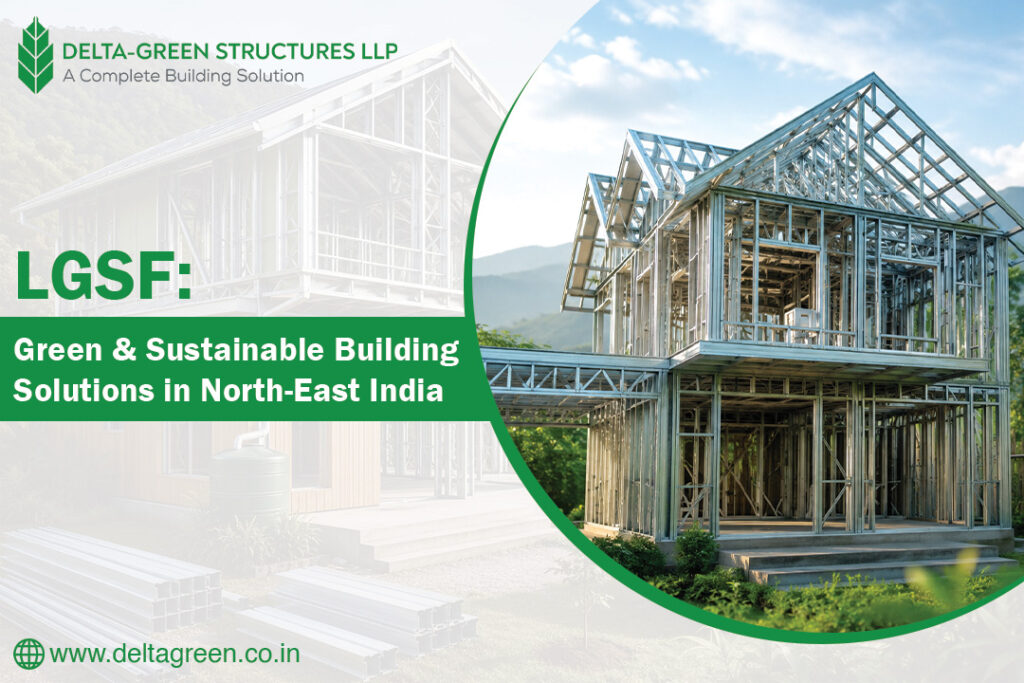
LGSF: Green & Sustainable Building Solutions in North-East India  Steel that speaks. Structures that last. The mountains tested it. The earthquakes challenged it. LGSF passed every time.  Construction in North-East India has always come with unique challenges. Difficult terrain. Extreme weather. High seismic activity. Frequent floods and landslides. These are the conditions where traditional building techniques fall short, due to their high expenses, lengthy construction times, and limited durability. There is a better way to construct. It is known as Light Gauge Steel Framing -and it is changing the way North-East India builds. Why LGSF is a Sustainable Building Solution Galvalume coating, combined with 55% Aluminium, 43.4% Zinc, 1.6% Silicon are one of the most widely used recycled materials in the building lifecycle. It reduces the environmental impact throughout the lifecycle. It has certain unique features such as : Less construction waste Faster project completion Energy-efficient structures Recyclable steel materials Lower maintenance costs Reduced environmental impact LGSF buildings are designed to last longer while consuming fewer natural resources compared to traditional construction methods. Why North-East India Needs LGSF Right Now? If the ground is shaking, your building should not. North-East India is one of the most seismically active regions of India. The area has undulating topography, unreliable weather, and high costs and long delivery times for bringing heavy construction material. The conventional RCC construction method is weighty. It is a heavy material that uses lots of cement, sand and water. It takes months or years to do. A heavy RCC structure is also at high risk in an earthquake-prone area. LGSF’s lightweight steel structural system provides complete solutions to all these problems. Green Building Benefits of LGSF in North-East India LGSF uses recycled material, Galvalume coating so it leaves a far smaller footprint on the region’s fragile ecosystems. It needs no river sand, no curing water, and generates almost zero construction waste on site. 1. Lower Environmental Impact Construction causes nearly 40% of global carbon emissions. LGSF helps because: No river sand mining is needed (unlike concrete) No water is required for curing Minimal waste is generated on-site Steel is the world’s most recycled material This protects rivers, forests, and biodiversity -all of which are critical in this region. 2. Earthquake Resilience The 1950 Assam earthquake measured 8.6 on the Richter scale -one of the strongest ever recorded. The threat has not gone away. LGSF buildings handle earthquakes better because: Steel absorbs and releases seismic energy safely Lighter buildings generate less force during a quake All joints are engineered and tested -no guesswork This is not a minor advantage. It is a life-safety issue for millions of people across the region. 3. Flood and Moisture Resistance Mawsynram in Meghalaya is considered to be the wettest place on Earth. Much of the North-East gets torrential rainfall every year. LGSF handles this well: Steel does not rot, warp, or swell Structures can be elevated easily above flood levels The right cladding keeps moisture out completelyNo mould or fungal growth in the wall cavity 4. Faster Construction Speed matters -especially when infrastructure is urgently needed. A typical LGSF building is completed in 4 to 6 months An equivalent RCC structure takes 18 to 24 months Faster builds mean less site disruption, less noise, and lower costs For schools, hospitals, and homes, this difference is enormous. 5. Energy Efficiency LGSF works well with insulation systems like rock wool, glass wool, or EPS panels. In the cold highlands of Nagaland, Arunachal, and Mizoram, it keeps the heat in In the humid lowlands of Assam and Tripura, it keeps heat out This reduces electricity bills and energy consumption year-round Well-designed LGSF buildings can qualify for GRIHA and IGBC green building ratings in India. Where Is LGSF Being Used in the North-East? Homes and Housing For affordable homes in remote hilly and tribal areas Compatible with PMAY (Pradhan Mantri Awas Yojana) It can be manufactured in Siliguri and assembled locally Schools Quick to build, safe in earthquakes Designed for natural ventilation and daylight Lower running costs for energy Hospitals and Health Centres Dust-free construction is ideal for medical settings Fast delivery is critical in underserved areas Hygienic and easy to maintain Government Buildings Several state governments are already exploring LGSF Compatible with Smart Cities Mission projects Suitable for areas with poor road connectivity Eco-Lodges and Tourism Low site impact -ideal near forests and wildlife zones Can be clad in bamboo, timber, or stone for a natural look Removable and relocatable if needed Respecting the Region’s Cultural Identity North-East India has a rich tradition of vernacular architecture. Assamese Chang Ghars (stilt houses) Naga Morung structures Mizo Zawlbuk community halls Arunachali bamboo homes LGSF does not replace these traditions. It complements them. LGSF frames can be clad in bamboo, local stone, timber, or traditional-inspired finishes. The result is a building that looks rooted in the region -but is far safer and more durable. LGSF and Sustainability -Building for the Future Green is not just a colour. With LGSF, it is a commitment. Governments, institutions, and private builders are all under increasing pressure to build greener. The LGSF construction system is inherently sustainable: Steel can be recycled and reused at the end of a building’s life Factory manufacturing reduces on-site pollution and waste Lighter structures require less concrete in foundations -reducing cement consumption Energy-efficient wall systems can be integrated into the steel frame Faster construction means lower energy use over the build period For North-East India -a region of extraordinary natural beauty and ecological sensitivity -building sustainably is not just good practice. It is a responsibility. What makes Delta Green Structures a Sustainable Building Solution in North-East India? Delta Green Structures LLP provides sustainable building solutions in North-East India. Based in Siliguri, West Bengal, they serve clients across West Bengal, Assam, Sikkim, Tripura, Meghalaya, Mizoram, Manipur, Arunachal Pradesh, Bihar, and even Bhutan. End-to-End Service: They handle everything from design, manufacturing and all the way to final handover, maintaining sustainable practices. One team. Zero confusion. Sustainable practices: They believe in eco-friendly

LGSF: Green & Sustainable Building Solutions in North-East India Read More »
Light Gauge Steel Framing (LGSF): Best Construction Method for High Altitude Areas

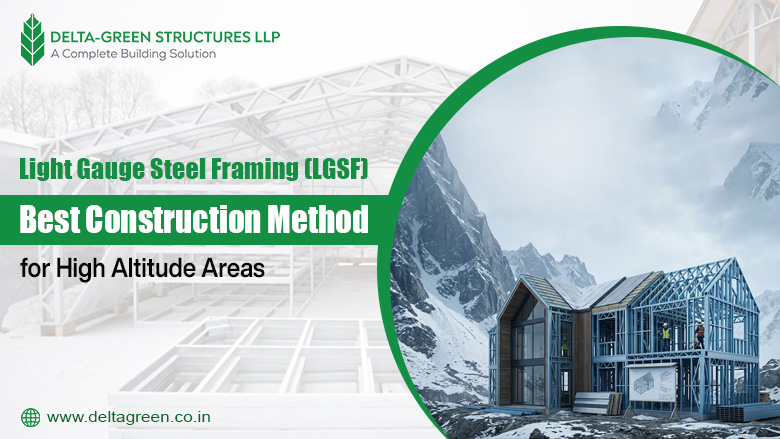
Light Gauge Steel Framing (LGSF): Best Construction Method for High Altitude Areas Building Strong Where Nature Tests the Hardest Snowfall. Landslides. Earthquakes. Heavy rain. Difficult transportation routes. Constructing buildings in mountainous terrain has never been easy. Traditional construction methods often struggle in these conditions because transporting heavy materials, managing labor, and maintaining construction speed become major challenges at high altitudes. This is where Light Gauge Steel Framing for High Altitude Areas is transforming the future of modern construction. From hill stations and border regions to remote mountainous zones, LGSF is becoming the preferred construction solution for engineers, architects, government projects, and private developers who need structures that are fast, durable, lightweight, and climate-resistant. At Delta Green Structures, advanced LGSF technology and fully automated Pinnacle manufacturing systems are helping redefine how modern buildings are constructed in challenging terrains across India. Why Traditional Construction Faces Problems in High Altitude Regions Building in mountainous areas is very different from building in cities or plains. High altitude locations create practical problems that directly affect project timelines and structural safety. Some of the biggest challenges include: Difficulty transporting cement, sand, and heavy materials Short construction seasons due to weather Increased labor and logistics costs Risk of earthquakes and soil movement Moisture damage caused by snow and rainfall Delays due to inaccessible terrain Traditional RCC structures often become slow, expensive, and difficult to manage in these environments. This is why experts are now choosing light gauge steel framing in high altitude regions for faster and more reliable project execution. What is Light Gauge Steel Framing (LGSF)? Light Gauge Steel Framing is a modern construction system that uses cold-formed galvanized steel sections to create strong structural frameworks for buildings. Unlike conventional concrete construction, LGSF structures are manufactured with precision-engineered steel components that are lightweight, durable, and easy to assemble on-site. The biggest advantage? The entire system is designed for speed, accuracy, and long-term performance — especially in difficult geographical conditions. At Delta Green Structures, every frame is manufactured using advanced automated technology to ensure superior precision and structural quality. Why LGSF is the Best Choice for High Altitude Areas 1. Lightweight Yet Extremely Strong One of the biggest advantages of Light Gauge Steel Framing for High Altitude Areas is its lightweight nature. In hilly regions, heavy structures increase pressure on unstable soil and foundations. LGSF significantly reduces dead load compared to concrete structures, making buildings safer and more stable on mountain slopes. This makes lightweight steel structures for hills highly effective for: Resorts Hotels Homestays Army camps Educational institutions Healthcare facilities Government infrastructure projects Even in remote locations, transporting steel sections becomes easier and more cost-efficient. 2. Faster Construction in Difficult Terrain Time is critical in mountainous regions because weather conditions can stop work unexpectedly. One of the biggest reasons behind the rise of fast construction in hilly terrain using LGSF is the speed of installation. Since most components are pre-engineered and manufactured off-site, on-site construction becomes faster, cleaner, and more organized. Compared to traditional methods, LGSF can reduce construction timelines dramatically. This is especially useful for: Border infrastructure projects Emergency housing Tourism properties Government development projects in remote regions At Delta Green Structures, turnkey LGSF solutions help clients complete projects within shorter deadlines without compromising quality. 3. Excellent Performance in Cold Climate Conditions High altitude areas often face freezing temperatures, moisture, and heavy snowfall. Concrete structures can develop cracks due to temperature fluctuations over time. Steel framing systems, however, perform exceptionally well when designed properly with insulation and weather-resistant materials. This makes LGSF for cold climate construction one of the smartest modern solutions for mountain architecture. Benefits include: Better thermal insulation possibilities Reduced moisture absorption Lower maintenance Long structural life Resistance to rust with galvanized coatings For regions that experience severe winters, LGSF provides long-term reliability with minimal structural deterioration. 4. Better Earthquake Resistance Mountainous regions are often located in seismic zones where earthquakes are a serious concern. One major advantage of LGSF for seismic zones is flexibility. Steel structures absorb and distribute seismic energy better than rigid concrete systems, reducing the risk of catastrophic failure. Because LGSF structures are lighter, the seismic load acting on the building also becomes lower. This makes steel frame buildings in mountainous areas safer for occupants and more reliable during seismic activity. For earthquake-prone hill regions in India and the North-East, this construction method is becoming increasingly preferred by infrastructure planners. 5. Eco-Friendly and Sustainable Construction Modern construction is no longer only about speed. Sustainability also matters. LGSF systems generate minimal construction waste and use recyclable steel components. They also require less water compared to traditional construction methods. In environmentally sensitive mountain ecosystems, this becomes a major advantage. With growing demand for green infrastructure, high altitude construction using LGSF is helping developers reduce environmental impact while maintaining high construction standards. Smart Construction for Tourism and Hospitality Projects Tourism in mountain regions is growing rapidly. Resorts, eco-retreats, boutique stays, and premium homestays are being developed across hilly destinations. But investors now want structures that are: Faster to build Energy efficient Visually modern Durable in extreme climates This is exactly why LGSF construction in hilly regions is gaining popularity in the hospitality industry. LGSF allows flexible architectural designs while ensuring structural safety and quicker project delivery. At Delta Green Structures, customized LGSF packages help hospitality businesses create modern infrastructure even in geographically challenging areas. The Future of Mountain Construction is Steel-Framed The future of construction in high altitude regions will depend on technologies that are: Faster Safer Smarter More sustainable Traditional construction methods often struggle to meet the demands of modern mountain infrastructure. In contrast, Light Gauge Steel Framing for High Altitude Areas delivers the perfect balance of strength, speed, flexibility, and durability. Whether it is government infrastructure, tourism projects, healthcare facilities, or residential developments, LGSF is proving to be the smarter choice for difficult terrains. With advanced manufacturing capabilities, premium materials, and expertise in challenging geographical conditions, Delta Green Structures is helping shape a new era of construction across high altitude

Light Gauge Steel Framing (LGSF): Best Construction Method for High Altitude Areas Read More »

Construction Challenges in North-East India & How LGSF Solves Them

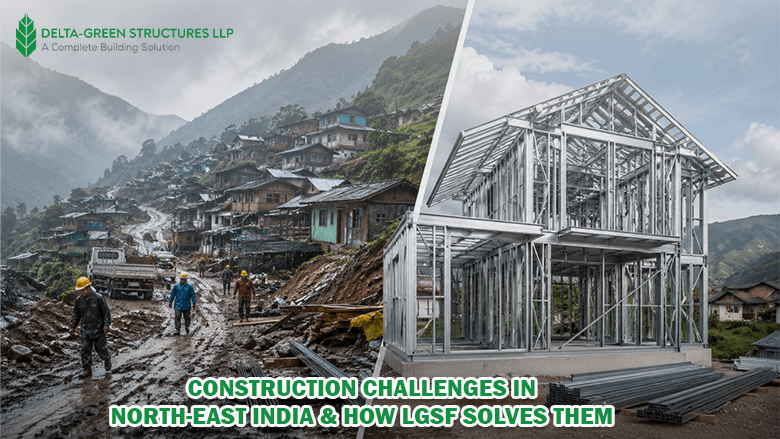
Construction Challenges in North-East India & How LGSF Solves Them Building in the North-East Was Never Easy, Until Now. Heavy rainfall, Landslide-prone roads, Earthquake-sensitive zones, Remote locations, Transportation delays, Short working seasons. Construction in North-East India has always been a different game altogether. While traditional brick-and-cement structures struggle with climate, terrain, and logistics, a smarter construction revolution is quietly changing the landscape – LGSF Construction in North-East India. And honestly! It’s not just a “new method” anymore. It’s becoming the future of fast, durable, and climate-smart infrastructure across the region. This is where companies like Delta Green Structures are stepping in with advanced technology, faster execution, and practical building solutions designed specifically for the North-East. Why Construction in North-East India Is So Challenging The North-East is one of the most beautiful regions in India but for builders, it comes with serious construction obstacles. 1. Difficult Terrain & Transportation Issues Transporting heavy materials through hilly roads and remote areas is expensive and time-consuming. In many locations, large construction equipment cannot even reach the site properly. Traditional construction depends heavily on: Sand Cement Bricks Large labor teams Continuous material supply One road blockage due to landslides or rain can delay an entire project for weeks. That’s one of the biggest reasons why Steel frame construction North East India is gaining attention. LGSF structures use lightweight steel components manufactured with precision and transported easily to project sites. Less weight. Less hassle. Faster assembly. Simple. 2. The Rain Problem Nobody Talks About North-East India receives some of the heaviest rainfall in the country. And rain affects construction more than people realize. Traditional construction often faces: Water seepage Damp walls Slow curing time Cracks due to moisture damage Long project delays during monsoon This is where Light Gauge Steel Frame construction North East India changes the entire approach. LGSF structures are manufactured off-site using automated machines, which mean: Minimal on-site construction dependency Faster installation Reduced weather impact Better structural consistency Even during challenging weather conditions, project timelines remain far more manageable compared to conventional methods. 3. Earthquake Zones Need Smarter Structures Here’s a fact many overlook: Most North-Eastern states fall under high seismic zones. That means buildings here need flexibility, reduced dead load, and better structural performance during earthquakes. Traditional heavy concrete structures increase seismic load. But LGSF Construction in North-East India offers a lightweight alternative that performs significantly better in seismic conditions. Why? Because steel framing systems: Reduce overall structural weight Distribute load efficiently Offer better flexibility during vibrations Minimize structural stress This makes LGSF one of the most practical choices for modern infrastructure in the region. And this isn’t just theory anymore. It’s already being implemented in residential, institutional, and commercial projects across challenging terrains. Speed Matters More Than Ever In the North-East, construction time isn’t just about convenience. It affects: Labor cost Material storage Weather exposure Government deadlines Operational expenses Traditional projects often stretch far beyond expected timelines. But the LGSF building system North East India approach changes the pace completely. Since most structural components are pre-engineered and precision-manufactured, installation becomes dramatically faster. Projects that normally take many months can often be completed in a much shorter timeframe. That’s a massive advantage for: Government infrastructure Schools Hospitals Tourism projects Site offices Resorts Residential housing Fast construction is no longer a luxury. In the North-East, it’s becoming a necessity. Why LGSF Is Perfect for Remote & High-Altitude Areas One of the biggest strengths of LGSF housing projects in North East India is adaptability. Whether it’s: Mountain regions Rural areas Forest-side developments Border infrastructure Tourism properties LGSF systems work efficiently where conventional construction becomes difficult. The lightweight steel sections reduce transportation challenges, while prefabrication reduces dependency on large local labor availability. That’s exactly why many modern developers are now exploring LGSF for: Eco resorts Homestays Staff quarters Educational buildings Commercial spaces And the best part? The design flexibility is surprisingly high. Modern LGSF structures don’t look temporary or industrial anymore. They can be sleek, premium, aesthetic, and highly customized. Delta Green Structures LLP: Bringing Advanced LGSF Technology to the North-East When discussing modern LGSF Construction in North-East India, Delta Green Structures stands out as one of the few companies bringing advanced manufacturing capabilities directly into the region. Being the only manufacturing unit in North-East India equipped with fully automated Pinnacle machines gives them a major edge in precision, consistency, and faster project delivery. But what makes Delta Green Structures different isn’t just machinery. It’s their practical understanding of North-Eastern geography and construction challenges. From difficult climatic conditions to remote project execution, the company focuses on delivering: Turnkey construction solutions Customizable packages Consultancy support Precision engineering Faster turnaround time And in a region where delays are common, execution quality matters a lot. Sustainability Is Becoming a Bigger Priority Construction today isn’t only about building fast. People are now asking:  “How sustainable is the structure?” Traditional construction creates significant material wastage and environmental impact. LGSF systems help reduce: Material waste Water usage On-site pollution Construction debris That makes Steel frame construction North East India a smarter option for future-ready infrastructure. Especially in ecologically sensitive regions like the North-East, sustainable building methods matter more than ever. The Future of Construction in North-East India Is Already Here The construction industry in the North-East is changing rapidly. People now want: Faster project completion Better durability Earthquake-resistant structures Lower maintenance Modern design flexibility Sustainable infrastructure And traditional construction methods are struggling to keep up with these expectations. That’s why LGSF Construction in North-East India is no longer just an alternative – it’s becoming the preferred solution for modern development. With advanced manufacturing, precision technology, and expertise in complex terrains, Delta Green Structures is helping shape this transformation across the region. Because in places where nature tests every structure, smarter construction is no longer optional. It’s essential.

Construction Challenges in North-East India & How LGSF Solves Them Read More »

LGSF Manufacturer in Manipur: Modern Steel Construction for the Future

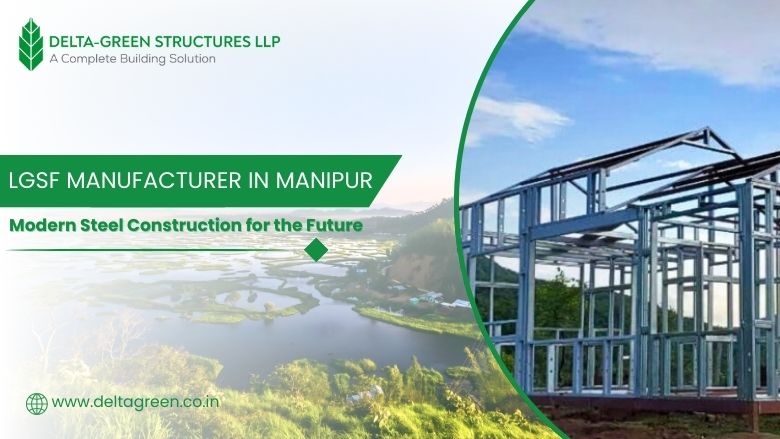
Manipur’s Construction Revolution: Why Smart Building Matters Now Manipur stands at a construction crossroads. The state is experiencing unprecedented urbanization—Imphal’s population growing, Ukhrul and Churachandpur expanding rapidly, commercial districts emerging. Yet traditional construction methods remain unchanged. Brick walls, concrete pillars, labor-intensive processes that take 18-24 months per project. But Manipur’s unique challenges demand smarter solutions:  Seismic Reality: Manipur sits in an earthquake-prone zone. Traditional brick structures crack, settle, and fail during seismic events. Modern steel frame construction offers what brick cannot: flexibility, ductility, and proven earthquake resistance. Monsoon Impact: 5-6 months of heavy rainfall annually. Traditional construction halts during monsoon season. Light Gauge Steel Frame (LGSF) manufacturing happens in climate-controlled factories—monsoon delays zero. Labor Constraints: Finding skilled brick masons has become nearly impossible. LGSF construction requires less specialized on-site labor, making it pragmatically superior in Manipur’s current employment landscape. Affordability Demand: Manipur’s State Affordable Housing Policy (2022) explicitly encourages LGSF technology. The Pradhan MantriAwas Yojana-Urban 2.0 offers Technology Innovation Grants of ₹3,000/sqm for LGSF projects. The question isn’t whether modern steel construction in Manipur is needed. Why haven’t we adopted it faster? What Is LGSF? The Technology Reshaping Manipur Light Gauge Steel Frame uses thin sheets of cold-formed galvanized steel (1-3mm thickness) to create precision-engineered structural frames. Unlike traditional masonry, LGSF components are manufactured in controlled factory environments, then rapidly assembled on-site. Key Components: Steel Studs: Vertical framework support members Steel Tracks: Horizontal channels guiding studs Joists: Floor and ceiling support Bracing: Diagonal stability members Sheathing: Wall and roof panels Fasteners: Secure connections Insulation: Energy efficiency and soundproofing Connections: Structural integrity details Why This Matters for Manipur: Factory manufacturing = quality regardless of monsoon. Galvanized steel = corrosion resistance in humid climates. Precision engineering = zero settling cracks. Lightweight = lower foundation costs. Why LGSF Construction is Booming in Manipur: Five Compelling Reasons 1. Speed: 60% Faster Than Traditional (9 Months vs 18-24) Factory pre-fabrication happens in parallel with site preparation. Monsoon doesn’t delay factory production. Fast-track construction with LGSF technology means: Developers recover investments faster Homebuyers occupy sooner Government housing targets become achievable 2. Earthquake Safety (Critical for Manipur’s Seismic Zone) Earthquake-resistant steel structures are proven. Steel’s ductility absorbs seismic energy instead of resisting rigidly. During earthquakes, LGSF buildings move safely with the ground. Brick buildings fight the ground—they fail. This is essential for Manipur. 3. Monsoon Resilience (5-6 Months Annual Rainfall) LGSF manufacturing is completely weather-independent. Projects don’t lose 5-6 months. Quality isn’t compromised by rain exposure. Timelines become predictable—critical for government and commercial projects. 4. Humidity & Pest Resistance Manipur’s humid climate creates moisture problems in traditional structures. LGSF solves this fundamentally.     resists corrosion. Steel doesn’t attract termites. No moisture problems. No settling. Long-term durability brick cannot match.    5. Government Incentives & Affordability Manipur’s Affordable Housing Policy explicitly encourages LGSF. PMAY-U 2.0 offers ₹3,000/sqm Technology Innovation Grants for LGSF projects. Cost-effective steel construction isn’t marketing—it’s government-backed reality. Key Advantages: Why LGSF Outperforms Traditional Construction Advantage Traditional LGSF Manipur Impact Construction Time 18-24 months 6-9 months Faster ROI, faster occupancy Labor Requirement Highly skilled Semi-skilled Solves Manipur’s labor shortage Monsoon Impact 5-6 month delays Zero delays Predictable timelines Earthquake Safety Fails in seismic Proven resistant Critical for Manipur zone Durability 30-40 years 50+ years Lower long-term costs Maintenance Settling cracks, repairs Zero settling cracks No future maintenance Waste Generation 40-50% waste 5-15% waste Environmental + cost savings Total Cost Baseline 15-20% lower Significant savings Real-World Applications in Manipur Residential: 2-3 BHK apartments for affordable housing (PMAY grant eligible) Institutional: Schools, colleges, government offices, hospitals Commercial: Retail complexes, IT parks, hospitality projects Industrial LGSF Structures: Warehouses, manufacturing, storage Rapid Response: Emergency shelters, disaster reconstruction (earthquake recovery) Why Choose Delta Green for LGSF in Manipur? Delta Green Structures is the Only Full-Service LGSF Manufacturer in North-East India. Unique Advantages: Local Presence, Deep Expertise Operating in Manipur, we understand the local climate, seismic vulnerability, monsoon challenges, building codes, and employment landscape. Complete Integration (Design + Manufacturing + Construction) Most competitors do one or two services. We provide integrated solutions. No vendor fragmentation. Single accountability. Quality control from concept to delivery. Government Project Experience Proven track record with state housing boards, government compliance, and large-scale project execution. Advanced Technology Top-tier LGSF materials, fully automated Pinnacle machines, precision-engineered designs, factory quality control that traditional on-site construction cannot match. Proven Results Quality structures exceeding industry standards. Shorter turnaround times. Real engineering excellence. Customizable Solutions Every project is different. Bespoke packages, flexible consulting, support adapted to specific needs. Sustainable Construction Aligns with green building certifications. Supports government sustainability mandates. Economical and environmental. FAQs: Common Questions About LGSF in Manipur Q: Is LGSF more expensive than traditional? A: Initially 5-10% more. Total cost? 15-20% lower when accounting for speed, labor efficiency, minimal waste, and zero settling issues. PMAY grants further offset costs. Q: Is LGSF safe in Manipur's earthquakes? A: Absolutely. Steel’s flexibility absorbs seismic energy. Proven globally in earthquake zones. Ideal for Manipur. Q: How does LGSF handle the monsoon climate? A: Factory manufacturing is monsoon-proof. Production unaffected. On-site assembly is weatherproofed. Quality is never compromised by rain. Q: How long do LGSF buildings last? A: 50+ years minimum. Galvanized coating provides superior corrosion protection in humid climates. Q: Is LGSF suitable for affordable housing projects? A: Perfect. Cost-efficient, fast-track, scalable. PMAY-U 2.0 offers substantial grants specifically for LGSF. Q: Can I customize designs with LGSF? A: Yes completely. Complex architectural plans, open floor layouts, custom interiors—all possible while maintaining structural integrity and earthquake safety. Q: Does LGSF work for industrial structures? A: Yes. Warehouses, manufacturing facilities, solar mounting structures—versatile across all applications. Q: Who should use LGSF in Manipur? A: Developers (faster ROI), homebuyers (quality + earthquake safety), government (affordability targets), commercial builders (design flexibility). Essentially, anyone building modernly in Manipur. Conclusion: The Smart Choice for Manipur’s Future Manipur’s construction evolution isn’t optional—it’s urgent. Rapid urbanization demands modern solutions. Seismic vulnerability demands earthquake-safe structures. Monsoon challenges demand weather-proof construction. Affordability demands cost-effective technology. LGSF—particularly through Delta Green Structures as Manipur’s only full-service LGSF manufacturer—provides the integrated answer. We offer:

LGSF Manufacturer in Manipur: Modern Steel Construction for the Future Read More »