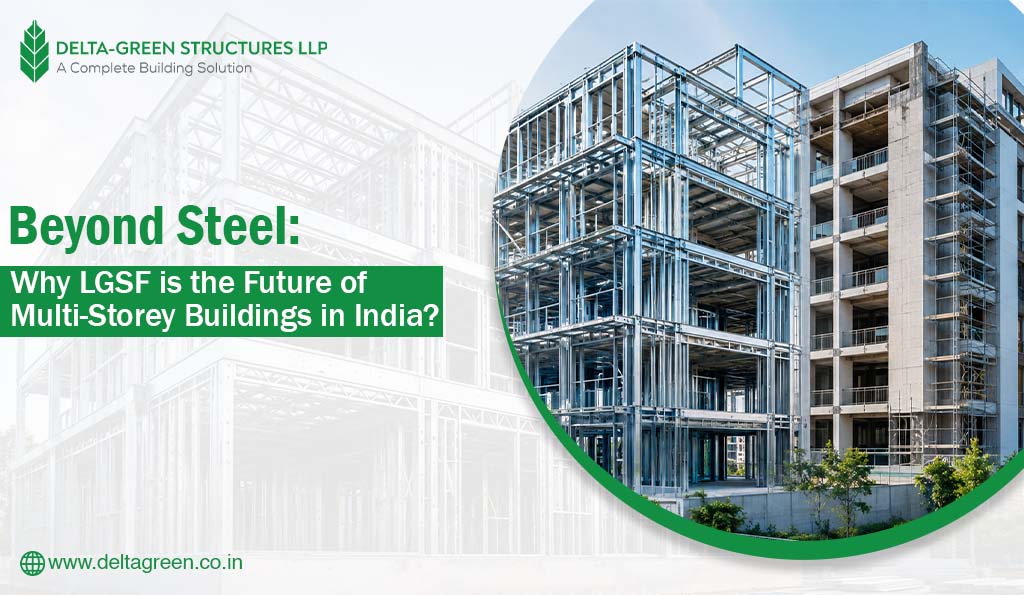
Beyond Steel: Why LGSF is the Future of Multi-Storey Buildings in India
Beyond Steel: Why LGSF is the Future of Multi-Storey Buildings in India What if buildings could rise faster, last longer, and waste almost nothing in the process? That question is no longer theoretical in India. It’s already being answered-quietly but powerfully-by LGSF for Multi-Storey Buildings in India. From metro skylines to upcoming smart townships, a new construction mindset is taking over: faster delivery, cleaner execution, and engineered precision. And leading this shift are modern innovators like Delta Green Structures, redefining how India thinks about building infrastructure altogether. The Shift No One Can Ignore: Construction Is Getting Smarter For decades, India has relied on RCC-based construction as the default. It worked-but the pressure of urban growth has exposed its limitations. Delays. Cost overruns. Weather dependency. Labour unpredictability. Now, the industry is moving toward something sharper and more controlled: Light Gauge Steel Frame (LGSF) systems. This isn’t just a material swap. It’s a complete upgrade in how structures are designed and delivered. With LGSF Construction in India, buildings are no longer “constructed” in the traditional sense-they are engineered, manufactured, and assembled. What Exactly Makes LGSF a Breakthrough? At its core, Light Steel Framing (also called Cold-Formed Steel Framing) uses precision-engineered steel sections formed in controlled factory environments. These components are then assembled on-site like a high-precision system. This shift brings three massive advantages: Controlled quality from factory to site Faster execution without weather delays Highly accurate structural alignment In short, Prefabricated Steel Structures are making construction predictable again. Why Multi-Storey Projects in India Are Turning to LGSF India’s cities are expanding vertically. But traditional systems are struggling to keep pace. This is exactly where LGSF for Multi-Storey Buildings in India is becoming a practical necessity-not just an option. Key reasons behind this shift: Rapid urbanization under Smart Cities missions Increasing demand for faster housing delivery Labour shortages in peak construction seasons Rising material and logistics costs With Steel Framing System technology, developers can now plan multi-storey projects with far more control and far fewer delays. Speed That Changes Everything: Faster Construction, Smarter Delivery Time is now the most expensive resource in construction. Traditional RCC buildings often take months-or years-to complete. But with LGSF Construction, timelines shrink dramatically. Why? Because: Components are pre-engineered off-site Assembly is systematic and quick No curing delays like concrete Minimal rework due to precision design This is why Faster Construction is one of the strongest advantages of Cold-Formed Steel Framing systems. At Delta Green Structures, automated Pinnacle machines ensure every component is manufactured with exact precision-reducing site inefficiencies and accelerating delivery timelines. Strength You Can Trust: Lightweight Doesn’t Mean Weak One of the biggest misconceptions about steel framing is that “lightweight equals less durable.” Reality says otherwise. Modern Light Gauge Steel Frame (LGSF) systems are engineered for: High load-bearing capacity Long-term structural stability Resistance to deformation Superior seismic performance This makes Earthquake-Resistant Buildings one of the strongest applications of LGSF technology, especially in India’s seismic zones. When comparing Steel Frame vs Concrete, LGSF stands out for its consistent structural reliability and predictable performance over time. Built for Indian Conditions: Fire, Weather, and Time India’s construction challenges are unique-humidity, heavy rainfall, and seismic risks all demand smarter engineering. That’s where LGSF Construction in India performs exceptionally well. It supports: Fire-Resistant Construction through engineered material layering Protection against termite and moisture damage Reduced corrosion when properly treated Long-term durability in extreme climates This makes Light Steel Framing especially suitable for multi-storey residential and commercial projects across diverse terrains. Sustainability Is No Longer Optional-It’s Expected Modern construction isn’t just about buildings. It’s about responsibility. And this is where Sustainable Construction in India is gaining momentum. LGSF supports sustainability naturally: Less construction waste due to precision manufacturing Steel is fully recyclable Lower water usage during execution Reduced on-site environmental disturbance The result? More Energy-Efficient Buildings that align with global green building standards. This is why Prefabricated Steel Structures are being adopted in forward-thinking infrastructure projects. LGSF vs RCC Construction: A Reality Check The debate between LGSF vs RCC Construction is becoming less about preference and more about performance outcomes. RCC Construction: Longer timelines High dependency on site conditions Material wastage Weather interruptions LGSF Construction: Faster project completion Precision-engineered components Cleaner, controlled execution Scalable for multi-storey expansion When comparing Modern vs Traditional Construction, LGSF clearly represents the next evolution of building technology. Why Smart Cities Are Quietly Moving Toward LGSF Urban development projects are under pressure to deliver faster, safer, and more sustainable infrastructure. That’s why Smart Cities initiatives are increasingly aligning with Steel Framing System technologies. LGSF supports: Rapid housing development Modular expansion capabilities Efficient resource utilization Scalable infrastructure planning This makes it a natural fit for India’s evolving urban future. How Delta Green Structures Is Driving This Change In the North-East region, Delta Green Structures is actively shaping the shift toward modern construction methods. With advanced LGSF manufacturing systems and fully automated technology, the company delivers precision-built infrastructure designed for today’s challenges. Their approach focuses on: End-to-end construction solutions Certified high-grade LGSF materials Automated production using Pinnacle machinery Adaptability for complex terrains and climates Custom-built project execution models This combination positions Delta Green Structures as a key contributor to the rise of LGSF for Multi-Storey Buildings in India. The Future Isn’t Coming-It’s Already Being Assembled Construction in India is undergoing a quiet revolution. Not loud. Not chaotic. But precise. From Light Steel Framing systems to fully Prefabricated Steel Structures, the industry is shifting toward methods that prioritize speed, sustainability, and structural intelligence. And as demand for Faster Construction, Earthquake-Resistant Buildings, and Energy-Efficient Buildings grows, LGSF is no longer an alternative-it is becoming the standard. Final Takeaway India doesn’t just need more buildings. It needs better ways to build them. And LGSF Construction in India is proving exactly that-every single day. With companies like Delta Green Structures pushing innovation forward, the future of multi-storey construction is becoming clearer: Smarter design. Faster execution. Stronger outcomes. Built in steel, designed for tomorrow.
Beyond Steel: Why LGSF is the Future of Multi-Storey Buildings in India Read More »