Delta Green

Delta Green

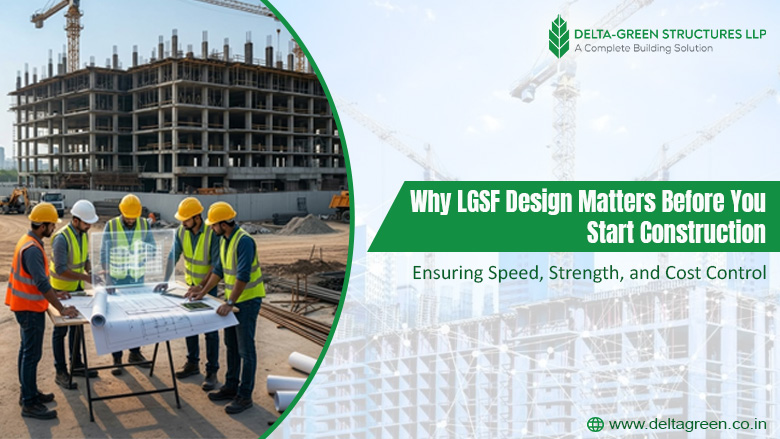
Why LGSF Design Matters Before You Start Construction: Ensuring Speed, Strength, and Cost Control

Why LGSF Design Matters Before You Start Construction: Ensuring Speed, Strength, and Cost Control Every successful building begins with one thing — a smart design plan. In modern construction, rushing straight into a building without proper structural planning often leads to delays, unexpected costs, and structural limitations. This is exactly why Light Gauge Steel Frame (LGSF) design has become a crucial step before starting construction. A well-planned Light Gauge Steel Frame (LGSF) design ensures that the building is strong, efficient, and built faster with better cost control. With advanced LGSF structural engineering and precision-driven manufacturing, companies like Delta Green Structures are helping reshape the way buildings are designed and constructed today. Before the first frame is installed, the real strength of a building is already decided — in the design stage. What Is Light Gauge Steel Frame (LGSF) Design? Think of Light Gauge Steel Frame (LGSF) design as the blueprint of modern steel construction. Instead of relying on traditional brick-and-cement methods, light gauge steel frame construction uses precisely engineered cold-formed steel sections to create the structural framework of a building. Every component — walls, roof systems, beams, and floors — is designed digitally before the project begins. This detailed LGSF structural design allows engineers to plan the entire structure with accuracy, ensuring: Proper load distribution Efficient use of materials Structural safety Faster construction timelines Through advanced LGSF building design planning, potential challenges are solved even before the construction process begins. The Real Importance of LGSF Design Before Construction Skipping the design stage in construction is like starting a journey without a map. The importance of LGSF design before construction lies in its ability to eliminate uncertainty. With detailed LGSF structural engineering, architects and engineers can visualize the building’s performance long before the first steel frame arrives on site. Proper Light Gauge Steel Frame (LGSF) design ensures: Structural accuracy Reduced construction errors Better project coordination Efficient material usage Controlled construction timelines When LGSF design optimization is done correctly, construction becomes smoother, faster, and far more predictable. Faster Construction Begins with Better Design Speed is one of the biggest advantages of Light Gauge Steel Frame (LGSF) design. Traditional construction involves multiple time-consuming processes like curing, manual adjustments, and repeated on-site corrections. In contrast, fast construction using LGSF begins long before workers arrive at the site. Once the LGSF building design planning is completed, components are manufactured using automated machinery and delivered ready for installation. This approach significantly accelerates the LGSF construction process. Here’s how LGSF design improves construction speed: Pre-engineered components reduce on-site work Digital design ensures perfect structural fit Assembly becomes faster and more organized Construction delays are minimized In short, LGSF design for speed and efficiency turns construction into a streamlined process rather than a slow and uncertain one. Strength That Comes from Engineering Precision Speed means nothing without strength. One of the biggest advantages of Light Gauge Steel Frame (LGSF) design is the exceptional structural strength it delivers. Through advanced LGSF structural engineering, every frame is designed to handle environmental stress, structural loads, and long-term usage. A well-planned LGSF structural design carefully considers: Wind loads Seismic resistance Structural stability Long-term durability LGSF load-bearing capacity Because steel is highly durable, LGSF building strength and durability often surpass traditional construction methods. This is one of the key reasons why modern steel frame construction is becoming increasingly popular across residential, commercial, and institutional projects. Smart Design Means Better Cost Control Construction budgets can quickly spiral out of control without proper planning. This is where LGSF construction cost control becomes a major advantage. A well-engineered Light Gauge Steel Frame (LGSF) design calculates the exact material requirements before manufacturing begins. That means: Less material wastage Lower labour expenses Faster project completion Better budget predictability With careful LGSF design optimization, developers can achieve cost-effective LGSF construction without compromising quality. This makes LGSF design for strong and cost-effective buildings one of the most efficient construction solutions available today. Pre-Engineered LGSF Structures: Precision Meets Efficiency Another key innovation in modern construction is the use of pre-engineered LGSF structures. Instead of fabricating structural elements on site, components are manufactured in controlled environments using advanced machines. This improves consistency, quality, and structural accuracy. Pre-engineered systems also simplify the LGSF construction process by reducing manual errors and installation time. With Light gauge steel frame construction, builders can assemble structures faster while maintaining exceptional engineering precision. Sustainable Construction for the Future Sustainability is becoming a major focus in modern infrastructure development. Fortunately, sustainable LGSF building design offers several environmental benefits. Steel is recyclable, durable, and produces far less construction waste compared to traditional building materials. Additionally, lightweight steel frames reduce foundation requirements and transportation loads. This makes Light Gauge Steel Frame (LGSF) design an environmentally responsible approach to modern steel frame construction. LGSF Design vs Traditional Construction When comparing LGSF design vs traditional construction, the advantages are clear. Traditional building methods often face issues like longer timelines, material wastage, and inconsistent structural quality. In contrast, Light Gauge Steel Frame (LGSF) design delivers precision, speed, and predictable performance. Key differences include: Factor LGSF Construction Traditional Construction Construction Speed Very Fast Slower Material Efficiency Highly Optimized High Wastage Structural Strength Engineered Precision Variable Cost Control Predictable Uncertain Sustainability Environment Friendly Less Sustainable These benefits highlight the importance of LGSF design before construction for modern building projects. Benefits of Proper LGSF Planning A well-executed Light Gauge Steel Frame (LGSF) design offers multiple long-term advantages. Some of the biggest LGSF design advantages include: Faster construction timelines Improved structural reliability Better design flexibility Reduced project risks Greater cost efficiency With proper LGSF building design planning, developers can ensure smoother project execution and better overall results. The Future of Construction Starts with Smart Design In today’s fast-paced construction industry, the success of a building is determined long before construction begins. A carefully developed Light Gauge Steel Frame (LGSF) design ensures speed, structural strength, and efficient cost management. Through advanced LGSF structural engineering and precision-driven planning, modern construction projects can achieve better results with fewer delays and
Why LGSF Design Matters Before You Start Construction: Ensuring Speed, Strength, and Cost Control Read More »

How an LGSF Manufacturer Adapts Designs for Different Climatic Zones

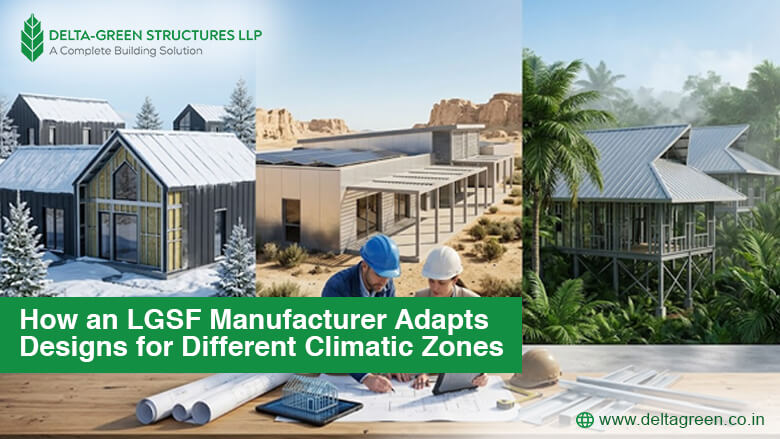
How an LGSF Manufacturer Adapts Designs for Different Climatic Zones Because great buildings don’t fight nature—they work with it. India’s landscape is as diverse as it gets scorching heat in the west, heavy rainfall in the North-East, freezing temperatures in the mountains, and humid coastal belts. In such a country, construction isn’t just about building, it’s about adapting. This is where a modern LGSF Manufacturer plays a critical role. Instead of using outdated, rigid construction methods, today’s smart builders focus on flexibility, precision, and climate responsiveness. At Delta Green Structures, every project begins with one simple question: “How will this building perform in its environment?”And the answer shapes everything from materials to design to execution. What Makes LGSF Ideal for All Climates? Lightweight structure. Heavy-duty performance. A trusted Light gauge steel framing manufacturer understands that adaptability is the biggest strength of LGSF (Light Gauge Steel Framing). Here’s why LGSF stands out: Precision-engineered components Faster construction timelines High strength with low weight Minimal material wastage Flexible and customizable designs Unlike traditional construction, a professional LGSF construction company can easily modify structural elements to suit specific environmental conditions. That’s what makes LGSF construction for different climates not just possible but highly efficient. Why Climate-Adaptive Design Matters A building designed without considering climate can lead to: Moisture damage – Constant exposure to rain or humidity can seep into walls and foundations, slowly weakening the structure and causing dampness issues. Poor insulation – Without proper climate-specific design, buildings fail to maintain indoor temperatures, leading to discomfort and higher energy use. Structural stress – Extreme weather conditions like heat, cold, or heavy loads can strain materials, reducing the lifespan of the building. High maintenance costs – Frequent repairs due to weather-related wear and tear can significantly increase long-term expenses. That’s why climate-adaptive LGSF design is no longer optional—it’s essential.  An experienced LGSF Manufacturer ensures that each project is tailored to its surroundings, enhancing durability, comfort, and long-term value. How LGSF Manufacturer Adapts to Different Climatic Zones 1. Heavy Rainfall & High Humidity Regions “Designed to handle every drop.” In areas like the North-East, buildings face constant exposure to rain and moisture. A skilled LGSF construction company tackles this with smart design strategies. Key adaptations include: Moisture-resistant boards and protective coatings Elevated structural designs for water drainage Leak-proof roofing systems Ventilated wall assemblies to prevent dampness At Delta Green Structures, such climate-specific detailing ensures that structures remain strong, dry, and long-lasting. 2. Cold & Snow-Bound Areas “Warm interiors. Resilient exteriors.” Cold regions demand buildings that can retain heat while withstanding snow loads. A professional Light gauge steel framing manufacturer focuses on both comfort and strength. Design enhancements include: High-quality insulation materials (EPS, mineral wool) Airtight construction to reduce heat loss Snow-load resistant roofing structures Thermal-efficient windows and panels This is where LGSF building design for different climates proves its true value—delivering energy-efficient and comfortable living spaces. 3. Hot & Dry Climatic Zones “Stay cool, even when the temperature rises.” In regions with intense sunlight and dry heat, reducing indoor temperature becomes a priority. A forward-thinking LGSF Manufacturer adapts by: Using reflective roofing materials Incorporating sun-shading elements Designing cross-ventilation layouts Installing heat-resistant wall systems With the right climate-adaptive LGSF design, buildings naturally stay cooler—cutting down energy costs significantly. 4. Coastal & Corrosion-Prone Areas “Built to resist what you can’t see.” Salt-laden air in coastal regions can slowly damage structures. This makes material selection crucial. An expert LGSF construction company ensures: Use of galvanized and corrosion-resistant steel Protective anti-rust coatings Structural designs that minimize exposure Delta Green Structures integrates these measures to ensure durability even in the harshest coastal environments. Technology & Customization in Climate-Adaptive LGSF Design Precision meets flexibility—built for every climate. A modern LGSF Manufacturer blends advanced technology with smart customization to deliver high-performance structures across diverse environments. At Delta Green Structures, automated Pinnacle machines ensure precision, while adaptive design strategies make LGSF construction for different climates efficient and reliable. How Technology & Customization Work Together Technology Advantage Customization Benefit Accurate, error-free production ensures perfect fit and durability Flexible design options adapted to specific climatic conditions Faster project turnaround with automated systems Tailored material selection for long-term performance Precision engineering for superior structural strength Continuous consultancy support throughout the project Consistent quality across all components Solutions for challenging terrains and extreme weather This powerful combination is what defines effective climate-adaptive LGSF design. A skilled Light gauge steel framing manufacturer and experienced LGSF construction company ensure that every project aligns with its environment—resulting in reliable and efficient LGSF building design for different climates. Why Choosing the Right LGSF Manufacturer Matters Expertise makes the difference. Not all manufacturers deliver the same level of quality. The success of LGSF building design for different climates depends on experience, technology, and execution. Choosing Delta Green Structures means: End-to-end building solutions Expertise in diverse climatic conditions High-quality materials and machinery Faster delivery with precision It’s not just about building structures—it’s about building confidence. Ready to Build for Any Climate? Partner with the Experts in LGSF A building should do more than exist—it should adapt, protect, and perform. That’s exactly what a reliable LGSF Manufacturer delivers through intelligent planning and climate-focused execution. From heavy rainfall regions to extreme cold and coastal zones, LGSF construction for different climates ensures long-term durability and comfort. With expertise, innovation, and commitment, Delta Green Structures continues to set new standards in LGSF building design for different climates—helping build a future that’s stronger, smarter, and ready for anything.

How an LGSF Manufacturer Adapts Designs for Different Climatic Zones Read More »

Benefits of Working with an ISO-Certified LGSF Manufacturer | Delta Green Structures

Benefits of Working with an ISO-Certified LGSF Manufacturer | Delta Green Structures Because when it comes to building the future, quality isn’t optional—it’s everything. In today’s fast-evolving construction landscape, speed and cost matter—but trust, precision, and consistency matter even more. This is exactly where choosing an ISO-Certified LGSF Manufacturer makes all the difference. Whether you’re planning a residential project, a commercial structure, or a government development, working with a certified partner ensures your project stands on a foundation of quality, safety, and long-term reliability. And when it comes to dependable expertise in North-East India, Delta Green Structures has been setting new benchmarks with its advanced LGSF solutions and commitment to excellence. What Does It Mean to Be an ISO-Certified LGSF Manufacturer? Let’s keep it simple. An ISO-Certified LGSF Manufacturer follows globally recognized standards for quality management, safety, and operational efficiency. This isn’t just a label—it’s proof that every process, from design to delivery, is systematic, monitored, and continuously improved. For clients, this means: No guesswork No compromise No inconsistency Just structured, reliable construction backed by international standards. Why ISO Certification Matters in LGSF Construction Not all construction companies deliver the same level of precision—and that’s where an ISO-Certified LGSF Manufacturer stands apart. An ISO certified construction company follows structured systems to ensure accurate designs, precise manufacturing, and consistent quality across every project. This approach brings transparency, meets timelines, and reduces costly errors. In LGSF construction, where even small mistakes can affect performance, working with a Quality assured steel frame manufacturer is crucial. Backed by strong ISO certification in steel manufacturing, they deliver structures built for reliability and long-term strength. 1. Assured Quality at Every Stage When you work with an ISO-Certified LGSF Manufacturer, quality isn’t inspected at the end—it’s built into every step. From raw material selection to machine processing and final assembly, everything follows a strict quality control framework. This ensures: Uniform steel strength Accurate dimensions Long-lasting structural integrity As a Quality assured steel frame manufacturer, Delta Green Structures uses top-tier materials and fully automated Pinnacle machines to deliver unmatched precision. 2. Consistency You Can Rely On One of the biggest challenges in traditional construction is inconsistency. Materials vary, workmanship differs, and timelines stretch unpredictably. With an ISO-Certified LGSF Manufacturer, every project follows a repeatable and standardized process. This means: Same high quality across all projects Predictable outcomes Minimal errors and rework For clients, this translates into peace of mind and better project control. 3. Faster Turnaround Without Compromising Quality Time is money—especially in construction. An ISO certified construction company is designed to optimize workflows, eliminate delays, and ensure efficient project execution. With LGSF technology: Components are pre-engineered Manufacturing is automated On-site assembly is faster Delta Green Structures stands out with its short turnaround time, helping clients complete projects faster without sacrificing quality. 4. Advanced Technology and Modern Manufacturing Not every builder invests in cutting-edge technology—but certified ones do. An ISO-Certified LGSF Manufacturer integrates advanced machinery and processes to ensure: High precision fabrication Reduced material wastage Better structural performance As a leading Certified steel structure company, Delta Green Structures uses fully automated systems to deliver designs that are not just efficient, but future-ready. 5. Expertise in Challenging Climatic Conditions India’s diverse geography demands adaptable construction solutions. From heavy rainfall zones to seismic regions, buildings must be designed to withstand environmental stress. An experienced ISO-Certified LGSF Manufacturer understands these challenges and designs accordingly. With proven expertise in complex terrains, Delta Green Structures offers: Climate-responsive designs Durable steel frameworks Reliable performance in extreme conditions This makes them a trusted partner for projects across varied landscapes. 6. Transparency and Professional Accountability When you choose an ISO certified construction company, you’re choosing accountability. ISO standards require: Proper documentation Clear communication Defined project timelines This ensures that clients are always informed and involved. No hidden surprises, no last-minute issues—just clear, professional project management from start to finish. 7. Cost Efficiency in the Long Run “Spend smart, build smarter.” At first glance, certified services might seem premium—but in reality, they save money over time. Here’s how: Fewer construction errors Reduced maintenance costs Longer building lifespan Better energy efficiency A Quality assured steel frame manufacturer ensures that your investment delivers value for years, not just months. 8. Customization with Confidence Every project is unique—and ISO-certified companies are equipped to handle that. With structured processes in place, an ISO-Certified LGSF Manufacturer can offer: Flexible design solutions Tailored construction packages End-to-end consultancy Delta Green Structures provides customizable solutions that adapt to your needs without compromising on quality or timelines. 9. Stronger Client Trust and Credibility Let’s be honest—trust is everything in construction. Working with a Certified steel structure company instantly builds confidence among: Investors Stakeholders Government bodies It signals professionalism, reliability, and commitment to excellence—qualities that matter in every project.  10. A Future-Ready Construction Approach Not just building structures—building the future. The construction industry is moving towards smarter, faster, and more sustainable methods. LGSF is already leading this transformation—and ISO-certified manufacturers are driving it forward. With innovation at its core, Delta Green Structures combines: Modern LGSF technology Automated manufacturing Sustainable building practices The result? Structures that are efficient, durable, and ready for tomorrow. Your Project Deserves More Than Construction—It Deserves Certified Excellence Choosing the right construction partner isn’t just a decision—it’s an investment in your project’s success. Working with an ISO-Certified LGSF Manufacturer ensures that every aspect of your project is handled with precision, professionalism, and accountability. From quality assurance to faster delivery and long-term value, the benefits are clear and measurable. With its commitment to excellence, advanced technology, and deep understanding of modern construction needs, Delta Green Structures stands as a reliable name in the industry—delivering not just buildings, but confidence. Looking to build smarter, faster, and better? Choose certified expertise. Choose precision. Choose Delta Green Structures.

Benefits of Working with an ISO-Certified LGSF Manufacturer | Delta Green Structures Read More »

How Modular LGSF Construction Supports Smart City Development

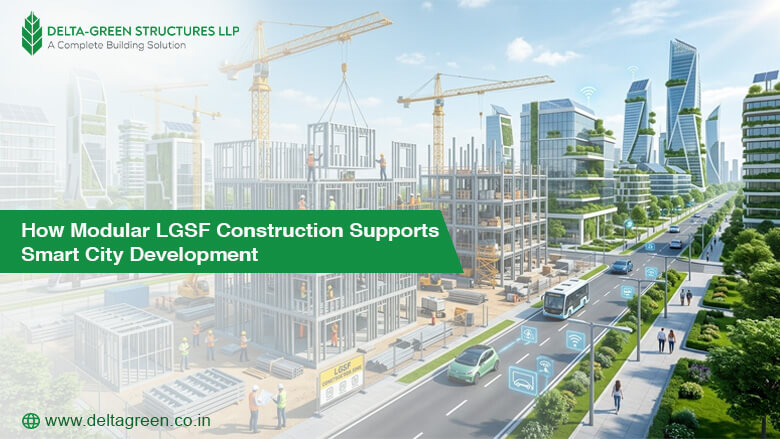
How Modular LGSF Construction Supports Smart City Development Cities today are growing at a pace never seen before. Populations are expanding, infrastructure needs are multiplying, and governments around the world are working toward a shared vision — smart cities that are efficient, sustainable, and future-ready. But building a smart city is not just about digital technology or connected systems. It begins with how the city itself is constructed. Traditional construction methods often struggle with delays, rising costs, and environmental impact. This is exactly where Modular LGSF Construction for Smart City Development is changing the game. Using advanced LGSF construction technology, developers can now build faster, smarter, and more sustainably than ever before. And companies like Delta Green Structures are helping lead this transformation by introducing precision-engineered Lightweight Steel Frame construction solutions designed for modern urban needs. The Construction Challenge Behind Smart Cities Every smart city project aims to create infrastructure that improves quality of life. From residential buildings and commercial hubs to hospitals and educational institutions, everything must be built efficiently, sustainably, and at scale. However, conventional construction often faces common challenges: Long project timelines Weather disruptions High material wastage Increased labour dependency Limited flexibility in design These challenges slow down Smart city infrastructure development, making it harder for cities to keep up with growing urban demands. This is why planners are increasingly turning toward modular construction in smart cities — a modern building approach that prioritizes efficiency, sustainability, and precision. What is Modular LGSF Construction? At its core, Modular LGSF Construction for Smart City Development combines the strength of steel with the efficiency of prefabrication. In Lightweight Steel Frame construction, buildings are created using cold-formed galvalume steel sections. These sections are manufactured with advanced automated machines, ensuring high accuracy and consistent quality. Instead of building everything on-site, structural components are pre-engineered and prefabricated in controlled environments. They are then transported to the site and assembled quickly. This process introduces a smarter way of building cities using Prefabricated steel structures and Fast-track construction technology. With its advanced manufacturing facility and automated Pinnacle machines, Delta Green Structures offers end-to-end LGSF solutions, making large-scale projects faster and more reliable. Speed That Matches the Growth of Modern Cities One of the biggest advantages of Modular LGSF Construction for Smart City Development is speed. Urban development projects often require quick completion to support growing populations. Waiting years for housing or infrastructure can slow economic development. This is where Fast-track construction technology plays a vital role. Since structural components are manufactured off-site, on-site construction becomes significantly faster. Projects that traditionally take over a year can often be completed in 40–60% less time using Modular construction in smart cities. This speed is especially beneficial for: Modern urban housing solutions Commercial complexes Educational institutions Healthcare infrastructure Faster construction not only saves time but also accelerates Smart urban planning solutions, helping cities expand without delays. Sustainability: The Foundation of Smart Urban Development A truly smart city is also a sustainable city. Environmental responsibility is becoming one of the most important aspects of urban development. Governments and developers now prioritize Sustainable construction for smart cities to reduce carbon footprints and environmental impact. LGSF construction technology naturally supports this vision. Here’s how: Reduced Construction Waste Traditional construction generates large amounts of debris and leftover materials. In contrast, prefabricated steel structures are produced with high precision, minimizing waste. Eco-Friendly Materials Steel used in Lightweight Steel Frame construction is recyclable, making it a core component of Eco-friendly construction technology. Energy-Efficient Buildings Modern LGSF designs support Energy-efficient building systems, improving insulation and reducing energy consumption in urban buildings. These advantages make Green building solutions more accessible and practical for large-scale smart city projects. Through innovation and engineering expertise, Delta Green Structures is helping clients implement environmentally responsible infrastructure across diverse geographic conditions. Strength and Safety for Future Cities Smart cities must be designed to withstand environmental challenges and natural disasters. One of the standout advantages of LGSF construction technology is its structural resilience. Steel frames distribute loads more efficiently than traditional concrete structures. This makes them highly reliable as Earthquake-resistant building technology, especially in regions prone to seismic activity. Additional benefits include: High structural accuracy Long-lasting durability Resistance to moisture and pests Lightweight yet strong framework These qualities make Modular LGSF Construction for Smart City Development ideal for long-term urban infrastructure projects. Cost Efficiency for Rapid Urban Expansion Building smarter cities should not mean dramatically increasing costs. Urban planners constantly search for Cost-effective urban construction solutions that balance quality and affordability. Modular LGSF Construction for Smart City Development significantly reduces construction costs through: Faster project completion Lower labour dependency Minimal material wastage Reduced maintenance requirements Because components are manufactured with automated precision, developers gain better control over project budgets. With customizable packages and complete construction support, Delta Green Structures helps clients implement scalable Modern urban housing solutions while maintaining financial efficiency. LGSF vs Traditional Construction for Smart Cities The shift from traditional building techniques to modular steel systems highlights the Role of modular construction in smart city projects. Factor Traditional Construction LGSF Construction Construction Time Slow Fast-track construction technology Environmental Impact High material waste Eco-friendly construction technology Structural Accuracy Moderate High precision Seismic Safety Moderate Earthquake-resistant building technology Energy Efficiency Limited Energy-efficient building systems This comparison clearly demonstrates how LGSF construction supports sustainable urban development. For rapidly expanding cities, Modular LGSF Construction for Smart City Development provides the efficiency, resilience, and sustainability required to support future growth. The Role of Modular Construction in Smart City Projects The Role of modular construction in smart city projects goes far beyond faster buildings. It enables cities to create infrastructure that is: Scalable Sustainable Technologically adaptable Economically viable As urban populations continue to grow, Modular LGSF Construction for Smart City Development provides the flexibility required to build infrastructure quickly while maintaining environmental responsibility. With advanced manufacturing and engineering expertise, Delta Green Structures is contributing to a new era of Smart city infrastructure development across India. Building the Cities of Tomorrow — Today Smart cities are not just

How Modular LGSF Construction Supports Smart City Development Read More »

How LGSF is Revolutionizing Affordable Housing in India

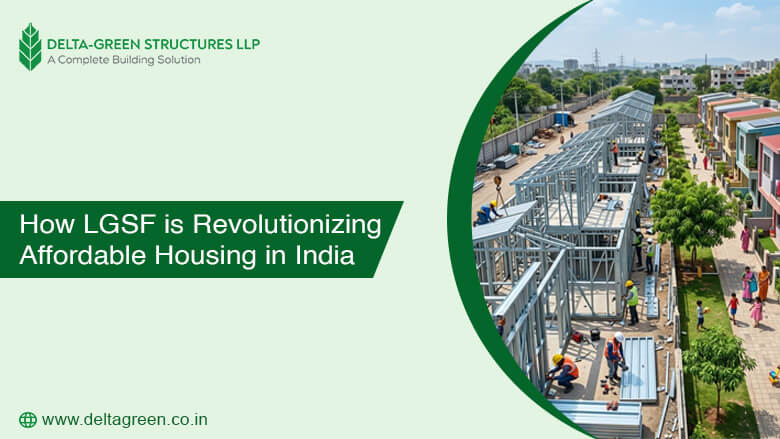
How LGSF is Revolutionizing Affordable Housing in India India is facing a housing challenge unlike ever before. With a rapidly growing population and expanding cities, the demand for affordable homes is increasing every year. Millions of families still dream of owning a safe, durable, and comfortable house that fits their budget. Traditional construction methods often struggle to meet this demand. Projects take longer to complete, costs rise unpredictably, and environmental concerns continue to grow. This is exactly where LGSF affordable housing in India is emerging as a transformative solution. Powered by Light Gauge Steel Frame construction, this modern approach to building homes is changing the way affordable housing projects are designed and delivered across the country. Delta Green Structures, which operate one of the only LGSF manufacturing units in North-East India, are playing a vital role in introducing this innovative technology to the construction sector. Let’s explore how LGSF is transforming affordable housing in India and why experts believe it is the future of smart, sustainable housing. Understanding LGSF Technology for Housing Light Gauge Steel Frame construction is a modern building technique that uses cold-formed steel sections to create the structural framework of buildings. These steel components are manufactured with precision using automated machines and then assembled on-site. Unlike traditional brick-and-cement construction, LGSF construction in India follows a prefabricated approach. Structural elements are produced in factories, ensuring accuracy, quality, and faster installation. This method falls under modern construction methods in India, where speed, efficiency, and sustainability are the primary goals. Today, LGSF technology for housing is being used worldwide for residential buildings, low-rise apartments, villas, schools, hospitals, and commercial spaces. The Growing Need for Affordable Housing Solutions in India India requires millions of new homes every year to support urban migration and population growth. Government initiatives such as affordable housing schemes have helped increase supply, but traditional building systems often slow down project delivery. Developers face challenges like: High labour costs Construction delays Material wastage Environmental impact Rising cement and steel prices Because of these issues, affordable housing solutions in India must adopt technologies that reduce cost, shorten timelines, and improve structural performance. This is where LGSF affordable housing in India offers a practical and scalable solution. Fast Construction Technology in India: Speed That Matters One of the biggest advantages of LGSF construction in India is speed. Traditional buildings may take 12–18 months to complete, but prefabricated steel structures for housing can significantly reduce construction timelines. Since the components are manufactured in advance, the on-site assembly process becomes much faster. This makes fast construction technology in India ideal for: Mass housing developments Low-cost housing projects in India Post-disaster housing Urban residential communities With faster completion times, developers can deliver homes sooner and reduce overall project costs. At Delta Green Structures, automated Pinnacle machines are used to manufacture high-precision LGSF components, ensuring faster and more efficient construction outcomes. LGSF vs. RCC Construction Cost in India When discussing LGSF vs. RCC construction cost in India, many developers are surprised by the long-term advantages of steel frame systems. While RCC (Reinforced Cement Concrete) construction has been widely used for decades, it involves heavy materials, longer curing times, and higher labour dependency. On the other hand, cost-effective housing construction with LGSF offers several financial advantages: Reduced labour requirements Faster project completion Minimal material wastage Lower transportation costs Long-term durability and reduced maintenance For low-cost housing projects in India, these benefits make LGSF affordable housing in India an extremely attractive option. Sustainable Housing Construction in India Modern cities require building technologies that protect the environment while meeting housing needs. This is why sustainable housing construction in India is gaining attention. LGSF systems support green building technology in India in multiple ways: Steel is 100% recyclable Minimal construction waste Lower water consumption during construction Energy-efficient building designs Compared to conventional building methods, prefabricated steel structures for housing significantly reduce the carbon footprint of construction projects. As sustainability becomes a global priority, green building technology in India will continue to rely on advanced systems like LGSF. Earthquake-Resistant Housing Solutions India has several seismic zones where earthquakes are a real concern. Safety and structural stability become extremely important in such regions. One major advantage of Light Gauge Steel Frame construction is its flexibility and strength. Steel structures can absorb seismic forces better than many traditional materials. This makes earthquake-resistant housing solutions possible even in challenging terrains such as mountainous regions and high-risk zones. For regions in North-East India and the Himalayan belt, this benefit makes LGSF construction advantages for residential projects even more valuable. Companies like Delta Green Structures have the expertise to build in challenging climatic conditions and geographical terrains, making LGSF ideal for these locations. Benefits of LGSF Construction for Low-Cost Housing When evaluating benefits of LGSF construction for low-cost housing, several factors stand out. Faster Project Delivery: Projects can be completed significantly faster than traditional construction. High Structural Strength: Steel frames provide exceptional durability and stability. Reduced Construction Waste: Factory manufacturing ensures better material usage. Design Flexibility: Architects can create modern layouts and innovative housing designs. Lower Long-Term Maintenance: Steel structures resist termites, rot, and moisture damage. Because of these advantages, LGSF affordable housing in India is becoming a preferred choice for developers, architects, and government housing initiatives. The Role of Delta Green Structures in Modern Housing As the demand for innovative housing solutions grows, technology-driven companies are leading the transformation. Delta Green Structures is among the pioneers bringing advanced LGSF technology for housing to the region. With cutting-edge manufacturing capabilities and fully automated machines, the company delivers high-precision steel frame systems designed for durability and efficiency. Being the only LGSF manufacturing unit in North-East India, Delta Green Structures provides end-to-end turnkey construction services, supporting both private and government projects. By combining engineering expertise with modern building technology, the company is helping accelerate the adoption of modern construction methods in India. The Future of Affordable Housing in India The housing demand in India will continue to grow in the coming decades. To meet this demand

How LGSF is Revolutionizing Affordable Housing in India Read More »

How LGSF Construction Enables Rapid Post-Disaster Housing Solutions in India

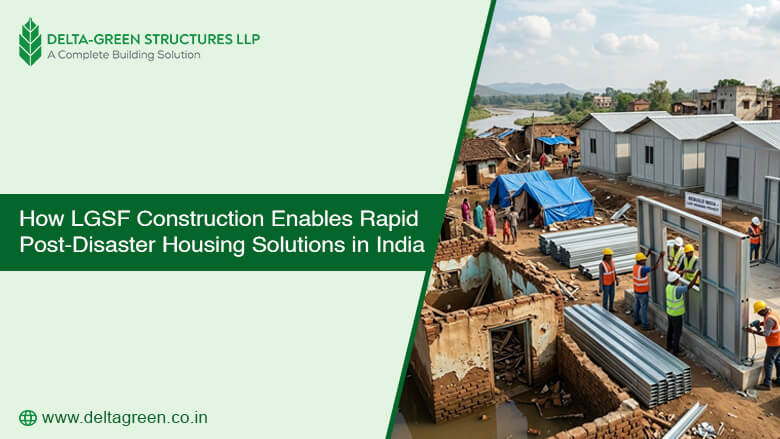
How LGSF Construction Enables Rapid Post-Disaster Housing Solutions in India Natural disasters strike without warning. From devastating floods in Assam to powerful earthquakes in Himalayan regions and cyclones along India’s eastern coastline, disasters leave thousands of families without shelter overnight. In these critical moments, the biggest challenge is not just rescue — it is rebuilding homes quickly, safely, and sustainably. This is where LGSF construction for post-disaster housing in India is transforming the way recovery and reconstruction happen. Modern Light Gauge Steel Frame (LGSF) technology is helping governments, relief organizations, and construction companies deliver rapid post-disaster housing solutions in India that are durable, cost-effective, and ready in a fraction of the time compared to traditional construction. Delta Green Structures are at the forefront of this transformation, using advanced LGSF technology and precision manufacturing to create homes that help communities recover faster after disasters. The Urgent Need for Rapid Post-Disaster Housing in India India faces frequent natural disasters due to its diverse geography and climate conditions. Earthquakes in the Himalayan belt, floods in the Northeast, landslides in hilly regions, and cyclones along coastal areas often destroy thousands of homes within hours. Traditional brick-and-cement construction struggles to respond to such emergencies because it requires: Long construction timelines Large labor forces Weather-dependent building processes Significant material transportation These limitations make it difficult to deliver emergency housing solutions after natural disasters when people urgently need shelter. This is why experts are increasingly turning toward LGSF construction technology in India — a modern approach designed for speed, durability, and efficiency. What is LGSF Construction? Light Gauge Steel Frame construction is a modern prefabricated building system where structures are made using cold-formed galvanized steel sections. Instead of constructing everything on-site, the building components are precision-engineered in factories using automated machines. These components are then transported to the site and assembled quickly. This method of prefabricated steel frame construction significantly reduces construction time while maintaining structural strength. At Delta Green Structures, advanced automated manufacturing systems are used to produce high-precision LGSF components that enable faster project completion without compromising quality. Why LGSF is Ideal for Post-Disaster Housing When rebuilding communities after disasters, speed alone is not enough. The houses must also be safe, resilient, and sustainable. 1. Faster Construction for Immediate Shelter One of the biggest advantages of LGSF construction for post-disaster housing in India is its rapid installation. Since most structural components are prefabricated in factories, onsite construction mainly involves assembling pre-designed frames. This enables: Houses to be constructed in weeks instead of months Faster relocation of displaced families Quick execution of disaster relief housing projects in India Such fast-track construction technology in India can dramatically reduce the time people spend living in temporary camps. 2. Earthquake-Resistant Structures Many disaster-prone regions in India fall within high seismic zones. Conventional masonry structures are often vulnerable to earthquakes. However, earthquake-resistant LGSF buildings offer superior safety due to: Flexible steel framing Lightweight structural design Even load distribution Steel structures absorb seismic energy better, making them highly suitable for disaster-resistant housing in India. 3. Flood-Resistant Construction Floods regularly affect large parts of India, especially in the Northeast and river basin regions. LGSF structures provide effective flood-resistant housing construction in India because: Steel does not absorb water like traditional materials Elevated modular designs can reduce flood impact Materials resist warping and deterioration This makes light gauge steel frame buildings ideal for rebuilding homes in flood-prone areas. 4. Modular and Scalable Housing Another major benefit of LGSF technology is its flexibility. Modular housing  solutions in India allow homes to be designed in standardized modules that can be expanded later as families rebuild their lives. This approach enables governments and developers to create: Temporary relief housing Permanent residential units Community infrastructure like schools and clinics With LGSF, entire communities can be reconstructed using efficient modular designs. 5. Cost-Effective Reconstruction Budget constraints often delay reconstruction after disasters. However, cost-effective post-disaster housing can be achieved using LGSF due to: Reduced construction time Lower labor costs Minimal material wastage Long-term durability These benefits make LGSF highly suitable for government disaster housing schemes in India, where efficiency and scalability are critical. 6. Sustainable Post-Disaster Reconstruction Modern disaster recovery must also consider environmental sustainability. LGSF technology supports sustainable post-disaster reconstruction through: Recyclable steel materials Reduced construction waste Energy-efficient building designs Minimal environmental impact Compared to traditional construction methods, LGSF structures are significantly more eco-friendly. Supporting Government Disaster Recovery Programs India has several initiatives aimed at rebuilding homes after disasters, including rural housing programs and emergency relief projects. The use of modern construction methods for disaster recovery like LGSF can significantly enhance the efficiency of these programs by enabling faster project completion and improved structural safety. With the increasing demand for disaster relief housing projects in India, innovative technologies are becoming essential for large-scale reconstruction. Organizations with advanced infrastructure and expertise — such as Delta Green Structures — play an important role in supporting these initiatives by providing end-to-end LGSF building solutions. The Future of Disaster-Resilient Housing in India As climate change increases the frequency and intensity of natural disasters, India must adopt construction technologies that prioritize speed, resilience, and sustainability. LGSF construction for post-disaster housing in India is emerging as one of the most reliable solutions to address these challenges. With benefits such as rapid construction, structural strength, environmental sustainability, and cost efficiency, LGSF is redefining how communities rebuild after disasters. Companies like Delta Green Structures, equipped with cutting-edge manufacturing technology and expertise in challenging climatic conditions, are helping bring this modern construction revolution to reality. Rebuilding Hope Through Smarter Construction Every disaster leaves behind stories of loss but also opportunities to rebuild stronger. By adopting fast-track construction technology in India, disaster-prone communities can recover faster and build homes that are safer for the future. LGSF construction technology in India is not just about building structures. It is about restoring stability, dignity, and hope for families who have lost everything. With innovative companies such as Delta Green Structures leading the way, the future of rapid post-disaster housing

How LGSF Construction Enables Rapid Post-Disaster Housing Solutions in India Read More »

LGSF Manufacturer in Manipur: Modern Steel Construction for the Future

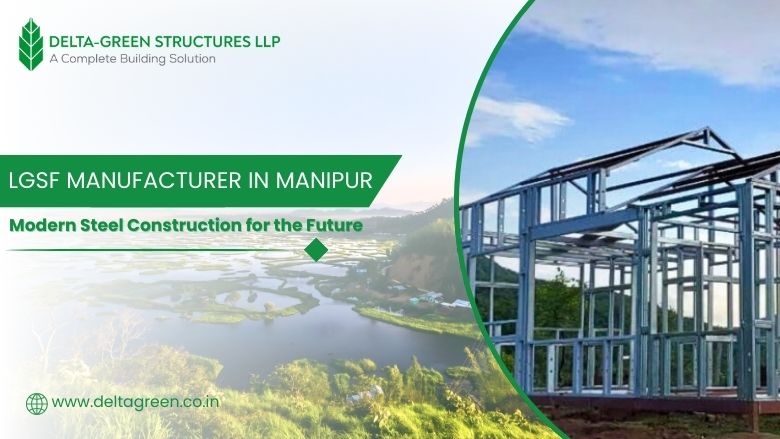
Manipur’s Construction Revolution: Why Smart Building Matters Now Manipur stands at a construction crossroads. The state is experiencing unprecedented urbanization—Imphal’s population growing, Ukhrul and Churachandpur expanding rapidly, commercial districts emerging. Yet traditional construction methods remain unchanged. Brick walls, concrete pillars, labor-intensive processes that take 18-24 months per project. But Manipur’s unique challenges demand smarter solutions:  Seismic Reality: Manipur sits in an earthquake-prone zone. Traditional brick structures crack, settle, and fail during seismic events. Modern steel frame construction offers what brick cannot: flexibility, ductility, and proven earthquake resistance. Monsoon Impact: 5-6 months of heavy rainfall annually. Traditional construction halts during monsoon season. Light Gauge Steel Frame (LGSF) manufacturing happens in climate-controlled factories—monsoon delays zero. Labor Constraints: Finding skilled brick masons has become nearly impossible. LGSF construction requires less specialized on-site labor, making it pragmatically superior in Manipur’s current employment landscape. Affordability Demand: Manipur’s State Affordable Housing Policy (2022) explicitly encourages LGSF technology. The Pradhan MantriAwas Yojana-Urban 2.0 offers Technology Innovation Grants of ₹3,000/sqm for LGSF projects. The question isn’t whether modern steel construction in Manipur is needed. Why haven’t we adopted it faster? What Is LGSF? The Technology Reshaping Manipur Light Gauge Steel Frame uses thin sheets of cold-formed galvanized steel (1-3mm thickness) to create precision-engineered structural frames. Unlike traditional masonry, LGSF components are manufactured in controlled factory environments, then rapidly assembled on-site. Key Components: Steel Studs: Vertical framework support members Steel Tracks: Horizontal channels guiding studs Joists: Floor and ceiling support Bracing: Diagonal stability members Sheathing: Wall and roof panels Fasteners: Secure connections Insulation: Energy efficiency and soundproofing Connections: Structural integrity details Why This Matters for Manipur: Factory manufacturing = quality regardless of monsoon. Galvanized steel = corrosion resistance in humid climates. Precision engineering = zero settling cracks. Lightweight = lower foundation costs. Why LGSF Construction is Booming in Manipur: Five Compelling Reasons 1. Speed: 60% Faster Than Traditional (9 Months vs 18-24) Factory pre-fabrication happens in parallel with site preparation. Monsoon doesn’t delay factory production. Fast-track construction with LGSF technology means: Developers recover investments faster Homebuyers occupy sooner Government housing targets become achievable 2. Earthquake Safety (Critical for Manipur’s Seismic Zone) Earthquake-resistant steel structures are proven. Steel’s ductility absorbs seismic energy instead of resisting rigidly. During earthquakes, LGSF buildings move safely with the ground. Brick buildings fight the ground—they fail. This is essential for Manipur. 3. Monsoon Resilience (5-6 Months Annual Rainfall) LGSF manufacturing is completely weather-independent. Projects don’t lose 5-6 months. Quality isn’t compromised by rain exposure. Timelines become predictable—critical for government and commercial projects. 4. Humidity & Pest Resistance Manipur’s humid climate creates moisture problems in traditional structures. LGSF solves this fundamentally.     resists corrosion. Steel doesn’t attract termites. No moisture problems. No settling. Long-term durability brick cannot match.    5. Government Incentives & Affordability Manipur’s Affordable Housing Policy explicitly encourages LGSF. PMAY-U 2.0 offers ₹3,000/sqm Technology Innovation Grants for LGSF projects. Cost-effective steel construction isn’t marketing—it’s government-backed reality. Key Advantages: Why LGSF Outperforms Traditional Construction Advantage Traditional LGSF Manipur Impact Construction Time 18-24 months 6-9 months Faster ROI, faster occupancy Labor Requirement Highly skilled Semi-skilled Solves Manipur’s labor shortage Monsoon Impact 5-6 month delays Zero delays Predictable timelines Earthquake Safety Fails in seismic Proven resistant Critical for Manipur zone Durability 30-40 years 50+ years Lower long-term costs Maintenance Settling cracks, repairs Zero settling cracks No future maintenance Waste Generation 40-50% waste 5-15% waste Environmental + cost savings Total Cost Baseline 15-20% lower Significant savings Real-World Applications in Manipur Residential: 2-3 BHK apartments for affordable housing (PMAY grant eligible) Institutional: Schools, colleges, government offices, hospitals Commercial: Retail complexes, IT parks, hospitality projects Industrial LGSF Structures: Warehouses, manufacturing, storage Rapid Response: Emergency shelters, disaster reconstruction (earthquake recovery) Why Choose Delta Green for LGSF in Manipur? Delta Green Structures is the Only Full-Service LGSF Manufacturer in North-East India. Unique Advantages: Local Presence, Deep Expertise Operating in Manipur, we understand the local climate, seismic vulnerability, monsoon challenges, building codes, and employment landscape. Complete Integration (Design + Manufacturing + Construction) Most competitors do one or two services. We provide integrated solutions. No vendor fragmentation. Single accountability. Quality control from concept to delivery. Government Project Experience Proven track record with state housing boards, government compliance, and large-scale project execution. Advanced Technology Top-tier LGSF materials, fully automated Pinnacle machines, precision-engineered designs, factory quality control that traditional on-site construction cannot match. Proven Results Quality structures exceeding industry standards. Shorter turnaround times. Real engineering excellence. Customizable Solutions Every project is different. Bespoke packages, flexible consulting, support adapted to specific needs. Sustainable Construction Aligns with green building certifications. Supports government sustainability mandates. Economical and environmental. FAQs: Common Questions About LGSF in Manipur Q: Is LGSF more expensive than traditional? A: Initially 5-10% more. Total cost? 15-20% lower when accounting for speed, labor efficiency, minimal waste, and zero settling issues. PMAY grants further offset costs. Q: Is LGSF safe in Manipur's earthquakes? A: Absolutely. Steel’s flexibility absorbs seismic energy. Proven globally in earthquake zones. Ideal for Manipur. Q: How does LGSF handle the monsoon climate? A: Factory manufacturing is monsoon-proof. Production unaffected. On-site assembly is weatherproofed. Quality is never compromised by rain. Q: How long do LGSF buildings last? A: 50+ years minimum. Galvanized coating provides superior corrosion protection in humid climates. Q: Is LGSF suitable for affordable housing projects? A: Perfect. Cost-efficient, fast-track, scalable. PMAY-U 2.0 offers substantial grants specifically for LGSF. Q: Can I customize designs with LGSF? A: Yes completely. Complex architectural plans, open floor layouts, custom interiors—all possible while maintaining structural integrity and earthquake safety. Q: Does LGSF work for industrial structures? A: Yes. Warehouses, manufacturing facilities, solar mounting structures—versatile across all applications. Q: Who should use LGSF in Manipur? A: Developers (faster ROI), homebuyers (quality + earthquake safety), government (affordability targets), commercial builders (design flexibility). Essentially, anyone building modernly in Manipur. Conclusion: The Smart Choice for Manipur’s Future Manipur’s construction evolution isn’t optional—it’s urgent. Rapid urbanization demands modern solutions. Seismic vulnerability demands earthquake-safe structures. Monsoon challenges demand weather-proof construction. Affordability demands cost-effective technology. LGSF—particularly through Delta Green Structures as Manipur’s only full-service LGSF manufacturer—provides the integrated answer. We offer:

LGSF Manufacturer in Manipur: Modern Steel Construction for the Future Read More »

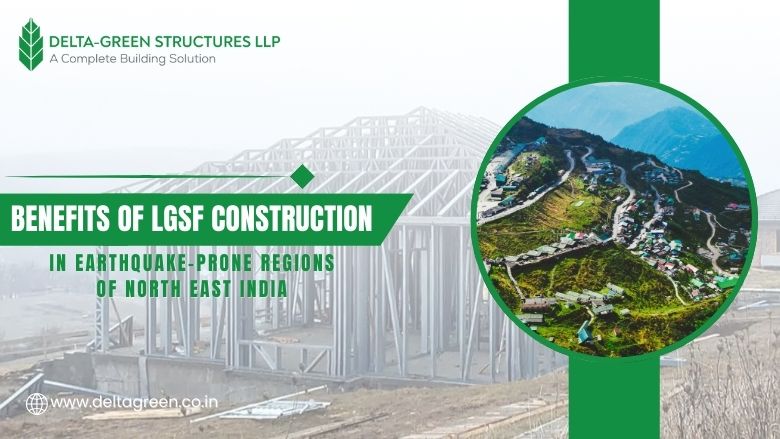
Benefits of LGSF Construction in Earthquake-Prone Regions of North East India

The Earthquake Reality in North East India North East India faces a critical reality: it’s one of the most earthquake-prone regions in the country. Seismic Zones IV and V cover Assam, Manipur, Meghalaya, Arunachal Pradesh, Sikkim, and other North-East states. Zone V is the highest risk category. Zone IV still carries a significant seismic threat. Recently the entire Northeastern region of India along with the broader Himalayan belt has been shifted to the newly created Zone VI by the Bureau of Indian Standards, under the 2025 Earthquake Design Code (IS 1893:2025). For decades, most buildings in these regions have been built using traditional RCC (Reinforced Concrete) and brick masonry. These structures are rigid and brittle. When earthquakes strike, they crack, collapse, and fail catastrophically. The result? Loss of life. Damaged property. Communities rebuilding from rubble. But modern construction technology offers a different approach: Light Gauge Steel Framing (LGSF). Unlike rigid concrete, LGSF is flexible, lightweight, and designed specifically to absorb seismic forces without breaking. Buildings built with LGSF don’t collapse in earthquakes. They flex, absorb energy, and protect occupants. This is why LGSF is becoming the preferred technology for earthquake-resistant construction across North East India.   Why North East India Needs Earthquake-Resistant Construction The statistics are sobering. North East India experiences frequent earthquakes: 1987 Manipur earthquake: 4.3 magnitude2004 Assam earthquake: 4.5 magnitude2009 Assam earthquake: 5.1 magnitude2011 Sikkim earthquake: 6.9 magnitude (devastating) These aren’t isolated events. They’re regular. Recurring. Predictable. Yet most homes, schools, hospitals, and offices in the North East are built with traditional methods that fail during earthquakes. The question isn’t whether an earthquake will hit North East India. It’s when. And when it does, will the building protect people or harm them? LGSF construction answers that question with proof. How LGSF Outperforms Traditional RCC in Earthquakes Reason 1: Lightweight Means Lower Seismic Forces The Physics: During an earthquake, force equals mass times acceleration (F = MA). Heavier buildings experience greater seismic forces. LGSF buildings are 40-60% lighter than equivalent RCC structures. This dramatically reduces the force an earthquake exerts on the building. Real Impact: A building weighing half as much experiences roughly half the seismic force. On a ₹20 crore multi-story project, this difference becomes the difference between safety and collapse. Reason 2: Steel is Flexible, Concrete is Brittle The Critical Difference: RCC is strong but brittle. It resists force rigidly. When force exceeds its strength, it cracks and fails suddenly. Steel, by contrast, is ductile. It bends without breaking. During an earthquake, LGSF buildings sway and flex, absorbing seismic energy instead of fighting it. Research Proof: Studies comparing RCC and steel frame structures in earthquake zones show steel structures exhibit: Lower lateral displacements (less sway) Reduced base shear (less force on foundation) Enhanced ductility (can bend significantly without breaking) Greater energy dissipation (absorbs earthquake force safely) Reason 3: Superior Strength-to-Weight Ratio Steel has the highest strength-to-weight ratio of any building material. This means: Maximum structural capacity with minimum weight. In earthquake zones, this is the holy grail of structural design. Real Outcome: LGSF buildings can support the same loads as heavier RCC structures while remaining lighter, more flexible, and more seismically resistant. Reason 4: Engineered Connections & Bracing Systems LGSF structures include: Diagonal bracing systems that distribute seismic forces evenly Shear walls that increase lateral stiffness Reinforced connections designed to withstand lateral movement Advanced fastening techniques that keep components securely together during earthquakes Every connection is engineered for seismic performance, not just architectural aesthetics. Reason 5: Uniform Load Distribution RCC concentrates loads at specific points (columns, walls). If these fail, the entire building fails. LGSF distributes loads evenly throughout the steel frame structure. If one component fails, the structure redistributes loads and maintains integrity. Safety Implication: LGSF structures don’t have single points of failure during earthquakes. LGSF vs RCC: The Practical Comparison Factor RCC LGSF Building Weight 40-50% heavier 40-60% lighter Flexibility Rigid (brittle) Flexible (ductile) Seismic Force Resistance Fights rigidly Absorbs energy Lateral Displacement Higher (more sway) Lower (controlled sway) Base Shear on Foundation Higher Lower Ductility (bending capacity) Low High Post-earthquake Repair Extensive (cracks/damage) Minimal (design absorbs energy) Construction Time 18-24 months 6-9 months Cost in Seismic Zones Higher (extra reinforcement) Comparable or lower Real-World Evidence: LGSF in Earthquake Zones Japan: Uses LGSF extensively. Frequent earthquakes demonstrate LGSF’s superior safety and quick recovery. New Zealand: After the devastating Christchurch earthquake (2011), LGSF construction was chosen for reconstruction because of its proven resilience. Turkey & Iran: Following major earthquakes, LGSF has been increasingly adopted for post-disaster reconstruction. North East India: Delta Green Structures builds LGSF structures designed specifically for High seismic conditions. Five Key Benefits of LGSF in North East India 1. Lives Are Protected LGSF buildings don’t collapse. They flex, absorb energy, and remain standing. People survive. 2. Property Damage is Minimized Unlike RCC buildings that develop extensive cracks and damage, LGSF buildings experience minimal post-earthquake damage because they absorb rather than fight seismic forces. 3. Faster Recovery LGSF buildings require minimal repairs after earthquakes. Communities recover faster. Economic impact is lower. 4. Government Compliance   LGSF construction complies with IS 1893:2016 (Indian seismic design standards) and exceeds minimum requirements in seismic zones. 5. Long-Term Durability Galvanized steel used in LGSF resists corrosion in North East India’s humid climate. Buildings stay strong for 50+ years with minimal maintenance. FAQ: LGSF Construction in Earthquake-Prone North East Q: Is LGSF really safer than RCC in earthquakes? A: Yes. Research shows steel structures outperform RCC structures in seismic zones through lower weight, higher ductility, and better energy dissipation. Q: Can LGSF handle Zone VI earthquakes (the highest seismic zone)? A: Yes. LGSF structures are engineered for specific seismic zones and can be designed for Zone VI compliance when properly engineered. Q: Is LGSF construction legal in North East India? A: Absolutely. LGSF complies with IS 1893:2016, IS 4326:2013, and all Indian Building Codes. It’s approved for seismic zones. Q: Does LGSF cost more than RCC in seismic zones? A: No. While LGSF components may cost slightly more, total project

Benefits of LGSF Construction in Earthquake-Prone Regions of North East India Read More »

How LGSF Manufacturers Minimize Human Error in Construction Projects

The Hidden Crisis: Why Construction’s Biggest Cost Isn’t Materials or Labor—It’s Human Error Every year, the global construction industry loses $1.8 trillion to human error. That’s not a rounding error or an industry estimate. That’s verified data from Autodesk and FMI Consulting, analyzing actual construction project failures worldwide. But here’s what makes this number even more staggering: 50% of construction rework is preventable. According to the Construction Industry Institute, up to 30% of total project cost goes to rework. Miscalculations. Design conflicts. Installation errors. Coordination breakdowns. Documentation losses. Communication failures. Each one rooted in human error. For a typical ₹10 crore construction project, this means ₹3 crore lost to rework. Half of that could have been prevented. This is the crisis that Light Gauge Steel Framing (LGSF) manufacturers solve systematically through three integrated technologies: Building Information Modeling (BIM), Automated Manufacturing, and Modular Construction. Delta Green Structures, leveraging these technologies, is redefining what “error-free construction” actually means. The Human Error Problem: Where Does It Really Come From? Human error in construction isn’t malice or carelessness. It’s systemic. Research shows: 24% of construction data is simply inaccurate (a five entered where a six should be) 24% of data is missing (blank fields in spreadsheets, lost documentation) 21% of data is wrong (recording one aspect but documenting another) Design errors account for 40% of all construction problems, costing $865 billion annually The underlying cause? Traditional construction is on-site dependent. A single brick layer’s skill level impacts quality. A single supervisor’s attention affects coordination. A single miscommunication halts progress. Every individual on-site is a point of failure. The result: Traditional construction achieves only 85-95% quality accuracy in manufacturing and inspection. The remaining 5-15% contains defects, rework, and waste. Technology Solution #1: Building Information Modeling (BIM) BIM eliminates design errors before they reach the construction site. BIM is not just 3D modeling. It’s a unified digital environment where architects, engineers, and contractors work from a single source of truth. How BIM Reduces Human Error: Clash Detection (Catching Problems Early)Traditional approach: Designs are created separately (architectural, structural, mechanical). Contractors discover conflicts on-site during construction. Cost: Rework, delays, safety issues. BIM approach: All systems integrate into one digital model. Conflicts appear immediately. Teams resolve clashes in virtual space before manufacturing begins. Impact: Fewer design errors, fewer surprises, fewer mistakes on-site. Improved Collaboration & CommunicationCloud-based BIM platforms ensure that every team member—architect, engineer, contractor, client—sees the same information in real-time. Not outdated prints. Not conflicting versions. One current model. Impact: Miscommunication drops dramatically. Information loss becomes impossible. Virtual Simulation (4D & 5D BIM) 4D BIM: Simulates construction sequence over time, identifying logistical conflicts before execution 5D BIM: Adds cost data, preventing budget surprises and hidden expenses Teams can “walk through” the project before construction starts, spotting problems humans would miss on paper. Impact: On-site errors drop because teams have anticipated and solved problems virtually. Technology Solution #2: Automated Manufacturing in LGSF Automation eliminates human variability in production. In traditional construction, quality depends on individual worker skill. Fatigue. Attention level. Experience. Training consistency. Each day, quality varies. In automated LGSF manufacturing, precision is guaranteed. The Accuracy Revolution: Research from the University of Virginia found that automated inspection systems achieve 99.9% accuracy—far exceeding human capability (85-95%). For LGSF manufacturers like Delta Green using fully automated Pinnacle machines: Precision Cutting & Forming Steel components cut to exact specifications: ±1-2mm tolerance Result: Every component matches design perfectly Real-Time Quality Inspection Every component automatically inspected at 99.9% accuracy Defects caught instantly, not weeks later Zero substandard components reach assembly Result: No rework, no surprise defects Digital Traceability Every component tracked with digital records Full manufacturing history accessible No lost documentation Result: Complete accountability, complete transparency Technology Solution #3: Modular Construction (Reducing On-Site Error Exposure) Factory-built components eliminate on-site human error by design. In traditional construction, 100% of the work happens on-site, exposing every step to weather, coordination challenges, and human error. In LGSF modular construction, 70-80% of the building is completed in the factory. Only final assembly happens on-site. Why This Matters: Factory Environment (Controlled, Supervised, Optimized): Climate-controlled conditions (no weather-related quality issues) Standardized processes (consistency guaranteed) Expert supervision (every step monitored) Quality control stations (errors caught immediately) On-Site Work (Simple Assembly Only): Fewer skilled labor requirements (less room for expertise variability) Simplified tasks (bolts and screws vs. complex masonry) Reduced coordination complexity (fewer teams, fewer interfaces) Shorter execution time (less exposure to error) Result: A building where human error is systematically minimized from design through assembly. The Delta Green Integration: BIM + Automation + Modular = Precision Delta Green combines all three technologies into an integrated system: BIM Design Phase: Every component designed in a unified digital environment. Clash detection eliminates conflicts. 4D/5D simulation identifies risks before manufacturing. Automated Manufacturing Phase: Pinnacle machines produce components at 99.9% accuracy. Every component inspected. Digital records track complete manufacturing history. Modular Assembly Phase: 75% factory-built components shipped ready. Simple on-site assembly with minimal error potential. Quality assured by factory precision. The Result by Numbers: Metric Traditional Construction LGSF with BIM + Automation Design Error Rate 40% of projects <5% (BIM catch) Manufacturing Tolerance ±10-15mm ±1-2mm Rework Cost 30% of project 3-5% of project Quality Accuracy 85-95% 99.9% Defect Detection Post-construction Pre-delivery Documentation Loss Common Zero FAQs: Understanding LGSF Error Minimization Q: How does BIM catch errors traditional construction misses? A: BIM integrates all building systems in one digital model. Conflicts appear instantly—MEP clashing with structure, architectural conflicting with mechanical. Teams resolve these virtually. Traditional construction discovers these conflicts on-site during expensive rework. Q: What is "99.9% accuracy" in LGSF manufacturing? A: Automated systems measure and produce components to ±1-2mm tolerance, detected by sensors at 99.9% accuracy. Traditional on-site construction achieves ±10-15mm tolerance with 85-95% detection—meaning 5-15% of errors go undetected until later. Q: Why does factory manufacturing reduce human error more than on-site? A: Factory production is standardized, supervised, and controlled. Weather doesn’t affect quality. Fatigue doesn’t reduce precision. Skill variability is eliminated through automation. On-site construction exposes every step to human variables. Q:

How LGSF Manufacturers Minimize Human Error in Construction Projects Read More »

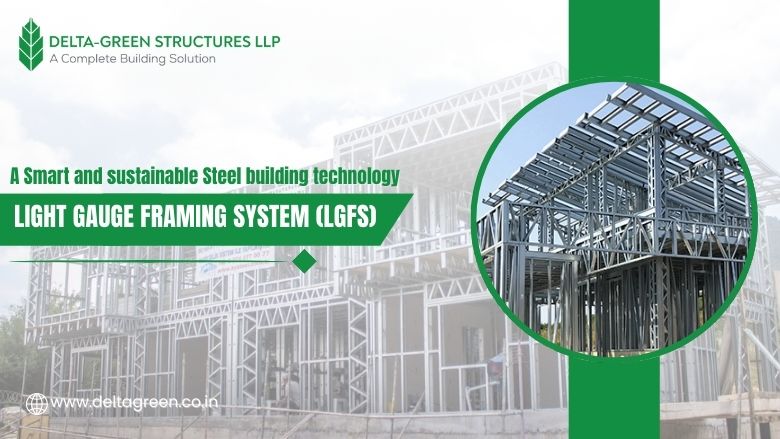
Light Gauge Framing System (LGFS): The Smart, Sustainable Future of Building in India

The Future of Construction Has Arrived—And It’s Changing Everything India faces a critical crisis: a 3 crore housing shortage, aggressive government targets to build 2 crore homes by 2025, and a construction method that simply can’t keep up. Traditional brick-and-concrete construction takes 18-24 months per project. Meanwhile, prefabricated steel structures using Light Gauge Framing System (LGFS) technology complete in just 6-9 months—60% faster. This isn’t a compromise. It’s an upgrade. And it’s reshaping how India builds.Whether you’re a developer racing to meet timelines, a homebuyer tired of waiting, an architect seeking design freedom, or a government official trying to meet housing targets responsibly, LGFS offers something traditional construction cannot: speed without sacrificing quality, affordability without compromising sustainability. The Problem: Why Traditional Construction Can’t Solve India’s Housing Crisis India’s construction industry faces a perfect storm of challenges: For Developers: Time delays mean lost revenue. A project delayed 6 months is a project that doesn’t generate returns. Traditional construction’s 18-24 month timeline leaves no room for contingencies, monsoons, or labor shortages. For Homebuyers: The dream of homeownership comes with a nightmare of waiting. And waiting isn’t the only problem. After decades in traditional buildings, owners deal with settling cracks, foundation issues, and maintenance costs that seem endless. For Government: The National Housing Mission targets 2 crore homes by 2025. The Pradhan Mantri Awas Yojana (PMAY) requires affordable housing at scale. Traditional construction methods simply cannot deliver this volume in this timeline. For the Environment: Brick-and-concrete construction generates massive waste, consumes enormous resources, and carries a carbon footprint 30-40% higher than steel alternatives. India’s push toward sustainable development demands smarter solutions. Enter LGFS—a technology that solves all these problems simultaneously. What Is Light Gauge Framing System (LGFS)? Light Gauge Framing Systems uses cold-formed steel sections (thin steel sheets 1-3mm thick, galvanized for corrosion protection) to create precision-engineered structural frames. Unlike traditional on-site brick laying, LGFS components are manufactured in controlled factory environments, then rapidly assembled on-site like building blocks. The key innovation: 75% of the structure is built in a factory where quality is guaranteed, weather is irrelevant, and precision is automated. Only final assembly happens on-site. This technology has been proven globally for decades in North America, Australia, Japan, and New Zealand. Now, India is experiencing rapid adoption—and for good reason. Why LGFS Is Superior to Traditional Construction 1. Construction Speed: 60% Faster Traditional: 18-24 months LGFS: 6-9 months Impact: Developers recover investments faster. Homebuyers occupy sooner. Government targets become achievable. Why? Factory manufacturing happens in parallel with site preparation. Monsoons don’t delay factory production. Assembly takes weeks, not months. 2. Cost Efficiency: 15-20% Lower Total Project Cost Yes, LGFS components may cost 5-10% more upfront than traditional materials. But: Less skilled labor required (reducing wages) 50-70% less construction waste (saving disposal costs) Faster completion (reducing management overhead) Zero settling cracks (eliminating long-term repair costs) When you calculate total cost, LGFS wins. 3. Superior Quality & Durability Zero settling cracks: Traditional brick structures settle over time, causing cracks. LGFS structures don’t settle. 50+ year lifespan: vs 30-40 years for brick structures Earthquake resistant: Steel’s flexibility absorbs seismic energy (proven in earthquake zones globally) Better insulation: Reduces heating/cooling costs by 20-30% (critical in India’s diverse climate zones) 4. Sustainability: 100% Recyclable Steel is infinitely recyclable 30-40% lower carbon footprint vs concrete 50-70% less construction waste Supports IGBC  and LEED  green building certifications Aligns with India’s sustainability mandates 5. Design Freedom LGFS enables complex architectural designs impossible with traditional methods—open floor plans, large windows, custom interiors, flexible spaces. Perfect for both affordable housing and premium projects. Why Now? Government Support + Market Tailwinds National Housing Mission (NHM): The government has approved LGFS as the preferred technology for mass housing. Target: 2 crore homes by 2025. PMAY (Pradhan MantriAwas Yojana): Specifically incentivizes sustainable, cost-effective housing solutions. LGFS checks both boxes. Market Growth: The India LGFS market was valued at USD 1.89 billion in 2022 and is growing at 6.3% annually. The global market reached USD 29.4 billion in 2025. Commercial construction (offices, IT parks, retail) is growing fastest at 6.8% CAGR. Labor Scarcity: India lacks skilled brick masons. LGFS requires less skilled on-site labor, making it pragmatically superior in today’s employment landscape. Real-World Applications: LGFS Works Everywhere Residential: 2-3 BHK apartments for affordable housing projects Institutional: Schools, hospitals, government offices Commercial: IT parks, retail complexes, hotels Rapid Response: Emergency shelters, disaster reconstruction LGFS is genuinely one-size-fits-all—from mass housing to premium commercial buildings. FAQs: Addressing Your Concerns Q: Is LGFS more expensive than traditional construction? A: Initially, yes (5-10% higher material cost). But total project cost is 15-20% lower when accounting for speed, labor efficiency, and zero long-term cracking issues. Q: Is LGFS earthquake-resistant? A: Absolutely. Steel’s flexibility absorbs seismic energy. LGFS has proven performance in earthquake zones globally. Q: How long do LGFS buildings last? A: 50+ years. The galvanized coating protects against corrosion in all climates—coastal, monsoon, desert. Q: Can LGFS handle monsoon climate? A: Yes. Factory manufacturing happens indoors regardless of weather. Monsoons don’t delay production, only assembly does—which is much shorter. Q: Is LGFS suitable for affordable housing? A: Perfect for it. Cost efficiency, speed, and scalability make it ideal for government housing schemes. Q: What are sustainability benefits? A: 100% recyclable, 30-40% lower carbon footprint, 50-70% less waste, superior energy efficiency. Q: Can I customize designs? A: Yes. LGFS allows complex architectural designs, open layouts, and flexible interiors—all while maintaining structural integrity. Q: Who should use LGFS? A: Developers (faster ROI), homebuyers (quality + sustainability), government projects (affordability + speed). Essentially, anyone building in modern India. Conclusion: The Smart Choice for Smart Construction The Light Gauge Framing System isn’t the future of construction in India—it’s the present reality, reshaping how we build homes, offices, and institutions. For developers, it means faster revenue and competitive advantage in a crowded market. For homebuyers, it means quality homes without endless waiting. For the government, it means achieving housing targets responsibly and sustainably. For the environment, it means construction practices aligned with our sustainability

Light Gauge Framing System (LGFS): The Smart, Sustainable Future of Building in India Read More »