Delta Green

Prefabricated Construction

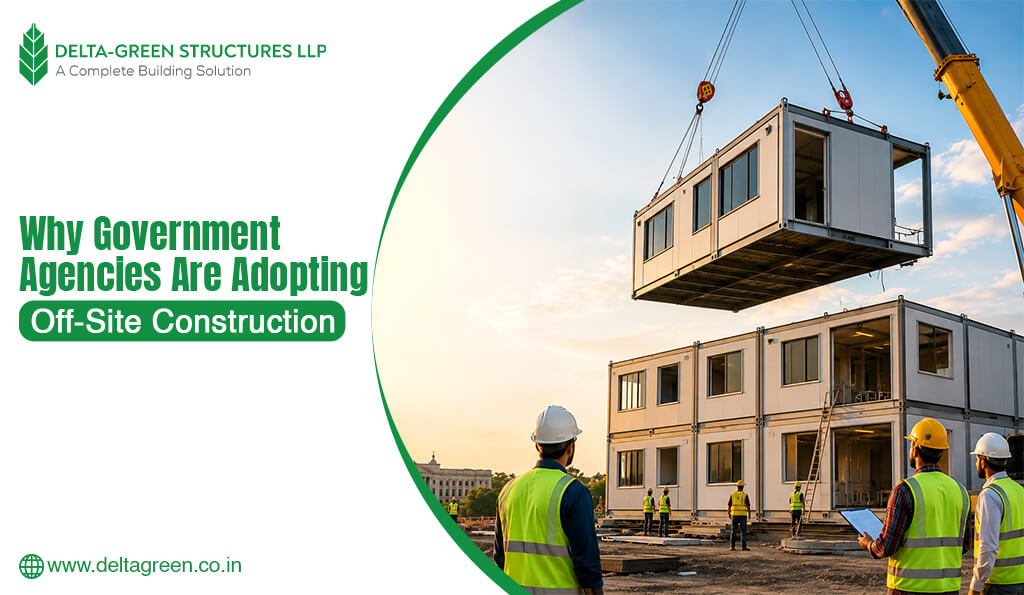
Why Government Agencies Are Adopting Off-Site Construction

Why Government Agencies Are Adopting Off-Site Construction The Future of Public Infrastructure Is Being Built… Off-Site The way public infrastructure is designed and delivered is undergoing a significant transformation. Across India and around the world, government agencies are increasingly adopting off-site construction and other Modern Methods of Construction (MMC) to meet the growing demand for high-quality infrastructure within tighter timelines and budgets. With rapid urbanisation, expanding public infrastructure requirements, and increasing pressure to optimise public expenditure, conventional construction methods often struggle with labour shortages, weather-related delays, material wastage, and schedule overruns. As a result, governments are turning to industrialised construction systems that offer greater efficiency, consistency, and predictability. Off-site construction addresses these challenges by manufacturing structural components in a controlled factory environment before transporting them to the project site for assembly. This approach enables faster project execution, improved quality control, enhanced worker safety, and reduced environmental impact compared to conventional construction methods. Today, off-site construction is no longer considered an emerging trend-it is becoming an integral part of government construction projects, public infrastructure development, institutional buildings, and Smart City initiatives. Why Governments Are Moving Toward Modern Methods of Construction (MMC) Government departments are expected to deliver infrastructure that is durable, cost-effective, sustainable, and completed within strict project schedules. However, conventional construction methods are often affected by unpredictable site conditions, labour availability, weather disruptions, and inconsistent workmanship. Modern Methods of Construction (MMC), including Light Gauge Steel Frame (LGSF) systems, modular construction, prefabricated building systems, and other industrialised construction techniques, provide a practical solution to these challenges. By transferring a significant portion of the construction process to a controlled manufacturing facility, these systems ensure precision engineering, stringent quality control, and faster project execution. Factory-manufactured components are produced using automated processes and assembled on-site with minimal disruption, resulting in improved construction quality and greater schedule certainty. Companies such as Delta Green Structures are contributing to this transformation by manufacturing precision-engineered LGSF building systems using automated production technology. These solutions enable government agencies to deliver infrastructure more efficiently while maintaining high standards of quality, safety, and durability. Key Benefits Driving Government Adoption 1. Faster Project Delivery Without Compromising Quality One of the most significant advantages of off-site construction is its ability to reduce project timelines. Since component manufacturing and site development take place simultaneously, projects can be completed considerably faster than conventional construction methods. For government agencies, this enables the timely delivery of schools, hospitals, staff housing, healthcare centres, and other critical public infrastructure. 2. Cost-Effective Construction at Scale Cost efficiency is a key priority for public infrastructure projects. Off-site construction reduces material wastage, minimises labour dependency, improves productivity, and lowers the risk of costly project delays. These efficiencies contribute to better lifecycle value and more effective utilisation of public funds, particularly for large-scale and repetitive building programmes. 3. Sustainability & Green Building Advantage Sustainability has become a fundamental objective in modern infrastructure development. Factory-based manufacturing optimises material utilisation, significantly reduces construction waste, lowers site disturbances, and supports environmentally responsible construction practices. Combined with energy-efficient building design, off-site construction contributes to the development of greener and more sustainable public infrastructure. 4. High-Quality Buildings with Precision In controlled environments, materials are engineered with strict quality checks. This ensures High-Quality Buildings with better durability, accuracy, and performance compared to unpredictable traditional on-site construction. 5. Climate-Resilient Infrastructure From floods to earthquakes, infrastructure must withstand extreme conditions. Climate-Resilient Infrastructure built using modular systems ensures better structural integrity and long-term reliability. Off-Site vs. Traditional Construction: The Real Difference Off-site construction represents a significant evolution in the way buildings and infrastructure are planned, manufactured, and delivered. Unlike conventional construction, where most activities are carried out sequentially at the project site, off-site construction transfers a substantial portion of the work to a controlled manufacturing environment. Traditional construction methods are often affected by labour shortages, weather disruptions, material handling inefficiencies, and varying site conditions, all of which can impact project schedules, quality, and overall costs. In contrast, off-site construction enables structural components to be manufactured while site preparation progresses simultaneously. This parallel workflow significantly reduces construction time, improves quality control, minimises material wastage, and enhances project predictability. Modern off-site construction systems, including Light Gauge Steel Frame (LGSF) technology, offer precision-engineered components that are manufactured to stringent quality standards before being transported to site for rapid assembly. As a result, these systems are particularly well suited for government infrastructure projects that require speed, consistency, and scalability. As infrastructure demands continue to grow, the construction industry is steadily transitioning from labour-intensive site-based practices to manufacturing-led construction processes that deliver greater efficiency, quality, and reliability. Smart Cities & Public Infrastructure: The Big Push India’s rapid urbanisation and expanding infrastructure requirements have accelerated the need for construction methods that are faster, more sustainable, and capable of delivering consistent quality at scale. Initiatives such as the Smart Cities Mission, affordable housing programmes, institutional development, and urban infrastructure projects demand solutions that can be executed efficiently without compromising quality. Off-site construction is well positioned to address these requirements. From educational institutions and healthcare facilities to government offices, staff accommodation, public housing, and utility buildings, industrialised construction methods enable faster project delivery while reducing disruption to surrounding communities. By combining factory-based manufacturing with efficient on-site assembly, Modern Methods of Construction (MMC) improve productivity, minimise construction waste, and provide greater certainty in project delivery. These advantages make off-site construction an increasingly preferred approach for public infrastructure development across India. Where Delta Green Structures Fits Into This Transformation In this evolving ecosystem, Delta Green Structures is emerging as a strong enabler of industrialized construction in North-East India. With advanced LGSF technology, automated Pinnacle machines, and turnkey construction capabilities, the company is redefining how infrastructure is manufactured and delivered. Their approach to Off-Site Construction ensures precision-driven output, faster turnaround times, and scalable solutions for both private and government projects. What makes them stand out is their commitment to quality, climate adaptability, and end-to-end execution-making them highly relevant for modern Government Construction Projects and infrastructure needs in challenging terrains. By integrating innovation

Why Government Agencies Are Adopting Off-Site Construction Read More »

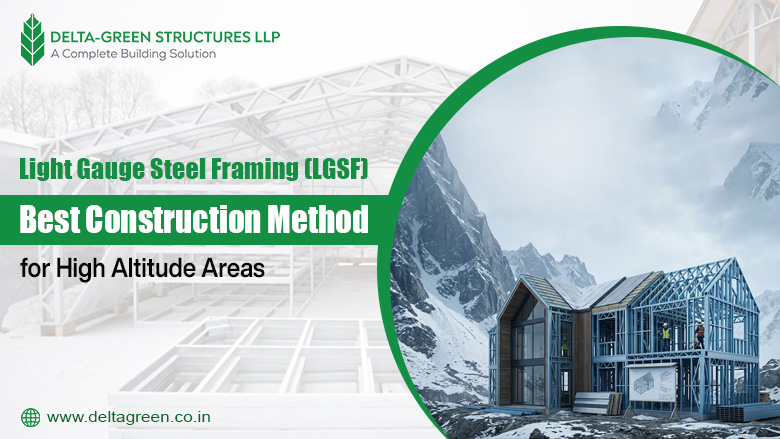
Light Gauge Steel Framing (LGSF): Best Construction Method for High Altitude Areas

Light Gauge Steel Framing (LGSF): Best Construction Method for High Altitude Areas Building Strong Where Nature Tests the Hardest Snowfall. Landslides. Earthquakes. Heavy rain. Difficult transportation routes. Constructing buildings in mountainous terrain has never been easy. Traditional construction methods often struggle in these conditions because transporting heavy materials, managing labor, and maintaining construction speed become major challenges at high altitudes. This is where Light Gauge Steel Framing for High Altitude Areas is transforming the future of modern construction. From hill stations and border regions to remote mountainous zones, LGSF is becoming the preferred construction solution for engineers, architects, government projects, and private developers who need structures that are fast, durable, lightweight, and climate-resistant. At Delta Green Structures, advanced LGSF technology and fully automated Pinnacle manufacturing systems are helping redefine how modern buildings are constructed in challenging terrains across India. Why Traditional Construction Faces Problems in High Altitude Regions Building in mountainous areas is very different from building in cities or plains. High altitude locations create practical problems that directly affect project timelines and structural safety. Some of the biggest challenges include: Difficulty transporting cement, sand, and heavy materials Short construction seasons due to weather Increased labor and logistics costs Risk of earthquakes and soil movement Moisture damage caused by snow and rainfall Delays due to inaccessible terrain Traditional RCC structures often become slow, expensive, and difficult to manage in these environments. This is why experts are now choosing light gauge steel framing in high altitude regions for faster and more reliable project execution. What is Light Gauge Steel Framing (LGSF)? Light Gauge Steel Framing is a modern construction system that uses cold-formed galvanized steel sections to create strong structural frameworks for buildings. Unlike conventional concrete construction, LGSF structures are manufactured with precision-engineered steel components that are lightweight, durable, and easy to assemble on-site. The biggest advantage? The entire system is designed for speed, accuracy, and long-term performance — especially in difficult geographical conditions. At Delta Green Structures, every frame is manufactured using advanced automated technology to ensure superior precision and structural quality. Why LGSF is the Best Choice for High Altitude Areas 1. Lightweight Yet Extremely Strong One of the biggest advantages of Light Gauge Steel Framing for High Altitude Areas is its lightweight nature. In hilly regions, heavy structures increase pressure on unstable soil and foundations. LGSF significantly reduces dead load compared to concrete structures, making buildings safer and more stable on mountain slopes. This makes lightweight steel structures for hills highly effective for: Resorts Hotels Homestays Army camps Educational institutions Healthcare facilities Government infrastructure projects Even in remote locations, transporting steel sections becomes easier and more cost-efficient. 2. Faster Construction in Difficult Terrain Time is critical in mountainous regions because weather conditions can stop work unexpectedly. One of the biggest reasons behind the rise of fast construction in hilly terrain using LGSF is the speed of installation. Since most components are pre-engineered and manufactured off-site, on-site construction becomes faster, cleaner, and more organized. Compared to traditional methods, LGSF can reduce construction timelines dramatically. This is especially useful for: Border infrastructure projects Emergency housing Tourism properties Government development projects in remote regions At Delta Green Structures, turnkey LGSF solutions help clients complete projects within shorter deadlines without compromising quality. 3. Excellent Performance in Cold Climate Conditions High altitude areas often face freezing temperatures, moisture, and heavy snowfall. Concrete structures can develop cracks due to temperature fluctuations over time. Steel framing systems, however, perform exceptionally well when designed properly with insulation and weather-resistant materials. This makes LGSF for cold climate construction one of the smartest modern solutions for mountain architecture. Benefits include: Better thermal insulation possibilities Reduced moisture absorption Lower maintenance Long structural life Resistance to rust with galvanized coatings For regions that experience severe winters, LGSF provides long-term reliability with minimal structural deterioration. 4. Better Earthquake Resistance Mountainous regions are often located in seismic zones where earthquakes are a serious concern. One major advantage of LGSF for seismic zones is flexibility. Steel structures absorb and distribute seismic energy better than rigid concrete systems, reducing the risk of catastrophic failure. Because LGSF structures are lighter, the seismic load acting on the building also becomes lower. This makes steel frame buildings in mountainous areas safer for occupants and more reliable during seismic activity. For earthquake-prone hill regions in India and the North-East, this construction method is becoming increasingly preferred by infrastructure planners. 5. Eco-Friendly and Sustainable Construction Modern construction is no longer only about speed. Sustainability also matters. LGSF systems generate minimal construction waste and use recyclable steel components. They also require less water compared to traditional construction methods. In environmentally sensitive mountain ecosystems, this becomes a major advantage. With growing demand for green infrastructure, high altitude construction using LGSF is helping developers reduce environmental impact while maintaining high construction standards. Smart Construction for Tourism and Hospitality Projects Tourism in mountain regions is growing rapidly. Resorts, eco-retreats, boutique stays, and premium homestays are being developed across hilly destinations. But investors now want structures that are: Faster to build Energy efficient Visually modern Durable in extreme climates This is exactly why LGSF construction in hilly regions is gaining popularity in the hospitality industry. LGSF allows flexible architectural designs while ensuring structural safety and quicker project delivery. At Delta Green Structures, customized LGSF packages help hospitality businesses create modern infrastructure even in geographically challenging areas. The Future of Mountain Construction is Steel-Framed The future of construction in high altitude regions will depend on technologies that are: Faster Safer Smarter More sustainable Traditional construction methods often struggle to meet the demands of modern mountain infrastructure. In contrast, Light Gauge Steel Framing for High Altitude Areas delivers the perfect balance of strength, speed, flexibility, and durability. Whether it is government infrastructure, tourism projects, healthcare facilities, or residential developments, LGSF is proving to be the smarter choice for difficult terrains. With advanced manufacturing capabilities, premium materials, and expertise in challenging geographical conditions, Delta Green Structures is helping shape a new era of construction across high altitude

Light Gauge Steel Framing (LGSF): Best Construction Method for High Altitude Areas Read More »

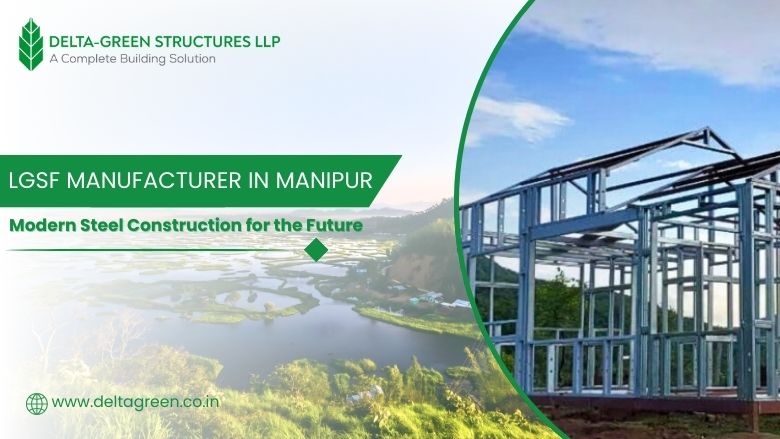
LGSF Manufacturer in Manipur: Modern Steel Construction for the Future

Manipur’s Construction Revolution: Why Smart Building Matters Now Manipur stands at a construction crossroads. The state is experiencing unprecedented urbanization—Imphal’s population growing, Ukhrul and Churachandpur expanding rapidly, commercial districts emerging. Yet traditional construction methods remain unchanged. Brick walls, concrete pillars, labor-intensive processes that take 18-24 months per project. But Manipur’s unique challenges demand smarter solutions:  Seismic Reality: Manipur sits in an earthquake-prone zone. Traditional brick structures crack, settle, and fail during seismic events. Modern steel frame construction offers what brick cannot: flexibility, ductility, and proven earthquake resistance. Monsoon Impact: 5-6 months of heavy rainfall annually. Traditional construction halts during monsoon season. Light Gauge Steel Frame (LGSF) manufacturing happens in climate-controlled factories—monsoon delays zero. Labor Constraints: Finding skilled brick masons has become nearly impossible. LGSF construction requires less specialized on-site labor, making it pragmatically superior in Manipur’s current employment landscape. Affordability Demand: Manipur’s State Affordable Housing Policy (2022) explicitly encourages LGSF technology. The Pradhan MantriAwas Yojana-Urban 2.0 offers Technology Innovation Grants of ₹3,000/sqm for LGSF projects. The question isn’t whether modern steel construction in Manipur is needed. Why haven’t we adopted it faster? What Is LGSF? The Technology Reshaping Manipur Light Gauge Steel Frame uses thin sheets of cold-formed galvanized steel (1-3mm thickness) to create precision-engineered structural frames. Unlike traditional masonry, LGSF components are manufactured in controlled factory environments, then rapidly assembled on-site. Key Components: Steel Studs: Vertical framework support members Steel Tracks: Horizontal channels guiding studs Joists: Floor and ceiling support Bracing: Diagonal stability members Sheathing: Wall and roof panels Fasteners: Secure connections Insulation: Energy efficiency and soundproofing Connections: Structural integrity details Why This Matters for Manipur: Factory manufacturing = quality regardless of monsoon. Galvanized steel = corrosion resistance in humid climates. Precision engineering = zero settling cracks. Lightweight = lower foundation costs. Why LGSF Construction is Booming in Manipur: Five Compelling Reasons 1. Speed: 60% Faster Than Traditional (9 Months vs 18-24) Factory pre-fabrication happens in parallel with site preparation. Monsoon doesn’t delay factory production. Fast-track construction with LGSF technology means: Developers recover investments faster Homebuyers occupy sooner Government housing targets become achievable 2. Earthquake Safety (Critical for Manipur’s Seismic Zone) Earthquake-resistant steel structures are proven. Steel’s ductility absorbs seismic energy instead of resisting rigidly. During earthquakes, LGSF buildings move safely with the ground. Brick buildings fight the ground—they fail. This is essential for Manipur. 3. Monsoon Resilience (5-6 Months Annual Rainfall) LGSF manufacturing is completely weather-independent. Projects don’t lose 5-6 months. Quality isn’t compromised by rain exposure. Timelines become predictable—critical for government and commercial projects. 4. Humidity & Pest Resistance Manipur’s humid climate creates moisture problems in traditional structures. LGSF solves this fundamentally.     resists corrosion. Steel doesn’t attract termites. No moisture problems. No settling. Long-term durability brick cannot match.    5. Government Incentives & Affordability Manipur’s Affordable Housing Policy explicitly encourages LGSF. PMAY-U 2.0 offers ₹3,000/sqm Technology Innovation Grants for LGSF projects. Cost-effective steel construction isn’t marketing—it’s government-backed reality. Key Advantages: Why LGSF Outperforms Traditional Construction Advantage Traditional LGSF Manipur Impact Construction Time 18-24 months 6-9 months Faster ROI, faster occupancy Labor Requirement Highly skilled Semi-skilled Solves Manipur’s labor shortage Monsoon Impact 5-6 month delays Zero delays Predictable timelines Earthquake Safety Fails in seismic Proven resistant Critical for Manipur zone Durability 30-40 years 50+ years Lower long-term costs Maintenance Settling cracks, repairs Zero settling cracks No future maintenance Waste Generation 40-50% waste 5-15% waste Environmental + cost savings Total Cost Baseline 15-20% lower Significant savings Real-World Applications in Manipur Residential: 2-3 BHK apartments for affordable housing (PMAY grant eligible) Institutional: Schools, colleges, government offices, hospitals Commercial: Retail complexes, IT parks, hospitality projects Industrial LGSF Structures: Warehouses, manufacturing, storage Rapid Response: Emergency shelters, disaster reconstruction (earthquake recovery) Why Choose Delta Green for LGSF in Manipur? Delta Green Structures is the Only Full-Service LGSF Manufacturer in North-East India. Unique Advantages: Local Presence, Deep Expertise Operating in Manipur, we understand the local climate, seismic vulnerability, monsoon challenges, building codes, and employment landscape. Complete Integration (Design + Manufacturing + Construction) Most competitors do one or two services. We provide integrated solutions. No vendor fragmentation. Single accountability. Quality control from concept to delivery. Government Project Experience Proven track record with state housing boards, government compliance, and large-scale project execution. Advanced Technology Top-tier LGSF materials, fully automated Pinnacle machines, precision-engineered designs, factory quality control that traditional on-site construction cannot match. Proven Results Quality structures exceeding industry standards. Shorter turnaround times. Real engineering excellence. Customizable Solutions Every project is different. Bespoke packages, flexible consulting, support adapted to specific needs. Sustainable Construction Aligns with green building certifications. Supports government sustainability mandates. Economical and environmental. FAQs: Common Questions About LGSF in Manipur Q: Is LGSF more expensive than traditional? A: Initially 5-10% more. Total cost? 15-20% lower when accounting for speed, labor efficiency, minimal waste, and zero settling issues. PMAY grants further offset costs. Q: Is LGSF safe in Manipur's earthquakes? A: Absolutely. Steel’s flexibility absorbs seismic energy. Proven globally in earthquake zones. Ideal for Manipur. Q: How does LGSF handle the monsoon climate? A: Factory manufacturing is monsoon-proof. Production unaffected. On-site assembly is weatherproofed. Quality is never compromised by rain. Q: How long do LGSF buildings last? A: 50+ years minimum. Galvanized coating provides superior corrosion protection in humid climates. Q: Is LGSF suitable for affordable housing projects? A: Perfect. Cost-efficient, fast-track, scalable. PMAY-U 2.0 offers substantial grants specifically for LGSF. Q: Can I customize designs with LGSF? A: Yes completely. Complex architectural plans, open floor layouts, custom interiors—all possible while maintaining structural integrity and earthquake safety. Q: Does LGSF work for industrial structures? A: Yes. Warehouses, manufacturing facilities, solar mounting structures—versatile across all applications. Q: Who should use LGSF in Manipur? A: Developers (faster ROI), homebuyers (quality + earthquake safety), government (affordability targets), commercial builders (design flexibility). Essentially, anyone building modernly in Manipur. Conclusion: The Smart Choice for Manipur’s Future Manipur’s construction evolution isn’t optional—it’s urgent. Rapid urbanization demands modern solutions. Seismic vulnerability demands earthquake-safe structures. Monsoon challenges demand weather-proof construction. Affordability demands cost-effective technology. LGSF—particularly through Delta Green Structures as Manipur’s only full-service LGSF manufacturer—provides the integrated answer. We offer:

LGSF Manufacturer in Manipur: Modern Steel Construction for the Future Read More »

How LGSF Manufacturers Minimize Human Error in Construction Projects

The Hidden Crisis: Why Construction’s Biggest Cost Isn’t Materials or Labor—It’s Human Error Every year, the global construction industry loses $1.8 trillion to human error. That’s not a rounding error or an industry estimate. That’s verified data from Autodesk and FMI Consulting, analyzing actual construction project failures worldwide. But here’s what makes this number even more staggering: 50% of construction rework is preventable. According to the Construction Industry Institute, up to 30% of total project cost goes to rework. Miscalculations. Design conflicts. Installation errors. Coordination breakdowns. Documentation losses. Communication failures. Each one rooted in human error. For a typical ₹10 crore construction project, this means ₹3 crore lost to rework. Half of that could have been prevented. This is the crisis that Light Gauge Steel Framing (LGSF) manufacturers solve systematically through three integrated technologies: Building Information Modeling (BIM), Automated Manufacturing, and Modular Construction. Delta Green Structures, leveraging these technologies, is redefining what “error-free construction” actually means. The Human Error Problem: Where Does It Really Come From? Human error in construction isn’t malice or carelessness. It’s systemic. Research shows: 24% of construction data is simply inaccurate (a five entered where a six should be) 24% of data is missing (blank fields in spreadsheets, lost documentation) 21% of data is wrong (recording one aspect but documenting another) Design errors account for 40% of all construction problems, costing $865 billion annually The underlying cause? Traditional construction is on-site dependent. A single brick layer’s skill level impacts quality. A single supervisor’s attention affects coordination. A single miscommunication halts progress. Every individual on-site is a point of failure. The result: Traditional construction achieves only 85-95% quality accuracy in manufacturing and inspection. The remaining 5-15% contains defects, rework, and waste. Technology Solution #1: Building Information Modeling (BIM) BIM eliminates design errors before they reach the construction site. BIM is not just 3D modeling. It’s a unified digital environment where architects, engineers, and contractors work from a single source of truth. How BIM Reduces Human Error: Clash Detection (Catching Problems Early)Traditional approach: Designs are created separately (architectural, structural, mechanical). Contractors discover conflicts on-site during construction. Cost: Rework, delays, safety issues. BIM approach: All systems integrate into one digital model. Conflicts appear immediately. Teams resolve clashes in virtual space before manufacturing begins. Impact: Fewer design errors, fewer surprises, fewer mistakes on-site. Improved Collaboration & CommunicationCloud-based BIM platforms ensure that every team member—architect, engineer, contractor, client—sees the same information in real-time. Not outdated prints. Not conflicting versions. One current model. Impact: Miscommunication drops dramatically. Information loss becomes impossible. Virtual Simulation (4D & 5D BIM) 4D BIM: Simulates construction sequence over time, identifying logistical conflicts before execution 5D BIM: Adds cost data, preventing budget surprises and hidden expenses Teams can “walk through” the project before construction starts, spotting problems humans would miss on paper. Impact: On-site errors drop because teams have anticipated and solved problems virtually. Technology Solution #2: Automated Manufacturing in LGSF Automation eliminates human variability in production. In traditional construction, quality depends on individual worker skill. Fatigue. Attention level. Experience. Training consistency. Each day, quality varies. In automated LGSF manufacturing, precision is guaranteed. The Accuracy Revolution: Research from the University of Virginia found that automated inspection systems achieve 99.9% accuracy—far exceeding human capability (85-95%). For LGSF manufacturers like Delta Green using fully automated Pinnacle machines: Precision Cutting & Forming Steel components cut to exact specifications: ±1-2mm tolerance Result: Every component matches design perfectly Real-Time Quality Inspection Every component automatically inspected at 99.9% accuracy Defects caught instantly, not weeks later Zero substandard components reach assembly Result: No rework, no surprise defects Digital Traceability Every component tracked with digital records Full manufacturing history accessible No lost documentation Result: Complete accountability, complete transparency Technology Solution #3: Modular Construction (Reducing On-Site Error Exposure) Factory-built components eliminate on-site human error by design. In traditional construction, 100% of the work happens on-site, exposing every step to weather, coordination challenges, and human error. In LGSF modular construction, 70-80% of the building is completed in the factory. Only final assembly happens on-site. Why This Matters: Factory Environment (Controlled, Supervised, Optimized): Climate-controlled conditions (no weather-related quality issues) Standardized processes (consistency guaranteed) Expert supervision (every step monitored) Quality control stations (errors caught immediately) On-Site Work (Simple Assembly Only): Fewer skilled labor requirements (less room for expertise variability) Simplified tasks (bolts and screws vs. complex masonry) Reduced coordination complexity (fewer teams, fewer interfaces) Shorter execution time (less exposure to error) Result: A building where human error is systematically minimized from design through assembly. The Delta Green Integration: BIM + Automation + Modular = Precision Delta Green combines all three technologies into an integrated system: BIM Design Phase: Every component designed in a unified digital environment. Clash detection eliminates conflicts. 4D/5D simulation identifies risks before manufacturing. Automated Manufacturing Phase: Pinnacle machines produce components at 99.9% accuracy. Every component inspected. Digital records track complete manufacturing history. Modular Assembly Phase: 75% factory-built components shipped ready. Simple on-site assembly with minimal error potential. Quality assured by factory precision. The Result by Numbers: Metric Traditional Construction LGSF with BIM + Automation Design Error Rate 40% of projects <5% (BIM catch) Manufacturing Tolerance ±10-15mm ±1-2mm Rework Cost 30% of project 3-5% of project Quality Accuracy 85-95% 99.9% Defect Detection Post-construction Pre-delivery Documentation Loss Common Zero FAQs: Understanding LGSF Error Minimization Q: How does BIM catch errors traditional construction misses? A: BIM integrates all building systems in one digital model. Conflicts appear instantly—MEP clashing with structure, architectural conflicting with mechanical. Teams resolve these virtually. Traditional construction discovers these conflicts on-site during expensive rework. Q: What is "99.9% accuracy" in LGSF manufacturing? A: Automated systems measure and produce components to ±1-2mm tolerance, detected by sensors at 99.9% accuracy. Traditional on-site construction achieves ±10-15mm tolerance with 85-95% detection—meaning 5-15% of errors go undetected until later. Q: Why does factory manufacturing reduce human error more than on-site? A: Factory production is standardized, supervised, and controlled. Weather doesn’t affect quality. Fatigue doesn’t reduce precision. Skill variability is eliminated through automation. On-site construction exposes every step to human variables. Q:

How LGSF Manufacturers Minimize Human Error in Construction Projects Read More »

Step-by-Step Process: How LGSF Manufacturers Build Faster and Smarter

In today’s fast-paced construction world, efficiency, precision, and sustainability are more important than ever.Traditional building methods often involve long timelines, unpredictable delays, and material waste. Light Gauge Steel Framing (LGSF) is a game-changing technology that allows manufacturers and builders to create structures faster, smarter, and more efficiently. At Delta Green Structures, we harness the power of Light Gauge Steel Framing (LGSF) to deliver structures that are not only robust but also built faster and smarter. But have you ever wondered how LGSF manufacturers achieve this efficiency? Let’s take you through the step-by-step process:  Building Smarter with LGSF: The Step-by-Step Process: 1. Design & planning Every LGSF project starts on paper, designing and planning is the very first step of every project. With the help of advanced BIM (Building Information Modelling) engineers create precise 3D models, anticipating potential changes before construction begins. This step mainly ensures: Accurate material estimation Reduced on site errors Streamlined workflow 2. Material Selection & Cutting LGSF Components are typically made from high-quality galvanized steel sheets. By using Computerized cutting machines, each panel and studs are shaped precisely by the manufacturers. This automation ensures: Consistent Quality Minimal Waste Faster Turnaround 3. Factory Assembly: Building Components off-site One of the best parts of LGSF is off-site fabrication. Components such as wall panels, floor joists, and roof trusses are assembled in a controlled factory environment. Benefits include: Less dependency on weather conditions Enhanced quality control Faster production 4. Transportation & Logistics This stage ensures that everything is in place for a seamless assembly. With modular components pre-assembled, logistics becomes simpler. Smart logistics help to reduce: On-site storage Needs Risk of Damage Construction Delays 5. On-site Assembly On-site LGSF structures come together like a well-orchestrated puzzle. The precision of pre-fabricated panels means: Faster construction times compared to traditional methods Minimal need for adjustments Safer working conditions 6. Finishing & Quality Assurance Once the structure is assembled, finishing touches such as insulation, cladding, and interior elements are added. Throughout this stage, rigorous quality checks are conducted to ensure the building meets structural and safety standards. 7. Sustainability & Innovation LGSF construction is not just faster—it’s smarter and greener. Steel is recyclable, and the precision manufacturing process reduces waste. At Delta Green Structures, we also integrate innovative energy-efficient designs, making our buildings more sustainable for the future. Why Choose Delta Green Structures? At Delta Green Structures, we don’t just build buildings, we create solutions that combine speed, accuracy, precision, and sustainability. Choosing us means partnering with a construction company that leverages the latest LGSF technology to deliver superior results for every project. Here’s what sets us apart: 1. Faster construction & Smarter processes By using prefabricated LGSF components, we reduce construction time without compromising quality. 2. Precision & Quality Every structure we build is backed by meticulous planning, cutting-edge manufacturing, and rigorous quality checks. From the first design draft to the final inspection, precision is at the core of our purpose. 3. Sustainable and Eco-friendly Building LGSF is fully recyclable, minimizes material waste, and supports energy-efficient building designs. Choosing Delta Green Structures means opting for a greener, smarter future. 4. Expert Team & Innovative Solutions Our team of experienced engineers, designers, and construction professionals brings innovation and expertise to every project. We tailor solutions to your specific needs, ensuring your building is not only functional but also built to last. 5. Reliability & Transparency From planning to completion, we prioritize clear communication, timely delivery, and adherence to safety and quality standards. With Delta Green Structures, you know your project is in capable hands. When you choose Delta Green Structures, you’re choosing a partner committed to speed, durability, precision, and sustainability. We build smarter so that you can enjoy a hassle-free, high-quality construction experience. By combining meticulous planning, precision manufacturing, and efficient assembly, LGSF manufacturers are revolutionizing the construction industry. At Delta Green Structures, we leverage these cutting-edge processes to deliver buildings that are faster to construct, more durable, and environmentally responsible. Ready to Build Smarter and Faster? Take the next step toward a durable, efficient, and sustainable building with Delta Green Structures. Whether it’s a residential project, commercial space, or industrial facility, our expert team and LGSF technology ensure your project is delivered on time, on budget, and built to last.Contact Us today to discuss your project and see how we can bring your vision to life with speed, precision, and sustainability.

Step-by-Step Process: How LGSF Manufacturers Build Faster and Smarter Read More »

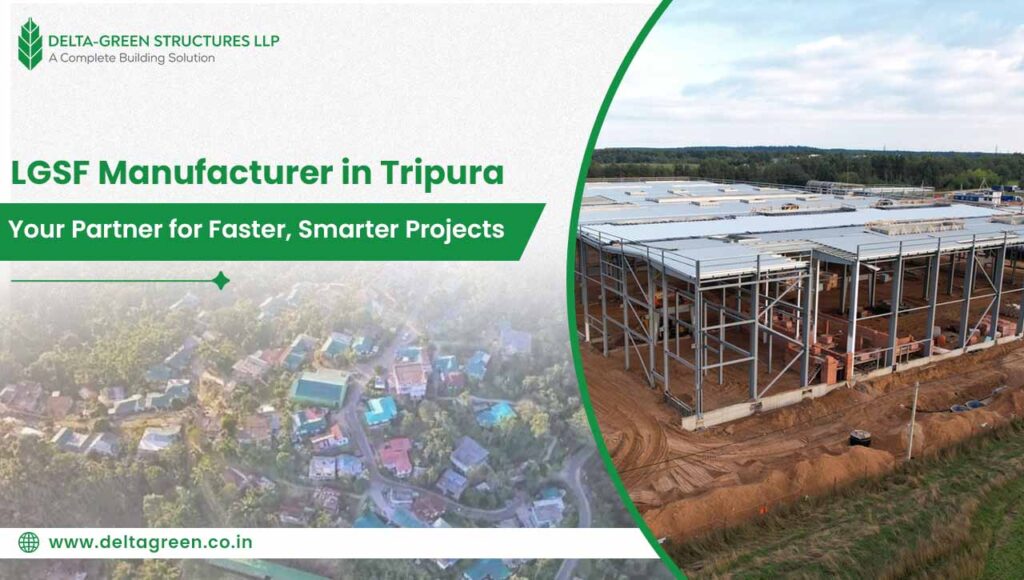
LGSF Manufacturer in Tripura: Your Partner for Faster, Smarter Projects

Tripura, with its lush landscapes, rich cultural heritage, and burgeoning economic potential, is on the cusp of a transformative era. As the state grows, so does the need for modern, efficient, and sustainable infrastructure—be it for homes, offices, schools, or commercial spaces. The traditional methods of construction, while familiar, often come with prolonged timelines, budget overruns, and a significant environmental footprint.   But what if there was a smarter way? A method that is faster, stronger, more durable, and inherently sustainable. That method is Light Gauge Steel Frame (LGSF) construction, and if you’re looking for the leading expertise to bring this technology to your project in Tripura, you’ve come to the right place.  While many search for an “LGSF Manufacturer in Tripura,” it’s crucial to understand that the real value lies not just in the materials, but in the end-to-end service, design integrity, and technical mastery that brings those materials to life. This is where Delta Green Structures becomes your indispensable partner.  Understanding LGSF: The Backbone of Modern Construction Before we delve into how we work, let’s understand what we work with. Light Gauge Steel Frame (LGSF) construction involves using cold-formed steel sections to create the primary structural framework of a building. Think of it as an incredibly strong, precise, and lightweight skeleton.   These steel sections are not manufactured on a large, heavy industrial site but are rather precisely fabricated in controlled environments based on your project’s unique digital design.   This methodology offers unparalleled advantages: Unmatched Speed: Since the components are pre-engineered and fabricated off-site, on-site construction is dramatically faster. Your project can be completed up to 50% quicker than with conventional methods, meaning you can move in, open your business, or start operations much sooner. Superior Strength and Durability: Steel is renowned for its high strength-to-weight ratio. LGSF structures are capable of withstanding extreme weather conditions, including the heavy monsoon rains of the Northeast, and are highly resistant to termites, rot, and fire. Exceptional Design Flexibility: Whether you envision a modern, minimalist home, a multi-story apartment complex, or a large industrial warehouse, LGSF can accommodate complex and innovative architectural designs with ease, free from the limitations of load-bearing walls. Sustainability at its Core: Steel is 100% recyclable, making LGSF an inherently green building solution. The construction process generates significantly less waste, reduces the consumption of water and sand, and results in a more energy-efficient building envelope. Your Service Partner, Not Just a Supplier This brings us to a critical distinction. When you partner with Delta Green Structures for your project in Tripura, you are not just procuring materials from a generic “LGSF Manufacturer in Tripura.” You are engaging a full-service partner dedicated to turning your vision into a tangible, high-quality reality. We operate on a robust service model that covers every single aspect of your project: Consultative Design and Engineering: Our process begins with your vision. Our team of structural engineers works closely with you and your architect, to understand your requirements, budget, and site conditions. Using advanced Building Information Modeling (BIM)  software, we create a detailed digital prototype of your structure. This model ensures every single component is designed for optimal performance and precision before any fabrication begins. Precision Fabrication (Sourced from Trusted Partners): While Delta Green Structures does not own a factory in Tripura, our strength lies in our curated network and logistical mastery. Our facilities use state-of-the-art machinery to roll, punch, and cut the steel frames with millimeter accuracy. This controlled, off-site process guarantees the highest quality control, free from the variables of on-site weather and human error.   Efficient Logistics and On-Site Execution: The accurately fabricated steel components, along with all necessary accessories, are then efficiently transported to your site in Tripura. Our experienced project management team oversees the entire logistics chain to ensure timely delivery. Once on-site, our skilled erection team assembles the structure with remarkable speed and efficiency, like a giant, incredibly strong kit. End-to-End Project Management: We don’t just supply a kit and leave. We provide comprehensive project management, ensuring that the assembly, insulation, cladding, and all other stages adhere to the highest standards of quality and safety. We coordinate all on-site work, making the entire process seamless, transparent, and stress-free for you.  Why Tripura is Ready for Delta Green Structures’ LGSF Solution Tripura’s progressive outlook and focus on development make it the perfect landscape for innovative construction technologies like LGSF. Rapid Urban Development: As Agartala and other urban centers expand, the demand for quick and efficient housing and commercial spaces is skyrocketing. LGSF is the ideal solution to meet this demand without compromising on quality. Educational and Healthcare Infrastructure: The state’s focus on improving social infrastructure can greatly benefit from the speed and hygiene of off-site construction. Building schools and clinics faster means serving the community sooner. Tourism and Hospitality: To boost its tourism potential, Tripura needs quality hotels, resorts, and facilities. LGSF allows for the rapid construction of aesthetically pleasing and durable structures that can blend with the natural beauty of the region. Resilience to Local Conditions: The durability of steel against moisture, pests, and seismic activity makes it a particularly wise choice for the long-term resilience of buildings in the Northeastern region. Your Next Steps Towards a Smarter Project in Tripura Choosing a construction method is one of the most critical decisions you will make for your project. By opting for LGSF, you are choosing a faster, smarter, and greener future. And by choosing Delta Green Structures as your service partner, you are ensuring that this advanced technology is executed with precision, professionalism, and unwavering commitment to your satisfaction.  Are you ready to build faster, smarter, and greener in Tripura? Contact Delta Green Structures today for a free, no-obligation consultation. Let’s discuss your project and show you how we can bring your vision to life, better and faster than you ever thought possible.    

LGSF Manufacturer in Tripura: Your Partner for Faster, Smarter Projects Read More »