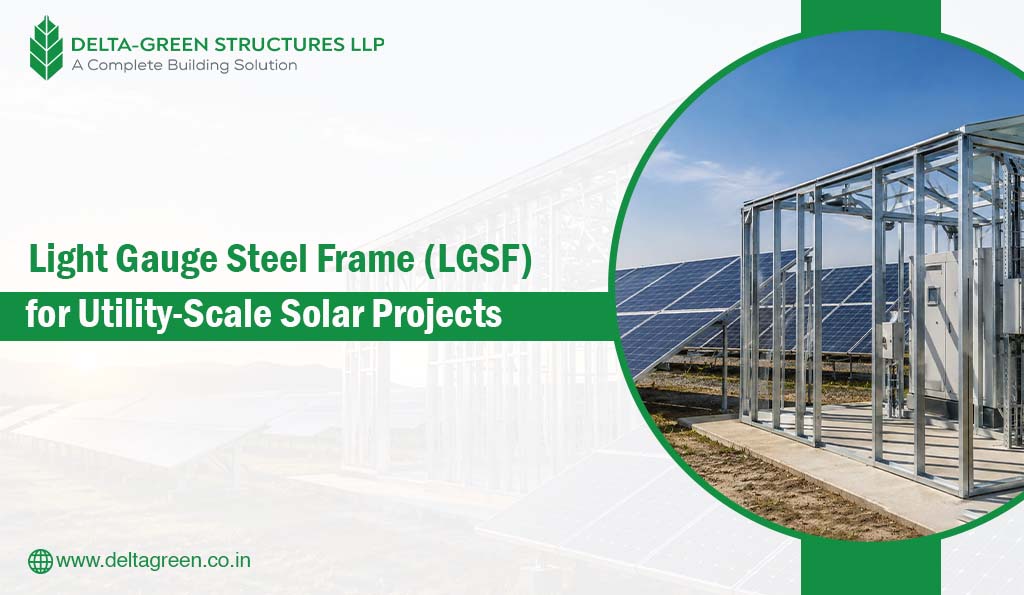
Light Gauge Steel Frame (LGSF) for Utility-Scale Solar Projects
Light Gauge Steel Frame (LGSF) for Utility-Scale Solar Projects Solar is having a moment. Every state government, every private developer, every EPC contractor is racing to lock down land and start bending metal for the next big solar farm. But here’s the plot twist nobody’s talking about enough: the panels get all the glory, while the structure holding them up quietly decides whether your project survives its 25-year lifespan or falls apart in year six. That structure is where the Light Gauge Steel Frame for Utility-Scale Solar Projects comes in – and it’s rewriting the rulebook for how ground-mounted solar systems get built. Wait, What Exactly is LGSF? Light Gauge Steel Framing (LGSF) uses cold-formed, galvanized steel sections instead of the heavier hot-rolled steel or timber traditionally used in construction. Think of it as steel that’s been engineered to be smart, not just strong – precision-rolled, lightweight, and shaped for exact structural performance. For solar, this translates into LGSF solar mounting structures that support PV panels without the bulk, cost, and installation headaches of conventional steel structures for solar farms. It’s the same technology already dominating modern building construction, now being adapted for renewable energy infrastructure at utility scale. Why Solar EPC Contractors Are Making the Switch If you’ve spent any time on-site for a utility-scale build, you already know the usual suspects that eat your timeline and budget: heavy material handling, welding delays, corrosion issues within a few monsoons, and mounting structures that just weren’t designed for the specific terrain you’re working on. Here’s what changes with LGSF: Faster installation, seriously faster: Cold-formed steel components arrive pre-engineered and ready to bolt together. No on-site welding, no curing time, no waiting on skilled labor that’s booked out for months. Crews can erect entire rows of PV mounting systems in a fraction of the time it takes with conventional structural steel. Corrosion resistance that actually holds up: Utility-scale solar farms often sit in punishing environments – coastal salt air, industrial zones, high humidity belts across India’s plains. LGSF components come galvanized and treated specifically to resist rust and degradation, which matters enormously when your investment horizon is measured in decades, not years. Lightweight structures, lower foundation costs: Less structural weight means smaller foundations, less concrete, and lower transport costs to remote solar sites. For large-scale ground-mounted solar systems spread across acres of land, that weight savings compounds fast. Long-term durability without the maintenance nightmare: Traditional steel structures for solar farms often need repainting, rust treatment, and periodic reinforcement. LGSF, done right, is built to outlast the panels it’s holding up. LGSF vs. Structural Steel: The Honest Comparison Nobody wants a sales pitch dressed up as a blog, so let’s be straight about it. Conventional hot-rolled structural steel still has its place – particularly for extremely high-load tracker systems or unusual terrain profiles. But for the vast majority of fixed-tilt utility-scale installations, LGSF wins on cost-per-watt, speed of deployment, and lifecycle maintenance. And when it comes to steel vs aluminum solar structures, aluminum might be lighter, but it comes at a premium price point and doesn’t match galvanized LGSF steel’s load-bearing capacity for large tracker arrays or high-wind zones. For utility-scale projects where every rupee per megawatt matters, LGSF typically comes out ahead. Fixed-Tilt vs. Tracker Systems: Does LGSF Work for Both? Yes – and this is where LGSF earns extra points. Whether your project is a fixed-tilt array or a single/dual-axis tracker system, cold-formed steel framing can be engineered to match the load and wind-resistance requirements of either configuration. That flexibility is a big reason solar EPC contractors are increasingly specifying LGSF at the design stage rather than treating it as an afterthought. Built for India’s Toughest Terrain This is where Delta Green Structures enters the conversation. As the only dedicated LGSF manufacturing unit in the North-East of India, Delta Green Structures has spent years solving for the exact conditions most manufacturers avoid – challenging climatic zones, difficult geographical terrain, and remote project sites where turnaround time can make or break a construction schedule. Using fully automated Pinnacle machines, Delta Green Structures produces precision-engineered LGSF components for both private developers and government-scale renewable energy infrastructure projects. It’s turnkey manufacturing built specifically for utility-scale solar, not retrofitted from another industry. What Makes a Genuinely Good LGSF Partner? Not every LGSF supplier is built for solar-scale demands. Here’s what actually matters when picking one: Certified manufacturing with consistent quality control Engineering support that understands solar loading, not just general construction Proven experience in extreme climates and difficult terrain Turnaround times that match utility-scale project deadlines Customisable packages instead of one-size-fits-all structures Delta Green Structures checks each of these boxes, offering end-to-end building solutions with flexible, consultancy-backed packages designed around the realities of large-scale solar deployment – not just the theory of it. The Bottom Line Utility-scale solar isn’t just about panels and inverters anymore. The mounting structure underneath is quietly becoming one of the most important engineering decisions in the entire project – affecting installation speed, long-term durability, maintenance costs, and ultimately, the return on investment for every megawatt installed. Light Gauge Steel Frame for Utility-Scale Solar Projects isn’t a trend. It’s the practical, cost-efficient, climate-resilient answer that ground-mounted solar systems have needed for a while. And with LGSF manufacturers like Delta Green Structures leading that shift in North-East India, solar developers finally have a partner who understands both the steel and the sun. If your next solar farm is still on the drawing board, the frame holding it up deserves just as much thought as the panels sitting on top.
Light Gauge Steel Frame (LGSF) for Utility-Scale Solar Projects Read More »