
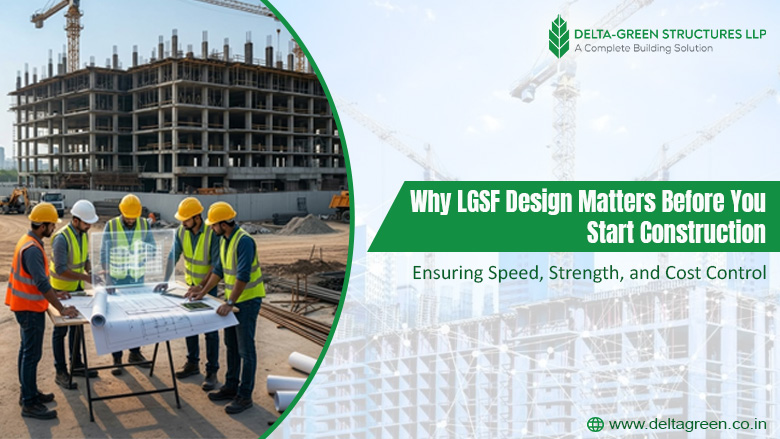
Why LGSF Design Matters Before You Start Construction: Ensuring Speed, Strength, and Cost Control
Every successful building begins with one thing — a smart design plan.
In modern construction, rushing straight into a building without proper structural planning often leads to delays, unexpected costs, and structural limitations. This is exactly why Light Gauge Steel Frame (LGSF) design has become a crucial step before starting construction.
A well-planned Light Gauge Steel Frame (LGSF) design ensures that the building is strong, efficient, and built faster with better cost control. With advanced LGSF structural engineering and precision-driven manufacturing, companies like Delta Green Structures are helping reshape the way buildings are designed and constructed today.
Before the first frame is installed, the real strength of a building is already decided — in the design stage.
What Is Light Gauge Steel Frame (LGSF) Design?
Think of Light Gauge Steel Frame (LGSF) design as the blueprint of modern steel construction.
Instead of relying on traditional brick-and-cement methods, light gauge steel frame construction uses precisely engineered cold-formed steel sections to create the structural framework of a building.
Every component — walls, roof systems, beams, and floors — is designed digitally before the project begins.
This detailed LGSF structural design allows engineers to plan the entire structure with accuracy, ensuring:
- Proper load distribution
- Efficient use of materials
- Structural safety
- Faster construction timelines
Through advanced LGSF building design planning, potential challenges are solved even before the construction process begins.
The Real Importance of LGSF Design Before Construction
Skipping the design stage in construction is like starting a journey without a map.
The importance of LGSF design before construction lies in its ability to eliminate uncertainty. With detailed LGSF structural engineering, architects and engineers can visualize the building’s performance long before the first steel frame arrives on site.
Proper Light Gauge Steel Frame (LGSF) design ensures:
- Structural accuracy
- Reduced construction errors
- Better project coordination
- Efficient material usage
- Controlled construction timelines
When LGSF design optimization is done correctly, construction becomes smoother, faster, and far more predictable.
Faster Construction Begins with Better Design
Speed is one of the biggest advantages of Light Gauge Steel Frame (LGSF) design.
Traditional construction involves multiple time-consuming processes like curing, manual adjustments, and repeated on-site corrections. In contrast, fast construction using LGSF begins long before workers arrive at the site.
Once the LGSF building design planning is completed, components are manufactured using automated machinery and delivered ready for installation.
This approach significantly accelerates the LGSF construction process.
Here’s how LGSF design improves construction speed:
- Pre-engineered components reduce on-site work
- Digital design ensures perfect structural fit
- Assembly becomes faster and more organized
- Construction delays are minimized
In short, LGSF design for speed and efficiency turns construction into a streamlined process rather than a slow and uncertain one.
Strength That Comes from Engineering Precision
Speed means nothing without strength.
One of the biggest advantages of Light Gauge Steel Frame (LGSF) design is the exceptional structural strength it delivers. Through advanced LGSF structural engineering, every frame is designed to handle environmental stress, structural loads, and long-term usage.
A well-planned LGSF structural design carefully considers:
- Wind loads
- Seismic resistance
- Structural stability
- Long-term durability
- LGSF load-bearing capacity
Because steel is highly durable, LGSF building strength and durability often surpass traditional construction methods.
This is one of the key reasons why modern steel frame construction is becoming increasingly popular across residential, commercial, and institutional projects.
Smart Design Means Better Cost Control
Construction budgets can quickly spiral out of control without proper planning.
This is where LGSF construction cost control becomes a major advantage. A well-engineered Light Gauge Steel Frame (LGSF) design calculates the exact material requirements before manufacturing begins.
That means:
- Less material wastage
- Lower labour expenses
- Faster project completion
- Better budget predictability
With careful LGSF design optimization, developers can achieve cost-effective LGSF construction without compromising quality.
This makes LGSF design for strong and cost-effective buildings one of the most efficient construction solutions available today.
Pre-Engineered LGSF Structures: Precision Meets Efficiency
Another key innovation in modern construction is the use of pre-engineered LGSF structures.
Instead of fabricating structural elements on site, components are manufactured in controlled environments using advanced machines. This improves consistency, quality, and structural accuracy.
Pre-engineered systems also simplify the LGSF construction process by reducing manual errors and installation time.
With Light gauge steel frame construction, builders can assemble structures faster while maintaining exceptional engineering precision.
Sustainable Construction for the Future
Sustainability is becoming a major focus in modern infrastructure development.
Fortunately, sustainable LGSF building design offers several environmental benefits.
Steel is recyclable, durable, and produces far less construction waste compared to traditional building materials. Additionally, lightweight steel frames reduce foundation requirements and transportation loads.
This makes Light Gauge Steel Frame (LGSF) design an environmentally responsible approach to modern steel frame construction.
LGSF Design vs Traditional Construction
When comparing LGSF design vs traditional construction, the advantages are clear.
Traditional building methods often face issues like longer timelines, material wastage, and inconsistent structural quality. In contrast, Light Gauge Steel Frame (LGSF) design delivers precision, speed, and predictable performance.
Key differences include:
Factor | LGSF Construction | Traditional Construction |
Construction Speed | Very Fast | Slower |
Material Efficiency | Highly Optimized | High Wastage |
Structural Strength | Engineered Precision | Variable |
Cost Control | Predictable | Uncertain |
Sustainability | Environment Friendly | Less Sustainable |
These benefits highlight the importance of LGSF design before construction for modern building projects.
Benefits of Proper LGSF Planning
A well-executed Light Gauge Steel Frame (LGSF) design offers multiple long-term advantages.
Some of the biggest LGSF design advantages include:
- Faster construction timelines
- Improved structural reliability
- Better design flexibility
- Reduced project risks
- Greater cost efficiency
With proper LGSF building design planning, developers can ensure smoother project execution and better overall results.
The Future of Construction Starts with Smart Design
In today’s fast-paced construction industry, the success of a building is determined long before construction begins.
A carefully developed Light Gauge Steel Frame (LGSF) design ensures speed, structural strength, and efficient cost management. Through advanced LGSF structural engineering and precision-driven planning, modern construction projects can achieve better results with fewer delays and lower risks.
As demand grows for faster and more sustainable buildings, Light Gauge Steel Frame (LGSF) design will continue to lead the way in shaping the future of construction.
And with innovative companies like Delta Green Structures driving advanced LGSF construction technology, the industry is moving toward a smarter, stronger, and more efficient building future.