
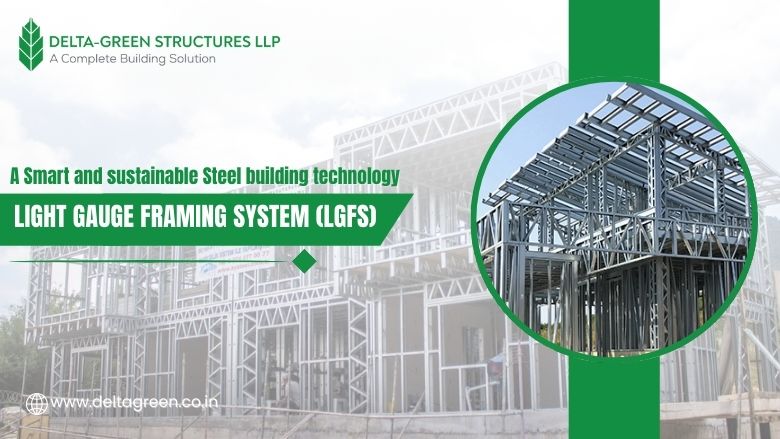
The Future of Construction Has Arrived—And It’s Changing Everything
India faces a critical crisis: a 3 crore housing shortage, aggressive government targets to build 2 crore homes by 2025, and a construction method that simply can’t keep up. Traditional brick-and-concrete construction takes 18-24 months per project. Meanwhile, prefabricated steel structures using Light Gauge Framing System (LGFS) technology complete in just 6-9 months—60% faster.
This isn’t a compromise. It’s an upgrade. And it’s reshaping how India builds.
Whether you’re a developer racing to meet timelines, a homebuyer tired of waiting, an architect seeking design freedom, or a government official trying to meet housing targets responsibly, LGFS offers something traditional construction cannot: speed without sacrificing quality, affordability without compromising sustainability.
The Problem: Why Traditional Construction Can't Solve India's Housing Crisis
India’s construction industry faces a perfect storm of challenges:
For Developers: Time delays mean lost revenue. A project delayed 6 months is a project that doesn’t generate returns. Traditional construction’s 18-24 month timeline leaves no room for contingencies, monsoons, or labor shortages.
For Homebuyers: The dream of homeownership comes with a nightmare of waiting. And waiting isn’t the only problem. After decades in traditional buildings, owners deal with settling cracks, foundation issues, and maintenance costs that seem endless.
For Government: The National Housing Mission targets 2 crore homes by 2025. The Pradhan Mantri Awas Yojana (PMAY) requires affordable housing at scale. Traditional construction methods simply cannot deliver this volume in this timeline.
For the Environment: Brick-and-concrete construction generates massive waste, consumes enormous resources, and carries a carbon footprint 30-40% higher than steel alternatives. India’s push toward sustainable development demands smarter solutions.
Enter LGFS—a technology that solves all these problems simultaneously.
What Is Light Gauge Framing System (LGFS)?
Light Gauge Framing Systems uses cold-formed steel sections (thin steel sheets 1-3mm thick, galvanized for corrosion protection) to create precision-engineered structural frames. Unlike traditional on-site brick laying, LGFS components are manufactured in controlled factory environments, then rapidly assembled on-site like building blocks.
The key innovation: 75% of the structure is built in a factory where quality is guaranteed, weather is irrelevant, and precision is automated. Only final assembly happens on-site.
This technology has been proven globally for decades in North America, Australia, Japan, and New Zealand. Now, India is experiencing rapid adoption—and for good reason.
Why LGFS Is Superior to Traditional Construction
1. Construction Speed: 60% Faster
- Traditional: 18-24 months
- LGFS: 6-9 months
- Impact: Developers recover investments faster. Homebuyers occupy sooner. Government targets become achievable.
Why? Factory manufacturing happens in parallel with site preparation. Monsoons don’t delay factory production. Assembly takes weeks, not months.
2. Cost Efficiency: 15-20% Lower Total Project Cost
Yes, LGFS components may cost 5-10% more upfront than traditional materials. But:
- Less skilled labor required (reducing wages)
- 50-70% less construction waste (saving disposal costs)
- Faster completion (reducing management overhead)
- Zero settling cracks (eliminating long-term repair costs)
When you calculate total cost, LGFS wins.
3. Superior Quality & Durability
- Zero settling cracks: Traditional brick structures settle over time, causing cracks. LGFS structures don’t settle.
- 50+ year lifespan: vs 30-40 years for brick structures
- Earthquake resistant: Steel’s flexibility absorbs seismic energy (proven in earthquake zones globally)
- Better insulation: Reduces heating/cooling costs by 20-30% (critical in India’s diverse climate zones)
4. Sustainability: 100% Recyclable
5. Design Freedom
LGFS enables complex architectural designs impossible with traditional methods—open floor plans, large windows, custom interiors, flexible spaces. Perfect for both affordable housing and premium projects.
Why Now? Government Support + Market Tailwinds
National Housing Mission (NHM): The government has approved LGFS as the preferred technology for mass housing. Target: 2 crore homes by 2025.
PMAY (Pradhan MantriAwas Yojana): Specifically incentivizes sustainable, cost-effective housing solutions. LGFS checks both boxes.
Market Growth: The India LGFS market was valued at USD 1.89 billion in 2022 and is growing at 6.3% annually. The global market reached USD 29.4 billion in 2025. Commercial construction (offices, IT parks, retail) is growing fastest at 6.8% CAGR.
Labor Scarcity: India lacks skilled brick masons. LGFS requires less skilled on-site labor, making it pragmatically superior in today’s employment landscape.
Real-World Applications: LGFS Works Everywhere
- Residential: 2-3 BHK apartments for affordable housing projects
- Institutional: Schools, hospitals, government offices
- Commercial: IT parks, retail complexes, hotels
- Rapid Response: Emergency shelters, disaster reconstruction
LGFS is genuinely one-size-fits-all—from mass housing to premium commercial buildings.
FAQs: Addressing Your Concerns
Q: Is LGFS more expensive than traditional construction?
Q: Is LGFS earthquake-resistant?
Q: How long do LGFS buildings last?
Q: Can LGFS handle monsoon climate?
Q: Is LGFS suitable for affordable housing?
Q: What are sustainability benefits?
Q: Can I customize designs?
Q: Who should use LGFS?
Conclusion: The Smart Choice for Smart Construction
The Light Gauge Framing System isn’t the future of construction in India—it’s the present reality, reshaping how we build homes, offices, and institutions.
For developers, it means faster revenue and competitive advantage in a crowded market. For homebuyers, it means quality homes without endless waiting. For the government, it means achieving housing targets responsibly and sustainably. For the environment, it means construction practices aligned with our sustainability commitments.
The question isn’t whether LGFS is right for your project. It’s how quickly you can get started.
The future of construction has arrived. And it’s built on steel.
Ready to build smarter? Contact Delta Green Structures today to explore LGFS solutions for your next project.